Travel Guide
Agra in 2 Days: Taj Mahal at Sunrise, Agra Fort & a Fatehpur Sikri Day Trip (Winter Itinerary)
Want the editable version of this route?
Open the Instaboard template and adapt stops, timing, and notes to fit your trip.
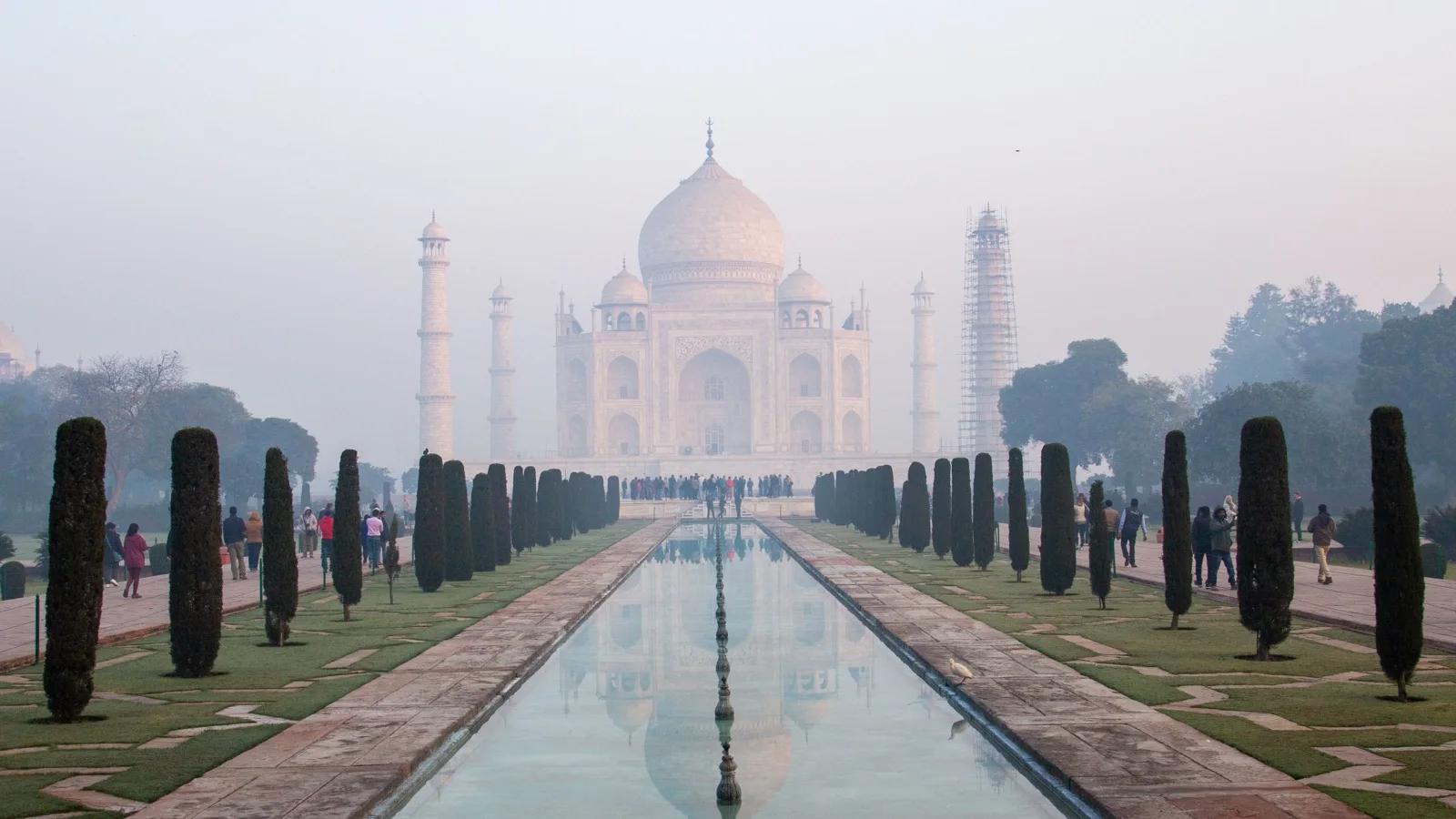
So, Agra: an otherwise ordinary city in northern India that happens to contain the most famous building on the planet. Two days is enough to do Agra properly, but only if you spend the right hours at the Taj Mahal, because dawn fog doesn't negotiate.
Winter is Agra's prime season, with days in the low twenties made for walking monuments. Pack a layer for the cold mornings.
Day 1
Day one is the classic arc: Taj Mahal at dawn, the fort where its builder ended up imprisoned, then sunset from across the river.
Taj Mahal
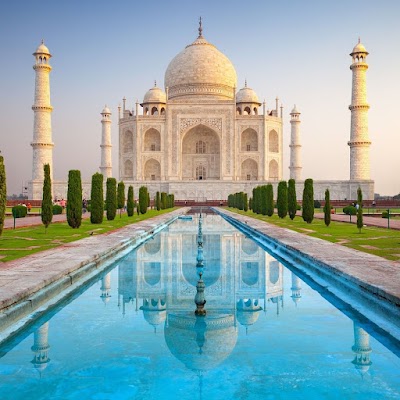
The Taj Mahal is a marble tomb Emperor Shah Jahan built for his wife, and no photo prepares you for the scale of the thing. Nobody warns you about the interior: after all that gleaming buildup outside, it's surprisingly small and dim, which honestly caught me off guard the first time.
Look close at the inlaid flowers and the calligraphy, which enlarges as it climbs so it reads level from the ground. That's the craftsmanship obsession here. Book online, use the West gate at opening, and keep a buffer morning. December fog can swallow sunrise entirely, and on Fridays it's closed.
Tip: Enter via the West gate at the 6:30am opening to beat the crowd. Book your ticket online to skip the line, and bring a warm layer for the fog.
Agra Fort
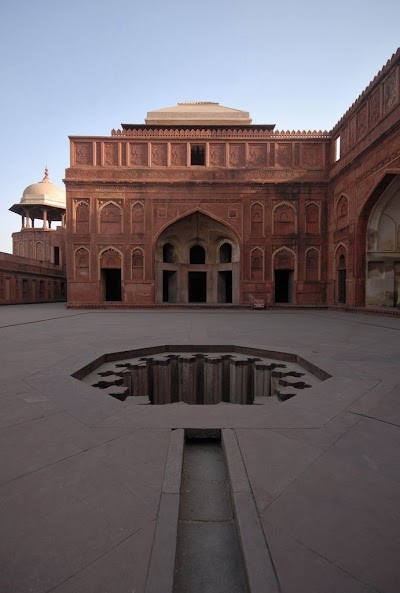
Next comes Agra Fort, because after the Taj you'll want the sequel: a walled red-sandstone city of palaces where the Mughal emperors actually ran things. Find the Musamman Burj, an octagonal marble balcony where Shah Jahan supposedly died gazing at the Taj, visible across the river and permanently out of reach.
You can read this place like a diary: Akbar's red sandstone giving way to his grandson's marble additions. Two emperors, two palettes, one fort. Come after lunch once the tour buses drain away, and head straight for the riverside palaces. Afternoon slanted light turns all that sandstone golden.
Tip: Use the Amar Singh gate entry after lunch when the tour-group crowd thins. Your online combo ticket covers same-day entry here too.
Mehtab Bagh
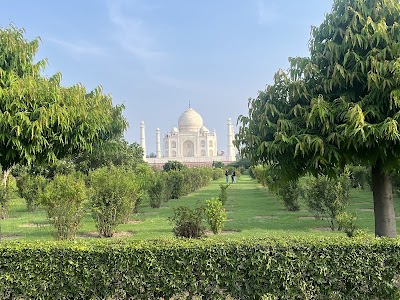
For sunset, do the counterintuitive thing: walk away from the Taj and cross the Yamuna river to Mehtab Bagh, a Mughal garden built to face it. The name means moonlight garden; the Mughals engineered this bank as a viewing terrace, and legend claims Shah Jahan planned a mirror-image Black Taj here.
At dusk the Taj flushes pink-orange above the water while the near bank goes quiet, a fraction of the crowd with all of the view. Arrive forty-five minutes before sunset for railing space, bring zoom because the Taj sits further across the water than photos suggest, and prebook your ride back.
Tip: Arrive 45 minutes before sunset for a terrace spot facing the Taj across the Yamuna. Confirm the winter closing hours and take a prepaid taxi back after dark.
Day 2
Day two leaves town: an emperor's self-designed tomb, an entire abandoned Mughal capital forty kilometers west, and street food back in Agra.
Akbar's tomb
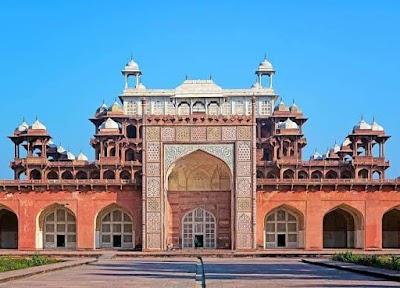
Akbar was the greatest Mughal emperor, and he designed his own tomb: a vast tiered sandstone monument set in quiet gardens on Agra's edge. The entrance gateway nearly steals the show, four white marble minarets flanking a red sandstone arch, a warm-up act outshining the headliner.
The gardens are the quiet part: dew on the gravel, birdsong, deer grazing loose, and monkeys that will absolutely investigate anything that looks like food. Time it for the nine a.m. opening, because the tomb sits right on the road toward Fatehpur Sikri and you'll have the place nearly to yourself.
Tip: Stop at the 9am opening on your way out of the city. Pay the small cash or card ticket at the gate before the tour buses arrive.
Fatehpur Sikri Fort
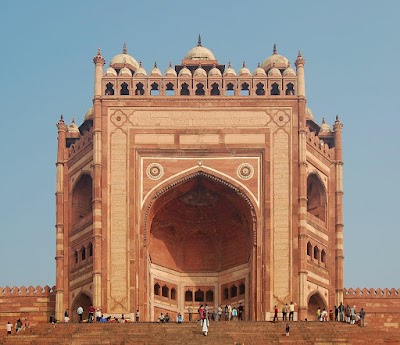
Fatehpur Sikri is the empire's plot twist: a complete capital Akbar built, lived in for barely fourteen years, then walked away from, most likely over water. You enter under the Buland Darwaza, a gateway tall enough to be its own monument, then reach the five-storey Panch Mahal. Wind, echoes, emptiness.
Here's the read that makes it click: this was never really a fortress, it's a stage set, audience terraces and pavilions built for pure courtly theater. The layout genuinely confuses first-timers, so take a licensed guide or audio guide, and arrange the return car before you're standing at the gate.
Tip: Hire a taxi for the 40 km transfer and arrive by late morning. Carry cash for the entry ticket, and prebook your return car ahead.
Sadar Bazar
Back in Agra, finish the trip at Sadar Bazar, the street where this city stops performing for tourists and starts eating, over by the railway station. The local signature is petha, candied ash gourd, a vegetable that got promoted to dessert, sold in more flavors than you'd think possible.
Picture frying chaat, sugar-syrup displays glowing under tube lights, and steam off hot counters. Stick to busy stalls, and do the chaat before the petha shopping. The marble shops all sell the same trinket with escalating conviction, so bargain firmly, carry cash, and know the petha boxes are the defensible souvenir.
Tip: End with an easy evening walk down this buzzing strip for chaat, petha sweets, and marble shops. Most stalls take cash only, and it peaks after monument closing hours.
What to book ahead
- Book Taj Mahal tickets online (3-7 days before) - Use the official ASI site; pick a 6:30-7:00am entry slot and note the Taj is closed on Fridays.
- Arrange Fatehpur Sikri transport (1-2 days before) - Prebook a return taxi or private car; the 40 km transfer each way takes about an hour.
- Reserve a licensed guide for Agra Fort (1 week before) - Guides with ASI licenses sell out in peak winter season; half-day rates cover Fort plus old city.
- Confirm Mehtab Bagh closing time (Day of visit) - Winter sunset is near 5:30pm; the garden gates shut shortly after, so arrive by 4:15pm.
- Check fog advisory for sunrise day (Night before) - Dense December fog can hide the Taj at dawn; shift your visit 60-90 minutes later if visibility is poor.
What to pack
Essentials
- Warm layer or light jacket - Winter mornings in Agra drop near 8-10C, especially on the Taj lawns and open fort terraces.
- Slip-on shoes with socks - You must remove footwear at the Taj mausoleum, mosques, and gurudwara entry points.
- Cash in small rupee notes - Bazaar food stalls, auto-rickshaws, and some monument counters are cash-only.
- Pollution mask - Winter fog plus dust makes air quality poor; useful in busy bazaar lanes.
- Printed or offline e-tickets - Spotty data at monument gates makes offline copies of Taj and Fatehpur Sikri bookings essential.
Nice to have
- Binoculars - Mehtab Bagh views of the Taj across the Yamuna are better with magnification.
- Polarized sunglasses - Low winter sun on white marble is blinding at midday.
- Scarf or head covering - Required to enter the Jama Masjid and respectful at the gurudwara.
- Portable charger - Long photo-heavy days at the Taj, Fort, and Fatehpur Sikri drain phone batteries fast.
Final take
Two days here, and what stays is the story: a monument built out of grief, a whole capital abandoned over water.
Plan this trip
Turn this guide into an editable trip plan
Open the route in Instaboard, adjust the stops, and share the itinerary with your travel group.