Travel Guide
Chiang Mai in 3 Days: Temples, Monk's Trail & Mountain Coffee
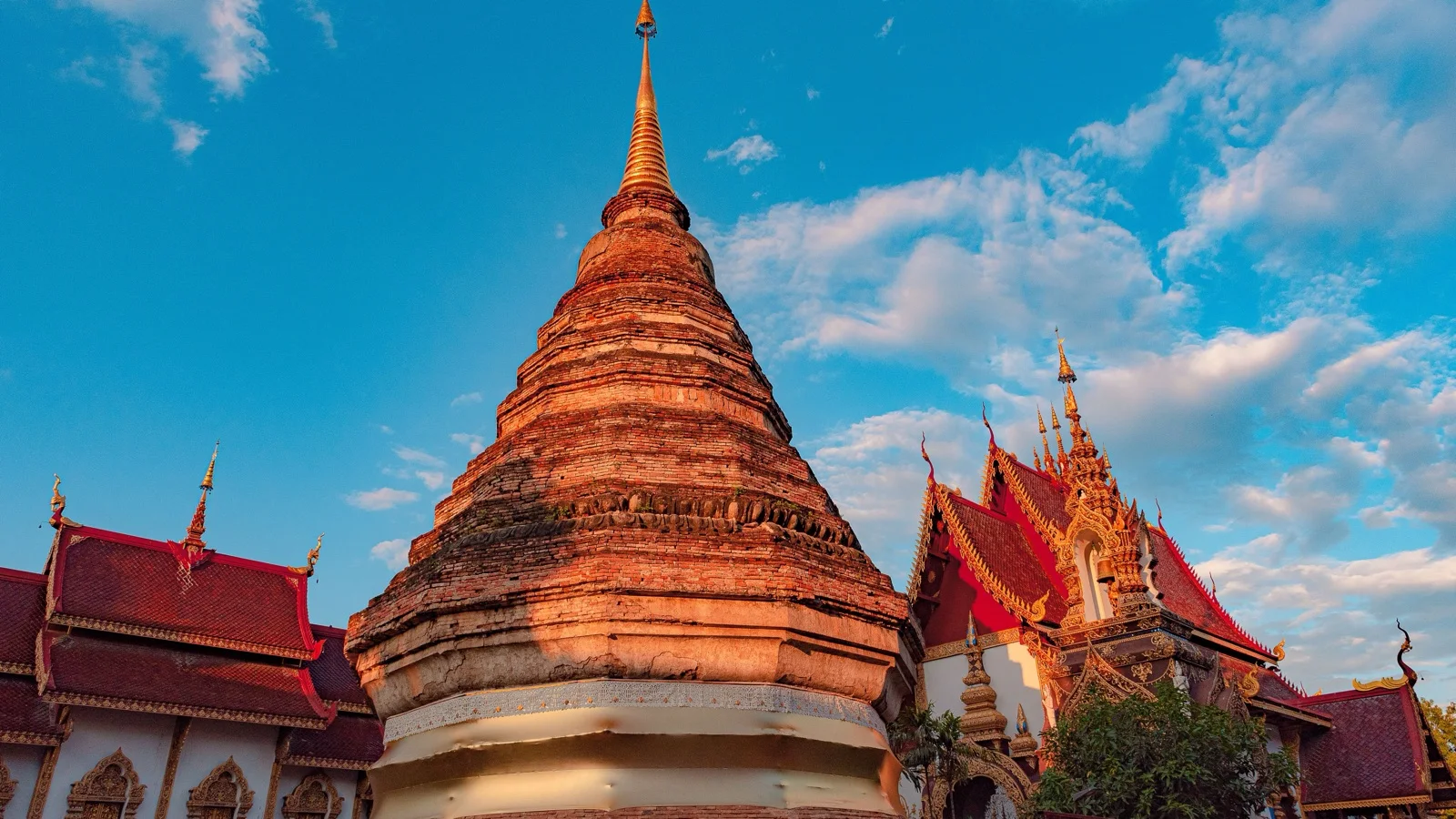
Want the editable version of this route?
Open the Instaboard template and adapt stops, timing, and notes to fit your trip.
Welcome to Chiang Mai, the northern Thai city where ruined temples, jungle mountains, and seriously good coffee all sit within a single square. Three days is plenty here, if you know which temples to hit at dawn and when to trade the crowds for a mountain trail.
Winter is the sweet spot: December through February means clear skies, warm days, and mornings cool enough that a jungle hike feels like a gift.
Day 1
Day one stays inside the moated Old City, where the biggest ruin in town and the most venerated temple are a ten-minute walk apart.
Wat Chedi Luang
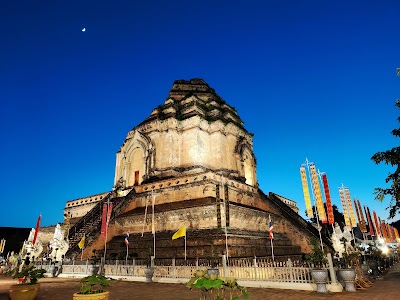
Wat Chedi Luang is the biggest structure in the Old City: a massive red-brick stupa that was once the tallest building in the Lanna kingdom. It was finished in the 1400s at around 85 meters tall, until a 1545 earthquake sheared off the top and left it roughly half its height.
For a while it held the Emerald Buddha, Thailand's most sacred image, before the quake damage prompted its move, and it eventually ended up in Bangkok. Arrive at the 8 am opening, because by mid-morning the tour buses roll in. The chedi reads best in soft light with barely anyone in frame.
Tip: Arrive right at the 8 am opening to have the earthquake-scarred 15th-century chedi almost to yourself before tour buses. Dress modestly (shoulders and knees covered) and bring cash for the small entry fee.
Wat Phra Singh Woramahawihan
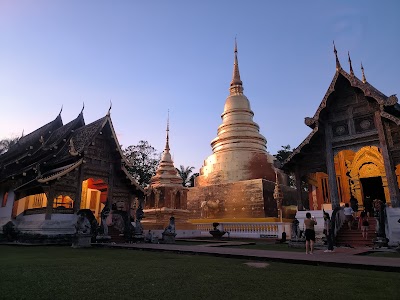
If Chedi Luang is the ruin, Wat Phra Singh is its living, gilded counterpart: one of the oldest and most venerated temples in Chiang Mai. It's home to the Phra Buddha Sihing, one of the most revered Buddha images in the north, and the temple where the craftsmanship actually stops you.
The Lanna-style murals lining the walls are genuinely intricate, and in clean winter morning light the gold-leaf hall and the painted figures actually glow. It's a short walk from Chedi Luang. Just remember shoes come off before you enter the main hall.
Tip: Walk ten minutes west along Ratchadamnoen Road to this revered temple. The Lanna murals glow in morning light; buy your ticket at the gate and remove shoes before entering the main viharn to see the Phra Buddha Sihing image.
Tha Phae Gate
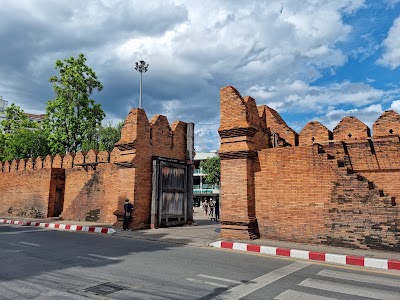
Tha Phae Gate is the brick arch from every Chiang Mai photo: the city's default meeting point and the most recognizable fragment of the old wall. Here's the honest part: most of the original city wall is gone, so this one restored gate carries nearly all the symbolic weight by itself.
By late afternoon the square fills with pigeons, selfie sticks, and mango sticky rice carts. Less a monument than the city's outdoor living room.
Don't plan to linger. It's a quick photo and a meeting spot, and the tuk-tuk touts clustering here are worth a firm no-thanks.
Tip: The restored brick gate is the city's gathering point: join the crowd feeding pigeons and grab a mango sticky rice from a nearby cart. Weekends bring street performers, so expect livelier scenes and more visitors by late afternoon.
Day 2
Day two leaves the flat city and heads uphill: a jungle trail, a golden mountaintop temple, and a panorama that puts the whole valley below you.
Wat Pha Lat Hike (Monk's trail) visitor/ticket booth
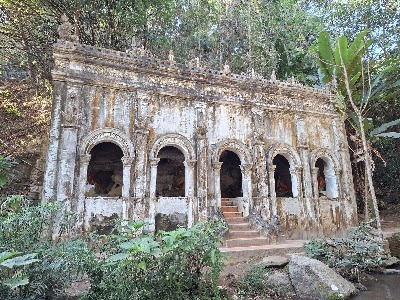
Most tourists ride straight up the mountain, but there's a forest footpath called the Monk's Trail that turns the approach into a proper jungle walk. It ends at Wat Pha Lat, a serene temple spilling down a hillside of boulders and streams, built into the jungle rather than placed in it.
Monks once used this as a pilgrim route to the mountain temples, and the payoff is the sudden hush when the stupa appears through the trees. Go early because the trail is cool and quiet then. Wear shoes with grip and carry water, since there are no vendors on the trail.
Tip: Start at the trailhead near Suthep Road and walk the gentle 45-minute forest ascent to Wat Pha Lad. Layer up (mountain mornings can be surprisingly cool) and bring water, as there are no vendors along the jungle trail.
Wat Phra That Doi Suthep
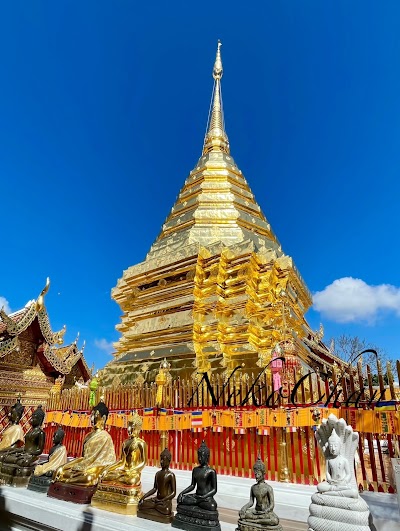
Doi Suthep is the temple on the mountain: on every postcard, and the one sight you can't really say you've done Chiang Mai without. You ride a red songthaew up the winding road, then climb roughly 300 naga-flanked steps to reach the gleaming gold chedi at the summit.
Legend says the site was chosen by a white elephant carrying a Buddha relic up here in the late 1300s. Wherever it lay down, they built. Come in the late afternoon because the lowering sun hits the gold, and the valley view reads clearest right before sunset.
Tip: Take a red songthaew (shared taxi) up the winding 15-km road, then climb the iconic 300 naga steps to the entry. Time your visit for the hour before sunset when the gilded chedi glows against the valley below.
Doi Pui Viewpoint
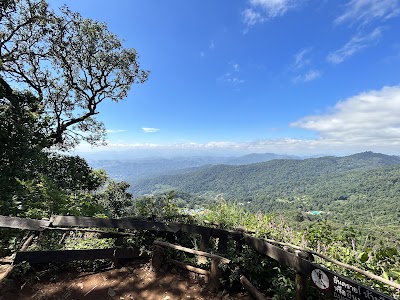
A short ride further up from Doi Suthep brings you to Doi Pui Viewpoint, a roadside pull-off where the entire Chiang Mai valley opens up below. You don't hike to it, you drive, and it gives the most complete single view of the city and the plain it sits on.
Time it for the 30 minutes before sunset because that golden-hour light is the whole reason to come. Midday flat light wastes the stop. Just have your ride sorted, because after sunset it gets dark fast and the rides down get scarce.
Tip: A short taxi ride continues up past Doi Suthep to this roadside overlook. Arrive 30 minutes before sunset for the best golden-hour light and fewer people blocking the panorama of the entire valley.
Day 3
Day three shows you Chiang Mai's stranger side: a tunnel temple in the forest, the dish that defines the north, and the city's coffee obsession.
Wat Umong Suan Putthatham
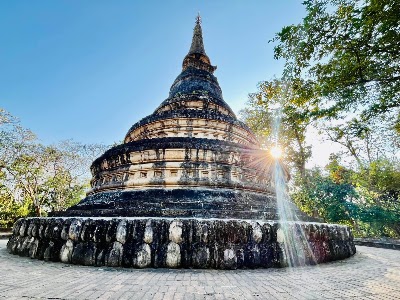
Wat Umong is the temple that breaks the pattern: instead of gold and open courtyards, it's a forest monastery built around underground tunnels. You walk dim brick corridors with Buddha images tucked into alcoves. The air is cool and damp, your footsteps echoing off mossy walls.
It's centuries old, tied to the early Lanna era, and the forest setting was designed as a meditation retreat: quiet where Doi Suthep is spectacular. Come in the morning because that's when the monk-chat sessions sometimes run, and bring a phone light for the darker passages.
Tip: A short taxi ride southwest leads to the 700-year-old tunnel temple. Bring a phone light for the underground passages. Check opening hours for the lakeside Monk Chat, which typically runs mid-morning and varies seasonally.
Khao Soi Khun Yai
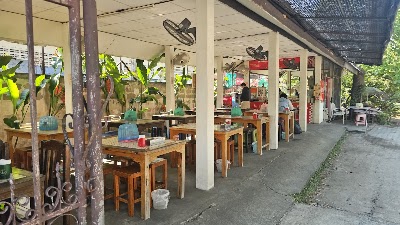
Khao soi is the dish that defines northern Thai food: a coconut-curry noodle soup topped with a tangle of crispy fried noodles. The pilgrimage for it is Khao Soi Khun Yai, Grandma's, a tiny no-frills stall that's been named among the best in the city for years.
Order the khao soi gai (chicken), and you get soft noodles below, crunchy ones on top, with pickled mustard and shallot on the side. Get there well before 1 pm because they sell out and close whenever they feel like it. Cash only, and that's just the deal.
Tip: This legendary stall famously closes when they sell out. Arrive before 1 pm or risk finding the shutters down, as opening hours are unpredictable. Cash only; order the classic khao soi gai with crispy noodles on top.
Ristr8to Original
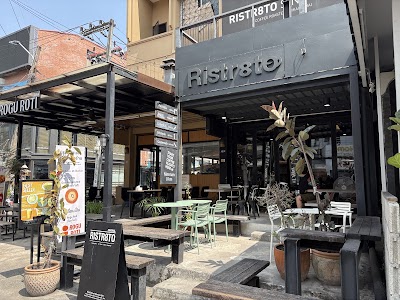
Ristr8to is the roaster that arguably kicked off Chiang Mai's specialty-coffee obsession, founded by a world latte art champion in the Nimman neighborhood. He opened this place around 2011, and it helped put northern Thailand on the map as a region that grows beans people actively seek out.
The pours look unreasonable and taste better: bright, clean cups, foam sculpted into something silly, and beans grown in the hills you just hiked. Go on a weekday afternoon because weekends draw a line. Ask for a single-origin northern Thai pour-over rather than just a latte.
Tip: Northern Thailand's most celebrated specialty roaster sits in the Nimman area. Expect a line on weekends, so visit on a weekday or come mid-afternoon. Ask for a single-origin northern Thai pour-over.
What to book ahead
- Confirm Sunday Walking Street dates (Before trip) - Held every Sunday evening rain or shine; plan Day 1 around it for the full experience
- Arrange Doi Suthep transport (1-2 days before) - Red songthaews depart from the base of Huay Kaew Road; agree on round-trip fare in advance
- Check Wat Umong Monk Chat schedule (Day before) - Hours vary seasonally; verify via their Facebook page or hotel front desk
What to pack
Essentials
- Modest temple attire - Shoulders and knees must be covered to enter all Buddhist temples
- Comfortable walking shoes - Old City exploration and the Monk's Trail hike require sturdy footwear
- Light jacket or sweater - Winter mornings on Doi Suthep can dip below 15°C
- Cash (Thai baht) - Most temples, markets, and street food stalls are cash-only
Nice to have
- Headlamp or flashlight - Useful for Wat Umong's candle-lit tunnels and early-morning hikes
- Reusable water bottle - Stay hydrated on jungle trails and during long temple-hopping days
- Power bank - Photo-heavy days at temples and viewpoints drain phone batteries fast
Final take
That's Chiang Mai: where a broken stupa, a forest tunnel temple, and a bowl of curry noodles can all be the highlight of the same trip.
Plan this trip
Turn this guide into an editable trip plan
Open the route in Instaboard, adjust the stops, and share the itinerary with your travel group.