Travel Guide
Chiang Rai in 2 Days: White Temple, Golden Triangle & a Cool-Season Itinerary
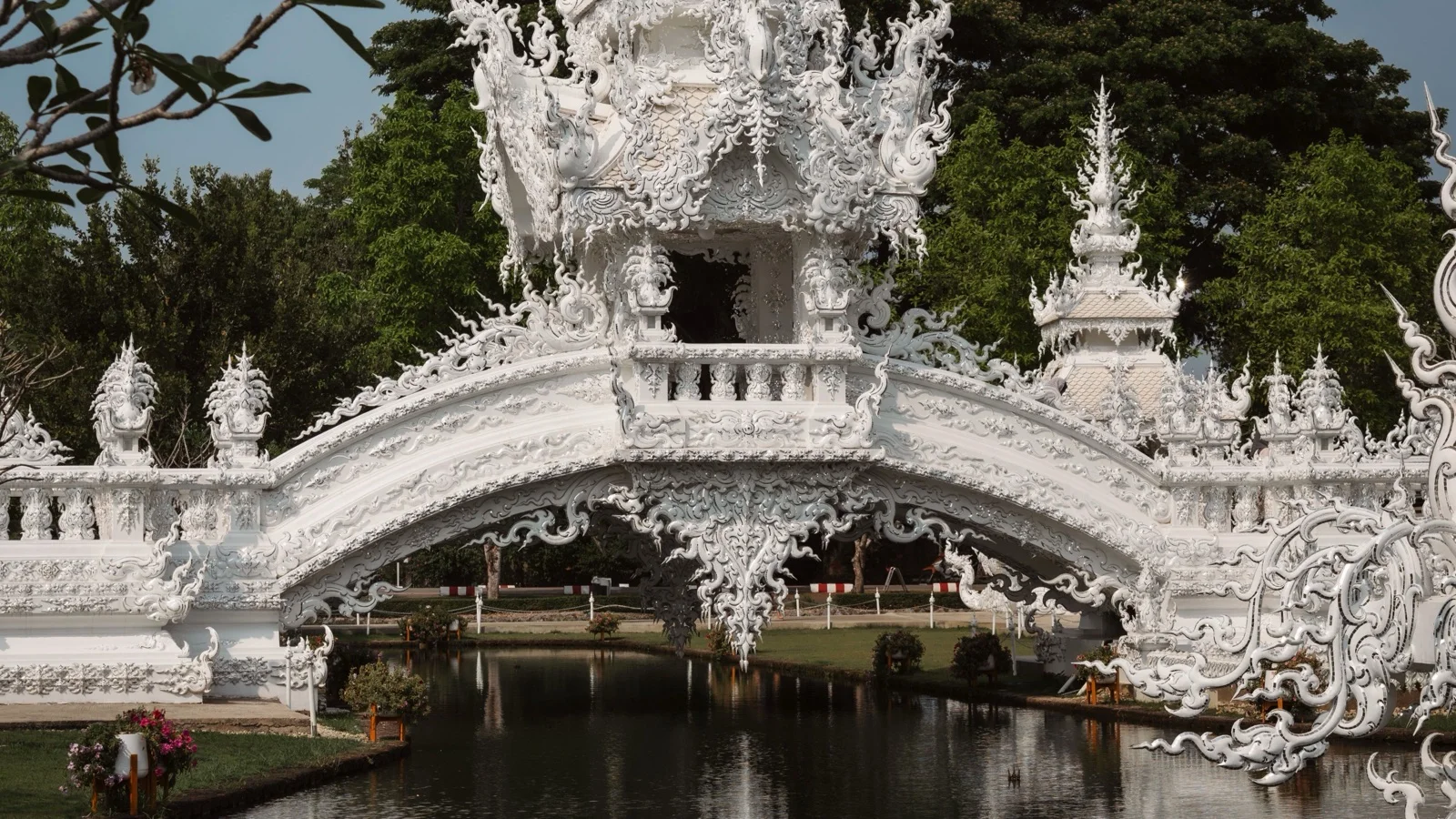
Want the editable version of this route?
Open the Instaboard template and adapt stops, timing, and notes to fit your trip.
This is Chiang Rai, northern Thailand's small, strange gem: temples like wedding cakes, tea hills, and mountains with a past. Two days is plenty here, if you time it right, because show up at the wrong hour and the famous white temple is forty strangers deep in selfies.
You're going in the sweet spot, November through February: cool, dry air, clear skies, misty sunrises in the hills, and evenings made for eating outdoors.
Day 1
Day one stays close to town: a temple that doubles as an art stunt, tea hills in the afternoon, and a night market for dinner.
Wat Rong Khun
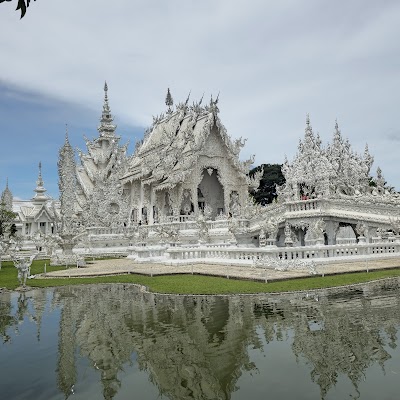
Wat Rong Khun is the white temple on every Chiang Rai postcard, not an ancient monument but a contemporary art project by painter Chalermchai Kositpipat. You reach it across a bridge over a sea of grasping hands, his vision of desire and hell, which makes the queue feel weirdly on theme.
The whole surface is flecked with embedded mirror that flickers as you move, and crisp morning light makes it glint like the building is showing off. Be there at the eight o'clock opening, because tour buses land mid-morning and every photo grows forty strangers.
Cover shoulders and knees despite the gallery vibe.
Tip: Arrive at the 8:00 opening to beat the tour buses and queue only briefly at the bridge. Entry is cash at the gate, and the mirrored facade glitters best in crisp winter morning light.
Boon Rawd farm
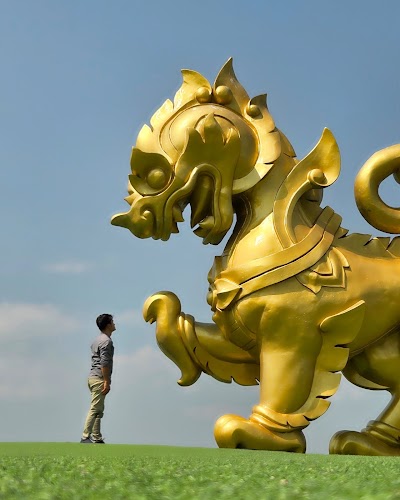
Forty minutes from town, Boon Rawd Farm is rolling tea terraces owned by the family behind Singha beer: your lager and your oolong, same house. It's the breather the day needs, because after all that white mirror your eyes want empty green, and this is the emptiest green around.
Tea tasting is free and ziplines hover over the rows, though they shut early, so lock in your driver's pickup before you wander off. On a weekday the terraces feel nearly private, wind moving across the rows like the whole hill is exhaling, so stay until the light runs out.
Tip: Hire a taxi or songthaew for the 40-minute ride and allow time to walk the terraces. Tea tasting is free, ziplines close early, and a warm layer helps on breezy winter afternoons.
Chiang Rai Night Bazaar
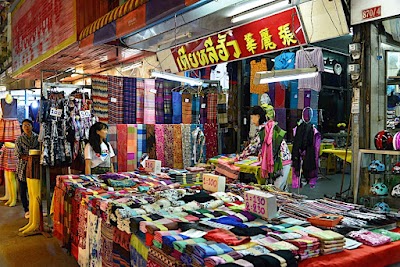
Back in town, dinner is the Night Bazaar: street-food and handicraft rows a short walk from the center, happening every single night of the year. It is less an attraction than a habit with a stage attached, all grill-cart smoke, textiles glowing under string lights, and a free cultural show amplifying over your noodles.
The show's benches fill first, so claim one early, and keep small bills handy because plenty of stalls are still cash-only. Do one full lap before you buy anything, because tourist-town pricing is real; all the best calls here get made at grill-cart eye level.
Tip: Walk here from the city center after dark and graze the street-food stalls. Many vendors are cash-only while bigger restaurants take card, and the free hilltribe show runs nightly, so grab a bench early when weekend crowds swell.
Day 2
Day two goes wide: up a mountain that traded opium for forest, then down to the river where three countries touch.
Wat Phra That Doi Tung
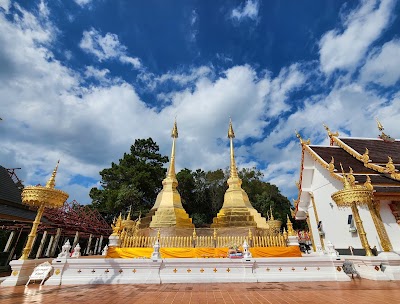
Wat Phra That Doi Tung is a mountaintop pilgrimage stupa at real altitude: a winding climb, mist on the ridge, and a terrace aimed at Myanmar and Laos. The real story is turnaround, because the Princess Mother's Doi Tung project swapped this mountain's opium fields for forest, and the view is the evidence.
Leave by seven-thirty, because the climb is ninety winding minutes and you want the mist still peeling off the ridge when you arrive. Up top it's cold wind and incense, mist lifting as the morning warms, and Thailand occasionally remembers it has mountains.
Tip: Depart Chiang Rai by 7:30 for the winding 90-minute transfer up the mountain. Mist usually burns off mid-morning, and in winter you will want a warm layer at the exposed stupa terrace looking toward the Myanmar and Laos borders.
Golden Triangle
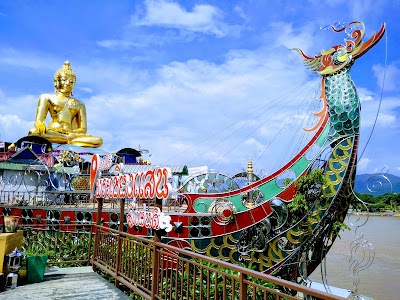
The Golden Triangle is where Thailand, Myanmar, and Laos meet on one brown river; stand on the bank and you read the other two like captions. The name comes straight from the opium-trafficking era, so it promises noir, but the reality is a landscaped park, a giant golden Buddha, and souvenir stalls.
Time it for late afternoon, because the west-facing banks catch soft light before sunset and the midday crowds have already bused home. Long-tail boats putt across to the far bank for a few hundred baht, so settle the price on shore, before your feet leave Thailand.
Tip: Continue down the loop to the river confluence marker. A short long-tail boat crossing costs a few hundred baht cash at the riverside gate, and the west-facing terraces catch soft golden light in the hour before sunset.
Hall of Opium Golden Triangle Park
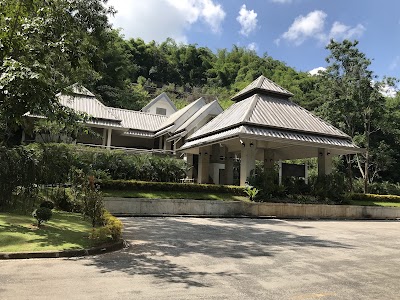
The Hall of Opium is the one museum here worth scheduling: opium's whole history, from ancient remedy to trafficking, told on the ground where it happened. You enter through a dim tunnel, museum design fully committed to the bit, and surface about an hour of dark, quiet history later.
Built under the Mae Fah Luang Foundation, it retroactively explains your whole day: the Golden Triangle's name, Doi Tung's forests, the calm riverbank. Only the clock can hurt you here, because last entry lands mid-afternoon and that gate is real, so plan the day backward from it.
Tip: Buy your ticket at the entrance, no advance booking needed, but confirm opening hours since last entry is mid-afternoon. The air-conditioned galleries make a cool retreat, and the walk-through tunnel takes about an hour.
What to book ahead
- Book Chiang Rai accommodation near the city center (2-3 weeks in advance) - Cool season is peak; night-bazaar-area hotels fill first
- Reserve a private driver or small-group tour for the Day 2 loop (1 week in advance) - Confirm a 7:30 departure to fit Doi Tung, Golden Triangle, and the museum
- Check opening hours for Hall of Opium and Doi Tung (Before the trip) - Hours shift seasonally and last entries can be early afternoon
- Arrange airport transfer and first-night dinner plan (Day before arrival) - Night Bazaar stalls peak between 18:00 and 21:00
What to pack
Essentials
- Warm layer or light jacket - Cool-season mornings on Doi Tung and at Phu Chi Fa can drop below 15C
- Temple-modest clothing - Shoulders and knees must be covered at White Temple and Doi Tung
- Cash in small bills - Entry fees, songthaews, market vendors, and boat rides are largely cash-only
- Sunscreen and sunglasses - Winter skies are clear and UV is strong at altitude and on the river
Nice to have
- Motion-sickness tablets - The Doi Tung road has long winding switchbacks
- Polarizing filter - Cuts glare on the White Temple's mirrors and the Mekong viewpoints
- Reusable water bottle - Long driving day with limited refill stops on the loop
Final take
That's Chiang Rai: a small town that turned opium money into frosting-white temples, beer money into tea hills, and a lawless legend into a quiet river view.
Plan this trip
Turn this guide into an editable trip plan
Open the route in Instaboard, adjust the stops, and share the itinerary with your travel group.