Travel Guide
Chongqing 3-Day Itinerary: Monorail Through a Building, Hongyadong Nights & Dazu Rock Carvings
Want the editable version of this route?
Open the Instaboard template and adapt stops, timing, and notes to fit your trip.
Imagine a city built straight up a mountainside, where the train goes through an apartment building and nobody considers that strange. Three days gets you the train-through-a-building, cliff trails, and a golden stilt city glowing over the river, as long as your timing holds.
I came in autumn and the skies actually cleared, which matters here. This city lives in its layered night views and river panoramas.
Day 1
Today is the day Chongqing explains itself: a train through an apartment, a city walked in staircases, and the golden stilt building at the end.
Liziba Filling Station
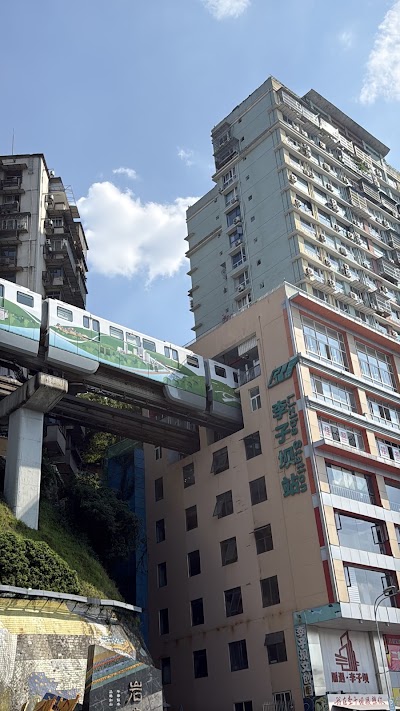
First, Liziba: the spot where a monorail slides straight through the fifth floor of an apartment block, because flat ground here is a rumor. Stand at street level and a full train passes a few meters from someone's balcony, the clearest one-shot explanation of how this city works.
The rumble arrives before the train does, and locals don't even glance up; they've watched it pass their laundry a dozen times a day for years. Watch one train pass, then ride Line 2 through the building yourself.
Morning means thinner crowds and softer light before the phones show up.
Tip: Watch monorail Line 2 slice straight through the apartment block from street level. Take the metro to Liziba station and stand at the track viewing spot; trains pass every few minutes.
Shancheng Trails
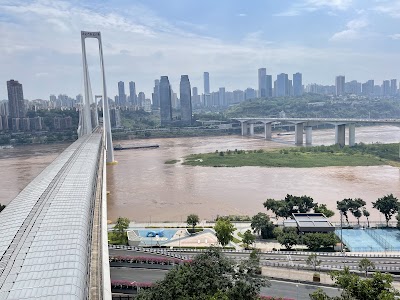
Next, the Shancheng Trails. Chongqing's called the Mountain City, and this cliffside network of old lanes and stairs is where you feel that in your legs.
In most cities a trail is a detour; here it's infrastructure. These stair-paths moved the city before cable cars and twelve-layer roads existed.
You'll share the stairs with locals carrying groceries uphill, past fortress remnants, with river wind on the terraces and a megacity humming just below. Head west for the gentler stairs, bring a layer for the windy terraces, and the walk lands you riverside right around dusk.
Tip: Cliffside walk linking old lanes, forts, and river terraces above the Yangtze. Walk east to west for gentler stairs and bring a layer for windy autumn terraces.
Chongqing Hongyadong (Northwest Gate)
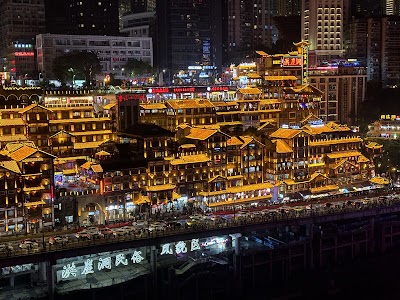
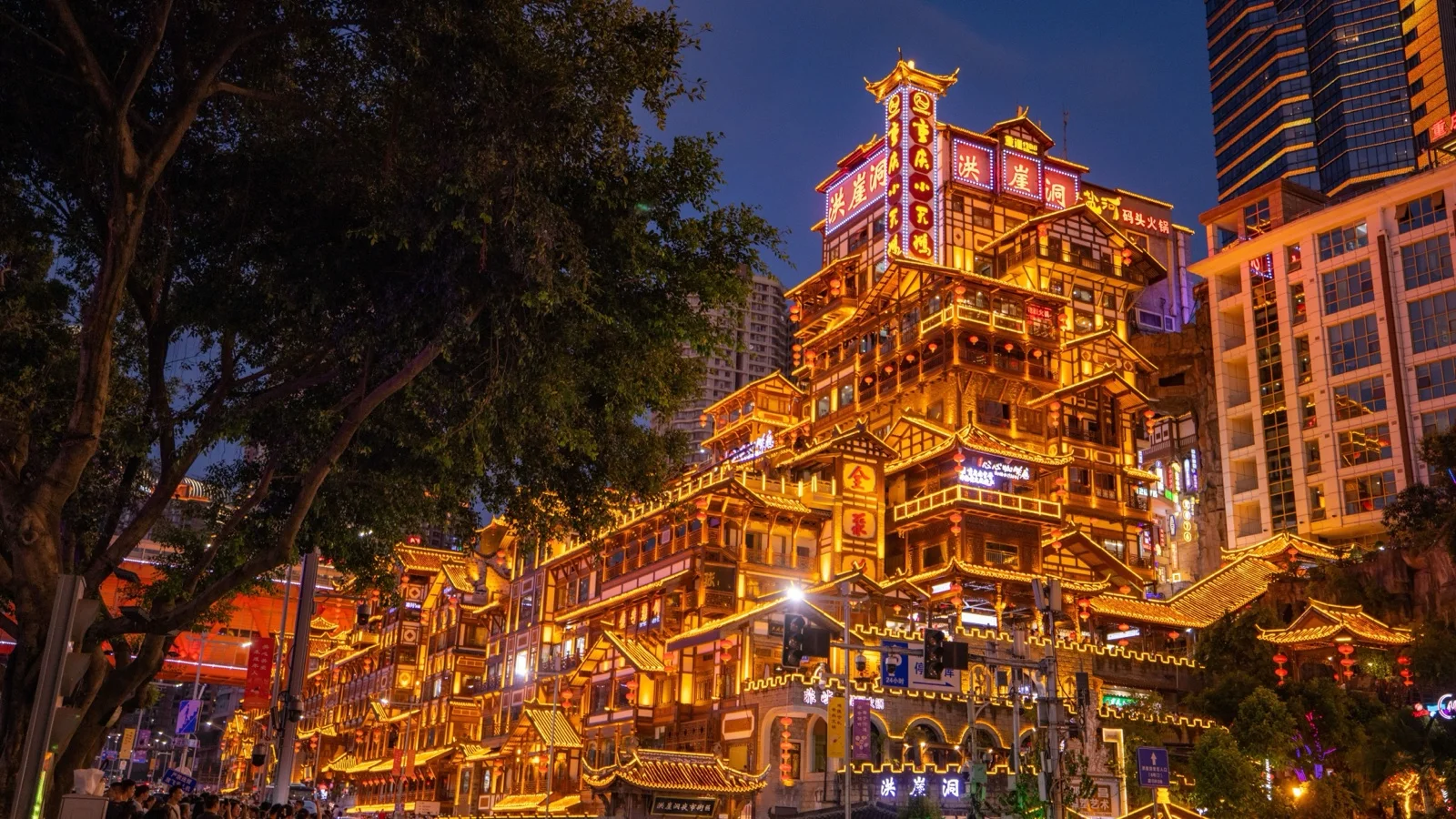
This is the Chongqing from the photos: Hongyadong, a stack of stilt-style buildings glowing gold over the Jialing River, less building than special effect. It's an old regional form, the diaojiaolou stilt house, rebuilt as an eleven-story shopping and dining complex: ancient silhouette, modern mall logistics.
The outside is the attraction; inside it's shops and snack stalls. Take it in from the gate bridge and the far bank first, then wander.
Show up about forty minutes before sunset. You'll catch daylight on the facade, watch the lights come on, and claim bridge space before the crush.
Tip: Stilt houses glowing gold over the Jialing after dark. Arrive forty minutes before sunset to beat the crowd at the gate bridge; expect queues for elevators later.
Day 2
Today opens quieter and climbs: carved guild halls by the river, a horizontal skyscraper above the docks, and a sunset cruise past the whole glowing skyline.
Huguang Guild Hall
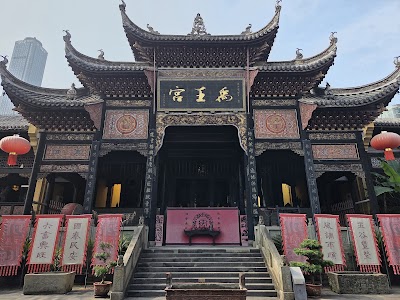
Morning starts at Huguang Guild Hall, a Qing-era complex of merchant clubhouses, all carved wood and open-air opera stages, sitting calmly beside the Yangtze. A guild hall was a clubhouse for merchants from the same home region, and migrants built these to keep hometown ties alive while doing business here.
After yesterday's neon, the quiet is the point: river breeze through wooden galleries, carved eaves, and towers looming overhead like they're waiting politely. Mornings can feel almost private, so give it a slow ninety minutes.
If a combined ticket's offered at the gate, it's usually the sensible buy.
Tip: Qing-era merchant guild halls with carved opera stages beside the Yangtze. Buy the combined ticket at the entry gate; morning visits are quietest before tour groups arrive.
Raffles City Chongqing
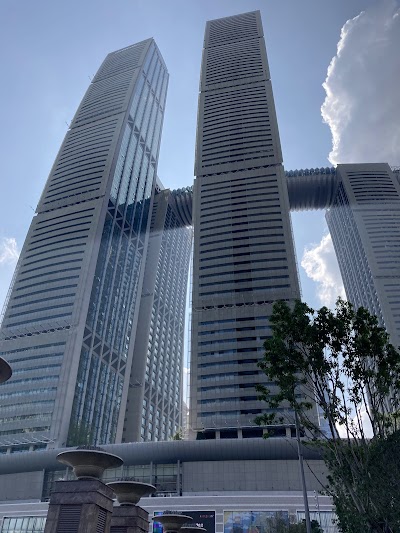
Then, Raffles City: a cluster of towers over the Chaotianmen river curve, joined at the top by a horizontal skyscraper laid across their roofs. The Exploration Deck sits 250 meters over the river bend, and looks down on both rivers and the skyline you've been walking through all day.
This is where the city's geometry finally clicks: the river bend, the clifftop sprawl, the towers climbing every surface, all of it at once. Book the Exploration Deck online before you go, because sunset slots and the walk-up line both get ugly at exactly the hour you want.
Tip: Horizontal skyscraper over the Chaotianmen curve with a 250m viewing deck. Book the Exploration Deck in advance online to skip the ticket line at busy sunset hours.
Chaotianmen Dock
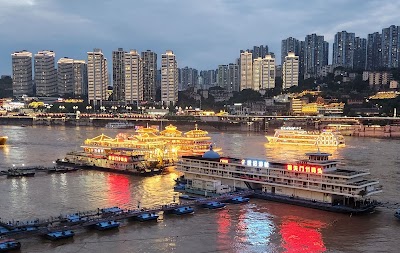
Finish at Chaotianmen, the city's historic front door: a monumental stairway down to the docks where the Yangtze and Jialing collide. The two rivers carry different sediment, so you can literally watch a color line where they meet, flowing side by side before they agree to mix.
For centuries, officials, merchants, and migrants arrived by boat right here; now it's stone steps, river wind, boat horns, and cliffs holding up a metropolis. Sort your sunset cruise ticket early in the day, walk the stairs before boarding, and remember every step down comes back up after dark.
Tip: Grand stairway plaza where the two rivers meet and night cruises depart. Prebook a sunset cruise ticket early in the day; the stair climb back tests tired legs.
Day 3
The last day is the heavyweight: a morning among ninth-century cliff carvings, then a finale in the neighborhood where Chongqing actually eats.
Dazu Rock Carvings
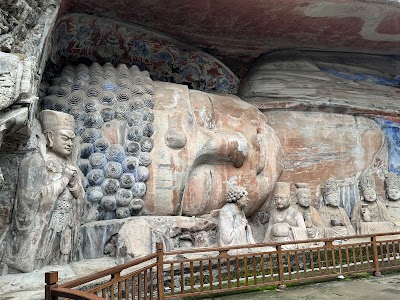
Dazu is a UNESCO-listed gallery of cliff sculptures carved between the ninth and thirteenth centuries, easily the most extraordinary thing within day-trip range. The Baodingshan site wasn't gathered into a museum; it's carved into a living cliff as one walkable devotional sequence, readable scene by scene.
Look for the colossal reclining Buddha and the golden thousand-hand Guanyin; figures sit at eye level in niches, close enough to study the pigment. Start early and prebook your bus or driver, because Baodingshan is over two hours out each way.
A late start turns the day into transit.
Tip: UNESCO cliff sculptures at Baodingshan, the strongest day trip from the city. Book a direct bus or private transfer in advance; confirm opening hours and start early.
Guan Yin Qiao Hao Chi Jie Parking Garage
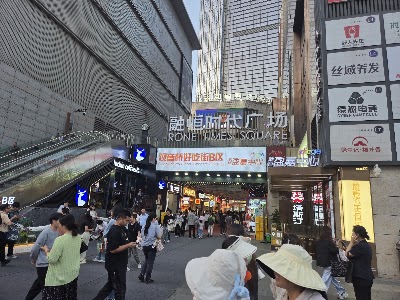
Tonight, Guanyinqiao, across the river in Jiangbei: the dining district where locals actually eat, built on appetite instead of itineraries. Yes, the famous food street's address is technically a parking garage, which is somehow perfect here.
This city hides its best food inside unexpected buildings.
After dark it's chili broth boiling, Sichuan pepper numbing the air, plastic stools, clatter, and whole streets glowing: the full sensory finish.
Order the numbing-and-hot broth at least once, take the spice warnings seriously, and ask for milder when you order. The heat doesn't renegotiate later.
Tip: Local dining district in Jiangbei with beloved hotpot houses and night-market energy. Take the metro to Guanyinqiao, then walk the side streets off the main plaza.
What to book ahead
- Book Raffles City Exploration Deck tickets (2-3 days before Day 2) - Online advance purchase skips the on-site queue for the 250m deck.
- Arrange Dazu day trip transport (3-5 days before Day 3) - Reserve a direct bus or private transfer and confirm Baodingshan opening hours.
- Reserve a farewell hotpot table (1-2 days before final evening) - Guanyinqiao and Nanbin Road hotpot houses fill up on weekends.
- Set up transit QR / ropeway payment (On arrival) - Metro and the ropeway accept transit card or mobile QR; cash rarely needed.
What to pack
Essentials
- Comfortable walking shoes - Chongqing is a vertical city; expect stairs and steep lanes all day.
- Light jacket or layers - Autumn evenings by the river and on hilltop lookouts get cool and windy.
- Portable charger - Heavy use of maps, metro QR codes, and night photography drains batteries fast.
- Cash in small notes - Some street-food vendors and older ticket counters still prefer cash over card.
Nice to have
- Tripod or phone gimbal - Night panoramas at Hongyadong and Nanshan benefit from stable long exposures.
- Compact umbrella - Autumn in Chongqing can bring sudden drizzle without much warning.
Final take
By the end, Chongqing isn't a name anymore. It's trains through apartments, stairs for streets, rivers that refuse to mix, and chili broth with friends.
Plan this trip
Turn this guide into an editable trip plan
Open the route in Instaboard, adjust the stops, and share the itinerary with your travel group.