Travel Guide
Damyang 2-Day Itinerary: Bamboo Forests & Autumn Foliage in Korea
Want the editable version of this route?
Open the Instaboard template and adapt stops, timing, and notes to fit your trip.
Damyang is a small county in Korea's southwest where the bamboo grows thick enough to swallow whole neighborhoods, and the trees turn burnt orange for about two weeks a year. The tricky part is timing. Show up a week early or a week late and you miss the foliage, pick the wrong hour at the bamboo forest and you're walking behind a conga line of selfie sticks.
Autumn here runs October through November, temperatures sit around eight to eighteen degrees, and the whole county shifts between emerald bamboo and amber canopy. It is comfortable walking weather with a deadline attached.
Day 1
Day one is a walking day. Expect bamboo forest, an old-growth riverside grove, and noodle soup on a terrace before the sun drops.
Juknokwon
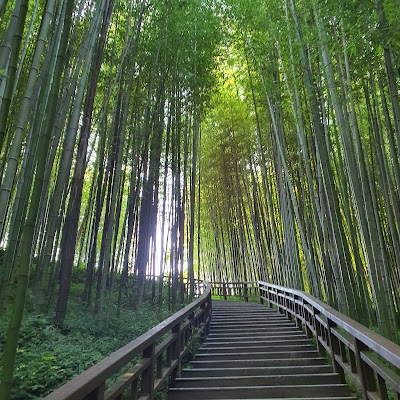
Juknokwon is Damyang's flagship bamboo park: a hundred-and-sixty-thousand square meters of walking paths opened in 2003. If you've seen a bamboo forest photo from Korea, it was probably taken here. The canopy closes overhead and the temperature drops a few degrees the second you step in. Bamboo creaks like a ship's rigging, light comes through in narrow green bars, and the ground is soft dirt instead of pavement.
Along the paths you'll spot signs measuring 'negative ions.' The forest literally posts its own air-quality scoreboard, which is either reassuring or slightly aggressive depending on which city you flew in from. Get here before nine because the light is best early and the weekend crowds don't wake up that fast. Bring a layer since the bamboo holds cold air like a refrigerator.
Tip: Korea's flagship bamboo forest with 2.4 km of shaded walking paths. Arrive before 9 am to avoid weekend crowds. Bring a warm layer as the forest stays cool.
담양 관방제림
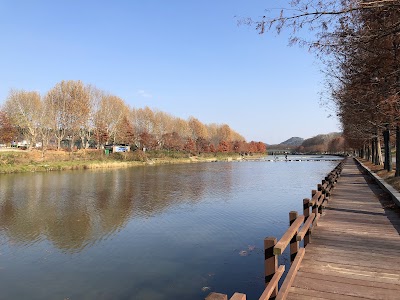
Cross the street from Juknokwon and you're in a completely different forest. Two-to-three-hundred-year-old muku and zelkova trees line the Damyangcheon stream, designated Korea's most beautiful forest by the Forest Service. These trees were planted as a flood barrier, function first, aesthetics later, and somehow ended up one of the most photographed stretches in the region.
Autumn turns the canopy gold and amber over the water. The boardwalk is dry and easy, and the light through those old branches gets warmer the later you stay. No entry fee, no gate. Just walk in and follow the water. If you've got energy left, rent a bike because the stream trail connects to the rest of town.
Tip: Centuries-old riverside nutmeg forest along the Yeongsan River with bike rentals and food stalls. Walk the boardwalk trail and bring cash for the riverside snacks.
담양국수거리
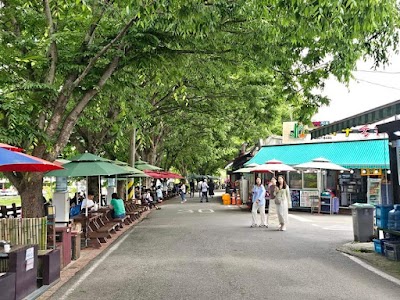
Damyang Noodle Street is exactly what it sounds like: dozens of restaurants along the Yeongsan River all serving kalguksu and pajeon from open-air terraces, competing for your business with view instead of menu variety. A big bowl of anchovy-broth knife-cut noodles runs about five thousand won, a green-onion-and-squid pancake about ten. The competition keeps everyone honest.
Pick whichever place has an open terrace seat facing the water because they're all cooking the same three dishes anyway. The only real decision is how many people end up in your sunset photo. Aim for early dinner around five. The light on the river is the whole point, and some places close between lunch and dinner service so don't drift too far into the afternoon gap.
Tip: Riverside restaurants serving kalguksu and pajeon on terraces overlooking the Yeongsan River. A line forms by noon on weekends. Arrive slightly after the rush for better seating.
Day 2
Day two shifts gears. Start with a sixteenth-century scholar's garden, then hit the main event: a road flanked by dawn redwoods that ignite burnt orange for a fortnight every autumn.
소쇄원
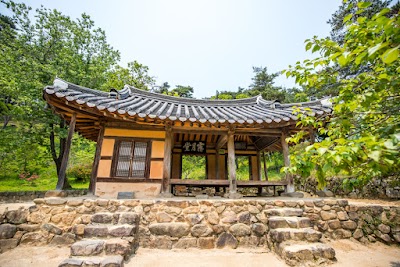
Soswaewon isn't just a garden. A Joseon scholar named Yang Sanbo built it in the 1520s after his mentor was killed in a political purge, and the whole place is essentially his resignation letter written in landscape. The name means 'clear and clean.' He named it that in the 1500s and meant it. Streams run over stones, three pavilions with names like Jewol and Gwangpung, all tucked into a bamboo-shaded valley.
It's small enough to rush in twenty minutes, but sitting in those pavilions by the waterfall is the entire reason you came, so don't treat it like a checkpoint. Morning is the move because the valley catches early light through the bamboo and mist is common. It's a short drive from central Damyang, not walkable, so factor that in.
Tip: Restored 16th-century Joseon scholar's garden with streams and pavilions in a bamboo-shaded valley. Buy your ticket at the gate and linger by the waterfall.
Metasequoia-lined Road
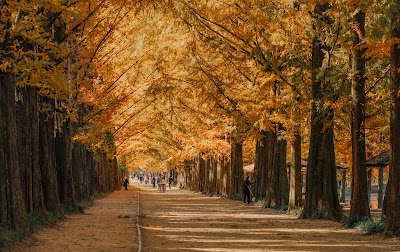
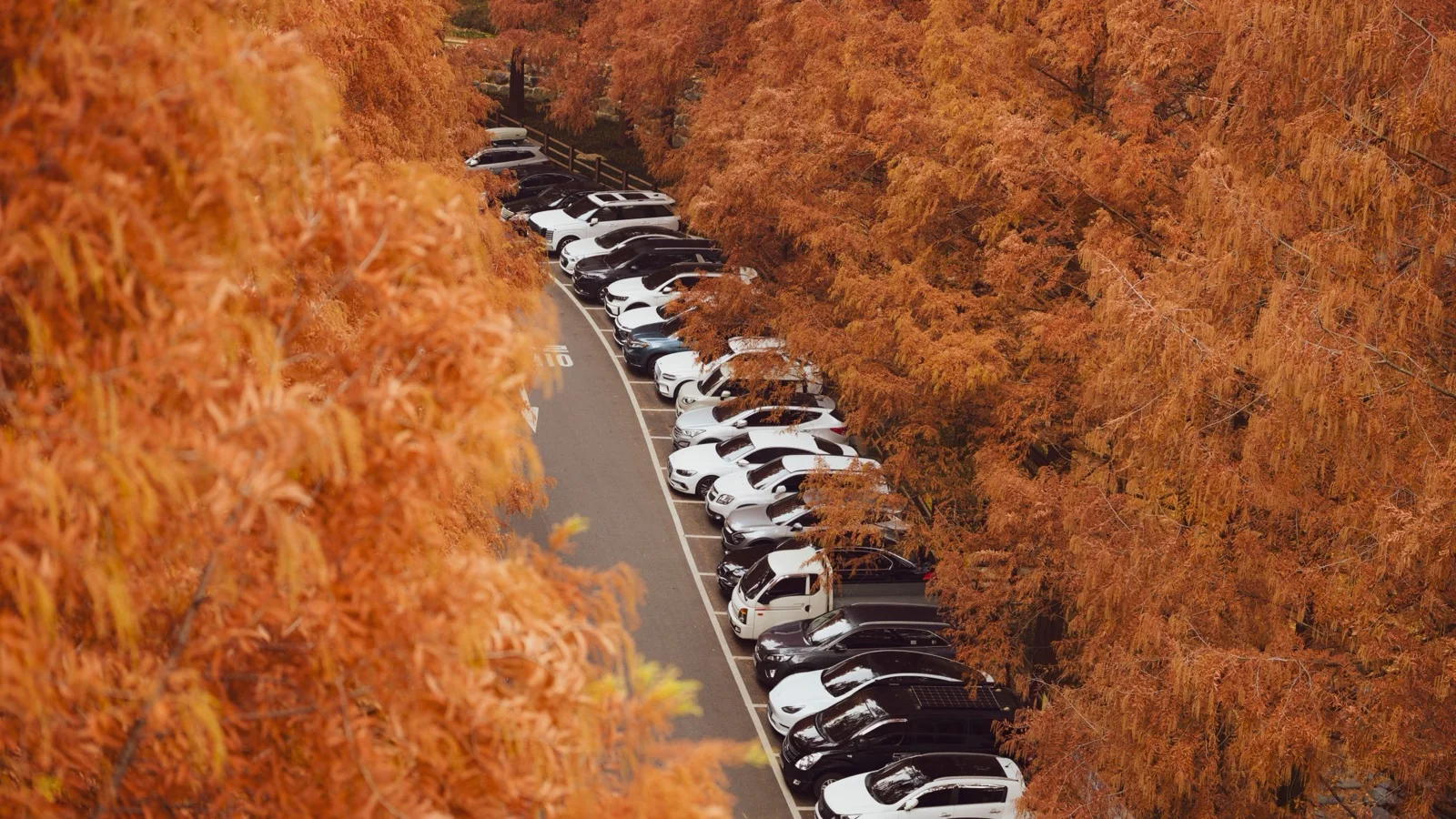
The Metasequoia-lined Road is the shot. Eight and a half kilometers of dawn redwoods, trees that were believed extinct until the 1940s, planted here as municipal street trees in 1972 and now taller than buildings. Late autumn they go burnt orange all at once, roughly late October to mid-November. That two-week window is the entire reason you timed this trip for autumn.
Walk or bike it because driving goes too fast. The scale creeps up on you, and when the low sun hits the canopy from the side the whole road turns into a warm corridor of amber. It's still an active road with traffic, so stay on the shoulders. The county planted these as infrastructure fifty years ago and they accidentally built one of Korea's most photographed places.
Tip: 8.5 km avenue lined with 4,700 dawn redwood trees glowing burnt-orange each autumn. Walk or bike the full canopy and aim for golden hour before sunset.
Meta Provence
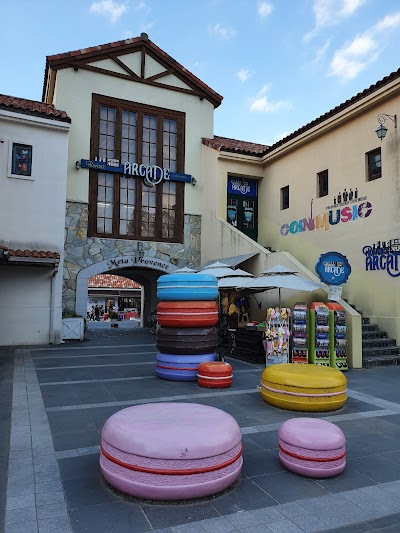
Right at the Metasequoia Road entrance there's Meta Provence: a Provencal-style village with pastel facades, wrought-iron balconies, and lavender props, dropped square into rural Jeolla Province. It's kitsch and it knows it. Warm cafes with espresso smells mixing with the cold autumn air, and honestly after walking all day the contrast between fake France and real Korean mountains is half the entertainment.
Think of this as a wind-down, not a destination. Grab a coffee, use the restrooms, sit somewhere warm and let the day settle before you drive home. Some cafes close by six or seven on weekdays so check before you commit. Forty-five minutes here is plenty if the coffee's good.
Tip: French-inspired pastel village with quirky architecture and cafes adjoining the Metasequoia Road. Check opening hours before visiting, as some cafes are closed on weekday evenings.
What to book ahead
- Book accommodation in Damyang town (2–3 weeks before) - Autumn foliage season fills up fast, especially on weekends
- Check Juknokwon opening hours (1 day before) - Hours may shift in late autumn; confirm on the official website
- Reserve a table at 담양국수거리 (Same day morning) - Popular riverside restaurants can have long waits on weekend evenings
What to pack
Essentials
- Comfortable walking shoes - Damyang's best spots require extended walking on forest trails and garden paths
- Light jacket or warm layer - Autumn temperatures drop to 8–12 °C in the morning and evening
- Portable charger - Full-day sightseeing with heavy photo and map usage drains batteries quickly
Nice to have
- Tripod or selfie stick - The bamboo tunnels and autumn foliage are incredibly photogenic
- Rain jacket - October can see occasional showers; umbrellas are cumbersome on trails
- Reusable water bottle - Stay hydrated on longer hikes around the bamboo trails and fortress paths
Final take
Two days in Damyang and you've walked through bamboo tunnels, sat in a scholar's retreat, eaten noodles by a river, and stood under trees that were supposed to be extinct. All within a county most foreigners have never heard of.
Plan this trip
Turn this guide into an editable trip plan
Open the route in Instaboard, adjust the stops, and share the itinerary with your travel group.