Travel Guide
Danyang, South Korea in 2 Days
Want the editable version of this route?
Open the Instaboard template and adapt stops, timing, and notes to fit your trip.
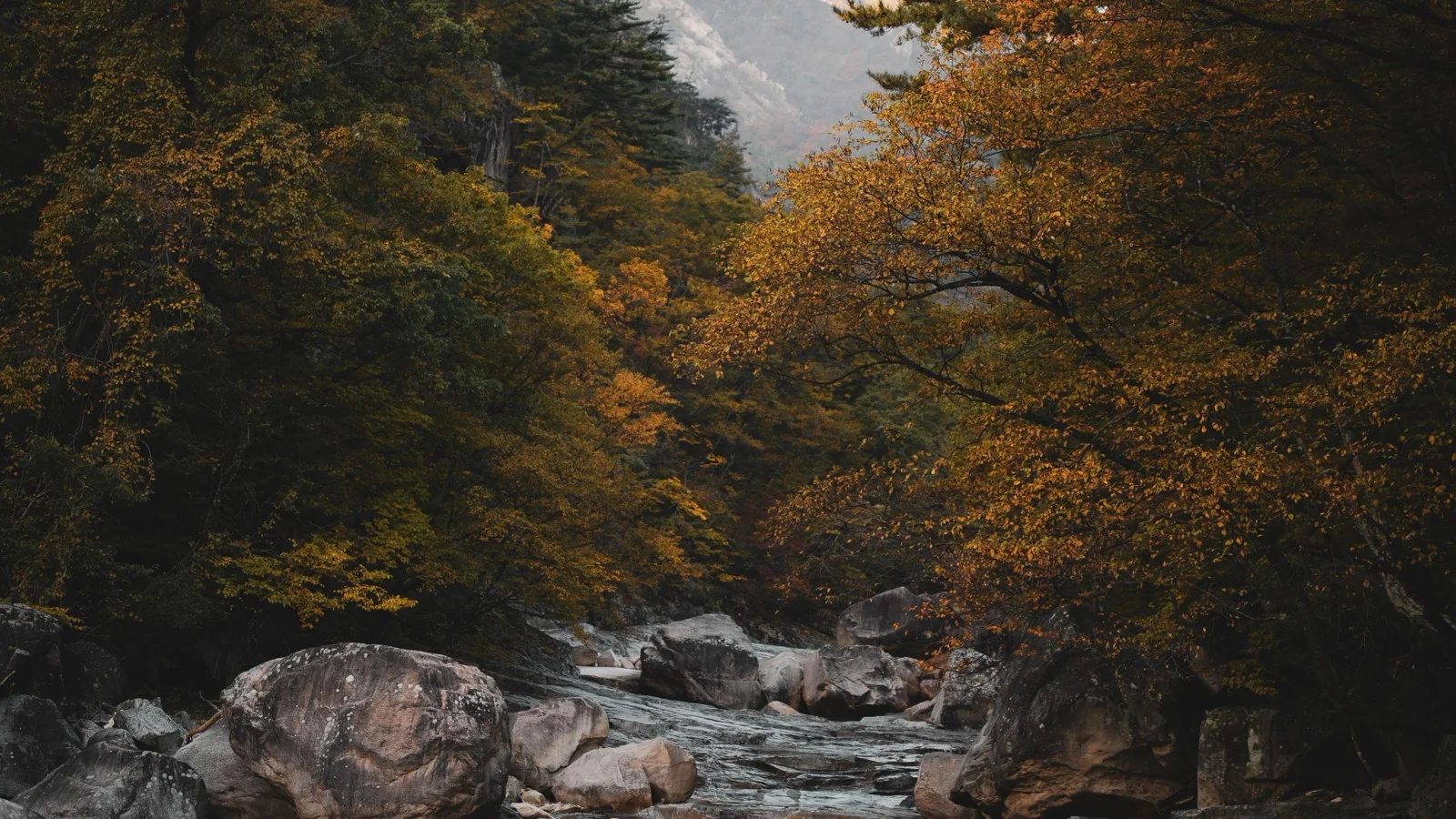
Danyang is this little river town a couple hours out of Seoul where the limestone cliffs just stand straight up in the water, and in autumn the whole valley goes up in red and gold. Two days is genuinely enough here if you know which viewpoints eat your morning and which cave bookings vanish by noon. Here's what's actually worth your time.
Think of this as a leaf-peeping trip with a cave detour and one massive temple. You're chasing peak color along the Namhangang River, and the mornings when mist sits on the water are the ones you'll remember.
Day 1
Day one is the greatest-hits day: three peaks in a river, a limestone cave, and a glass skywalk over the valley. Danyang puts its most photogenic stuff right up front.
도담삼봉 Dodamsambong Peaks
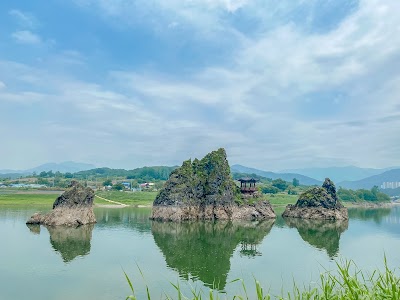
Dodamsambong is Danyang's postcard: three stone peaks standing literally in the river, and it's the first thing every tour bus stops for. The middle peak is the husband, flanked by his wife and his mistress. Korean folklore sentenced all three to stand in that river together forever, which feels about right.
Get there before 9 a.m., because that's when you get the mist sitting on calm green water and the whole scene looks like a scroll painting. After mid-morning the viewing deck fills up fast on weekends. Free and roadside means everyone stops, so the early start isn't optional advice, it's the whole shot.
Tip: Three rock peaks rising from the Namhangang, framed by autumn maples. Arrive before 9 a.m. for morning mist and to dodge weekend crowds; parking is free but limited.
Gosu Cave
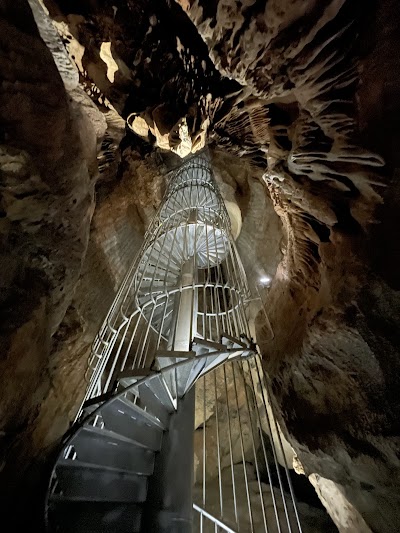
Gosu Cave is the surprise of day one. Danyang's whole show above ground is rocks and leaves, but underneath there's a genuinely massive limestone cave, Natural Monument number 256.
These formations took hundreds of millions of years to build, so you're walking through rock older than any Korean dynasty anyone talks about. It holds about 12 degrees Celsius year-round, which in autumn feels like walking into a refrigerator, so bring a layer because you will be down there a while.
It's a narrow one-way route with metal stairs, and same-day entry sells out on weekends, so book online ahead. The line moves at the speed of the slowest person in front of you.
Tip: One of Korea's finest limestone caves with dramatic stalactites. Book tickets online in advance; same-day entry sells out on weekends. Bring a warm layer as the interior holds near 12 degrees year-round.
Mancheonha Skywalk
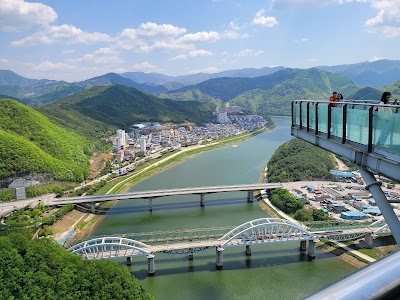
Mancheonha Skywalk is a glass-bottomed deck cantilevered out over the cliff, roughly 80 meters above the Namhangang. You look straight down through your feet at the river.
It's a modern attraction built to monetize a view that was always there, and honestly the view earns it: afternoon light hits the river bend and the fall color laid out below. If glass floors aren't your thing, the solid platform nearby is nearly as good, and the same complex runs a zip-line and alpine coaster if standing still isn't enough.
Prebook online because the entry queue is the real bottleneck on weekends, and double-check hours in shoulder season. That exposed deck is also where you'll want a wind layer.
Tip: Glass-floored deck cantilevered over sheer cliffs with panoramic valley views. Prebook online to skip the queue; the skywalk runs limited hours in shoulder season, so confirm opening times before you go.
Day 2
Day two shifts gears: a sprawling temple stacked up a mountainside, a razor-thin cliff mirrored in the river, and a flat cliffside walk to wind it all down.
Guinsa Temple
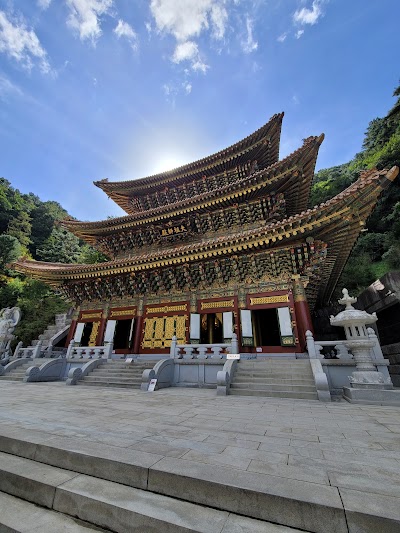
Guinsa isn't some quaint hermitage. It's the headquarters of the Cheontae Buddhist Order, and its buildings cascade up the Sobaeksan foothills in tiers, more resort-scale than temple-scale.
It's modern, founded mid-20th century, and it administers over 140 sub-temples, so if you're expecting weathered ancient stone, this is loud and grand and new, and that's the point. The scale absorbs crowds better than smaller temples, but morning is still when the light hits those tiered roofs head-on and it feels more pilgrimage than tourist stop.
Take the internal shuttle up instead of climbing, and the communal vegetarian kitchen serves a temple meal worth lining up for. The smell alone tells you this place feeds people all day.
Tip: Sprawling terraced temple complex headquarters of the Cheontae Order, nestled in Sobaeksan amid fiery autumn foliage. Take the shuttle bus up and reserve a temple-stay lunch for authentic vegetarian bibimbap.
Oksunbong
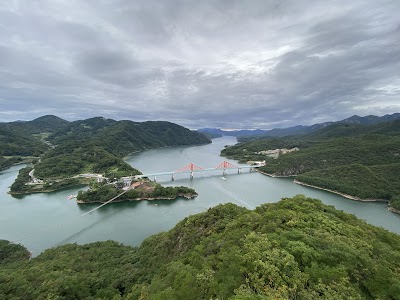
Oksunbong is one narrow vertical slash of limestone beside the river, and on still water it mirrors almost perfectly. It's the knife-edge counterpoint to Dodamsambong's three rounded lumps.
It's part of the Eight Scenic Views of Danyang, a curated greatest-hits list locals have been ranking for centuries, so you're looking at canon, not just a nice rock. Late afternoon is when the cliff face turns gold and the tour buses have usually pulled out, because everyone's already headed to dinner.
Walk the riverside boardwalk to the prime reflection angle. It's free, no gate, and the crowd spreads thin enough that you'll actually get the shot.
Tip: Distinctive needle-shaped cliff peak mirrored in the Namhangang, one of Danyang's Eight Scenic Views. Walk the riverside boardwalk to the best photo angle; sunset light turns the rock face golden and the crowd thins after tour buses depart.
Danyanggang Jando Trail
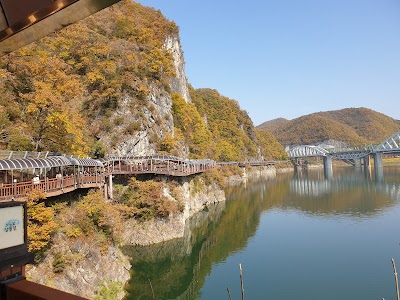
The Danyanggang Jando Trail is a flat walking path bolted onto the cliff above the river, and it's the one place on this trip where you move through the scenery instead of just driving to it. No hiking fitness required.
It's level the whole way, which is rare in Korean scenery, where the good views usually demand a mountain climb. Evening is the window: golden light, cooler air, and the trail thins out as day-trippers vanish, because this is a walk, not a photo stop, and dusk rewards the people who stay.
It does get breezy and genuinely cold fast on an exposed cliff at dusk, so throw on a layer. It's free, ungated, and the easiest decision you'll make all day.
Tip: Flat cliffside walking path above the Namhangang with uninterrupted river and peak views. Wear a layer as the riverside walk turns breezy at dusk; the trail is free with no entry gate.
What to book ahead
- Book Gosu Cave tickets (2–3 days before) - Online reservations required on weekends during peak foliage; same-day often sells out.
- Reserve Mancheonha Skywalk entry (1–2 days before) - Prebook online to skip on-site queues, especially on Saturday and Sunday.
- Reserve Guinsa temple-stay lunch (1 day before) - Vegetarian bibimbap is served in set windows; reserve ahead to guarantee a tray.
- Reserve Danyang rail-bike slot (if adding) (3+ days before for weekends) - Time-specific pedals sell out fast; choose a morning slot for lighter crowds.
What to pack
Essentials
- Light warm layer or fleece jacket - Cave interiors stay near 12°C and riverside evenings turn breezy in autumn.
- Sturdy walking shoes - Cliffside trails, temple stairways, and cave boardwalks require reliable footing.
- Cash (KRW) - Market stalls and some boat-ticket vendors don't accept card payment.
Nice to have
- Travel tripod - Long-exposure river reflections at sunrise and sunset reward a stable shot.
- Portable power bank - Full days of photos, navigation, and booking confirmations drain phone batteries fast.
- Motion sickness pills - Winding mountain roads to Guinsa and Sobaeksan can be rough for sensitive riders.
Final take
Two days here and you've gone from river level to underground to a glass deck 80 meters up, then a temple stacked into a mountainside. Danyang packs more vertical range into a weekend than towns five times its size.
Plan this trip
Turn this guide into an editable trip plan
Open the route in Instaboard, adjust the stops, and share the itinerary with your travel group.