Travel Guide
Delhi in 3 Days: Monuments, Markets & Metro Hacks
Want the editable version of this route?
Open the Instaboard template and adapt stops, timing, and notes to fit your trip.
Delhi packs an emperor's red fortress, India's biggest mosque, and a bazaar louder than both within a short walk of each other. Three days covers this city well if the timing's right, because winter fog and Monday closures will quietly edit a badly ordered plan.
Winter is Delhi's good season: cool, foggy mornings that make monuments pleasant instead of punishing. The one trick is starting after the fog lifts.
Day 1
Day one is Old Delhi at full volume: an emperor's red fortress, the country's largest mosque, and the bazaar that swallowed both.
Red Fort
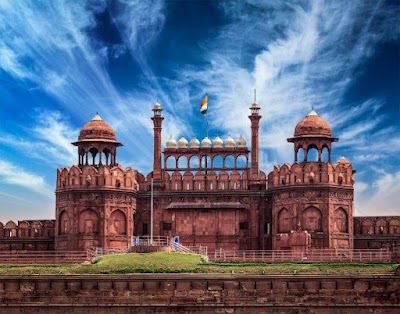
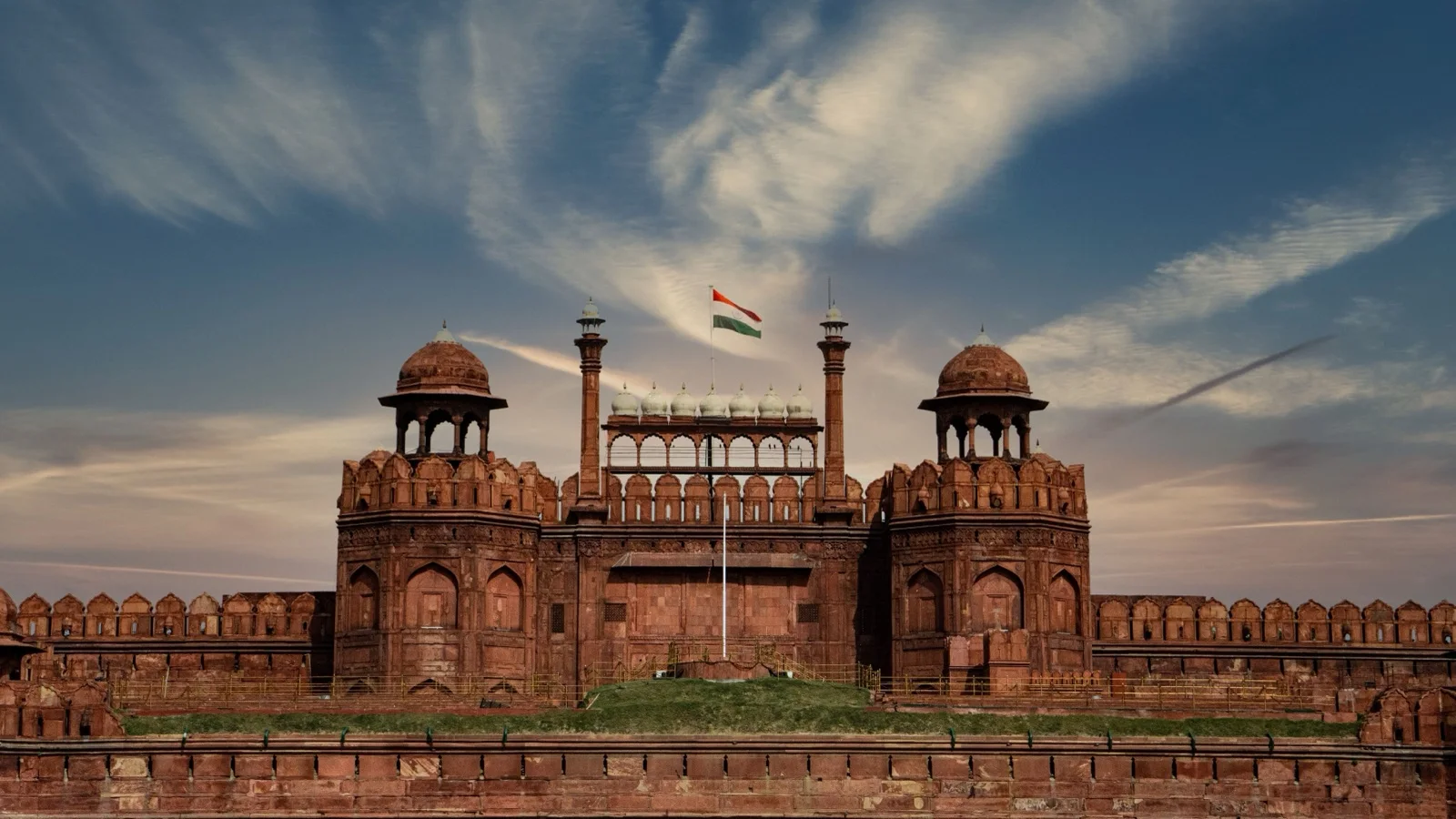
This is the Red Fort, the red sandstone fortress Shah Jahan built when he moved his capital here. It is essentially a walled imperial city in miniature, 1600s power rendered in stone: gates, audience halls, gardens. The Prime Minister still speaks from these ramparts every Independence Day.
There's a certain comedy to standing in a security line for a building whose entire original purpose was keeping people out. Come for the 9:30 opening, when the line stays short and the light stays soft. It's closed Mondays, so book your entry ticket online beforehand.
Tip: Start at opening (9:30 AM) to beat the worst queue; book your ASI entry ticket online in advance and carry photo ID for the gate check. The fort is closed on Mondays.
Jama Masjid
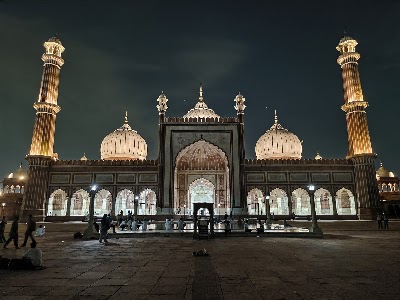
Minutes away sits Jama Masjid, India's largest mosque. Same emperor, same era; the fort ran the empire, this held its soul. It sits on a platform above the bazaar, a calm shelf above the noise, with a courtyard built for stadium-sized congregations.
Climb the south minaret first. It's a tight, one-way spiral, but it's the only place you'll see Old Delhi's rooftops as one tangled blanket. Shoes come off at the gate, and winter stone is cold enough that socks feel like genius, so carry small notes for the shoe desk.
Tip: Climb the south minaret for rooftop views of Old Delhi before the midday crowd builds. Dress modestly, leave shoes at the gate, and keep small cash notes for the camera and shoe fees.
Chandni Chowk
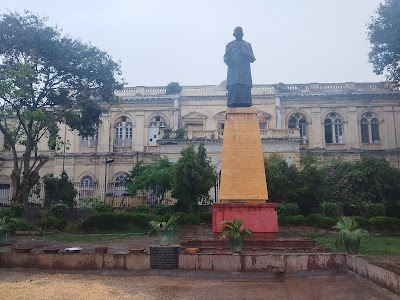
Then the evening goes to Chandni Chowk, the Mughal-era market street that defines what most Indians picture when they say Delhi. Lanes sized for palanquins now negotiate with motorcycles and hand-carts: saffron, silver, wedding gear, all at full volume.
Walk parathe wali gali as the shops light up: frying ghee, spice dust, rickshaw bells, often within the same ten meters. Cards are largely useless here, so carry small cash, and hop cycle rickshaws between the spice and bridal lanes instead of walking everything.
Tip: Walk parathe wali gali and the spice lanes as the bazaar lights switch on. Take the metro to Chandni Chowk station, hop a cycle rickshaw between markets, and keep small cash handy since most stalls take no card.
Day 2
Day two is the grand-geometry side: a garden tomb the Taj borrowed from, a war memorial arch at sunset, and dinner inside a giant white circle.
Humayun’s Tomb
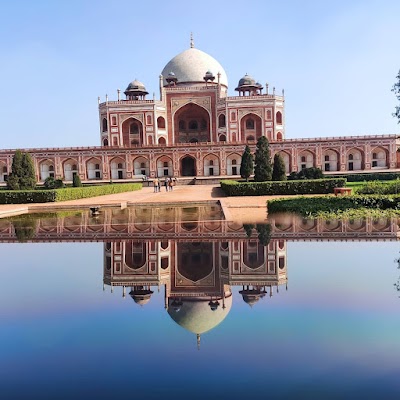
Humayun's Tomb is the garden tomb the Taj Mahal borrowed its blueprint from, built in the 1500s for the second Mughal emperor. Morning fog drifting across the charbagh lawns is Delhi's best photograph; the dome surfaces out of the white like a slow reveal.
It's startlingly quiet two minutes from a main road, and the outer tomb pavilions are where the calm actually lives. Hit the 9 AM opening, because picnickers and photoshoots take the lawns by late morning. If fog swallows the dome, it usually lifts within the hour.
Tip: Reach the gate at the 9 AM opening for soft winter light on the charbagh lawns; book your ticket online in advance to skip the line, and layer up for foggy mornings.
India Gate
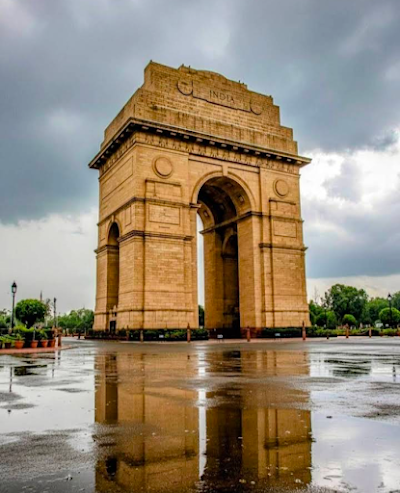
From Mughal geometry to the imperial capital's ceremonial axis: India Gate, a 42-meter arch remembering Indian soldiers of the First World War. The soldiers' names are carved into the stone itself, and the lawns below are Delhi's collective picnic blanket: ice cream carts, kites, kids everywhere.
Late afternoon is the entire point. The arch goes amber at golden hour, then the floodlights snap on at dusk. Take the metro to Central Secretariat and walk in, because the approach down the avenue is half the photo, and mornings here are nearly empty.
Tip: Stroll the lawns along Rajpath as golden hour lights the arch. Take the metro to Central Secretariat and walk the last stretch, staying until sunset when the floodlights come on.
Connaught Place
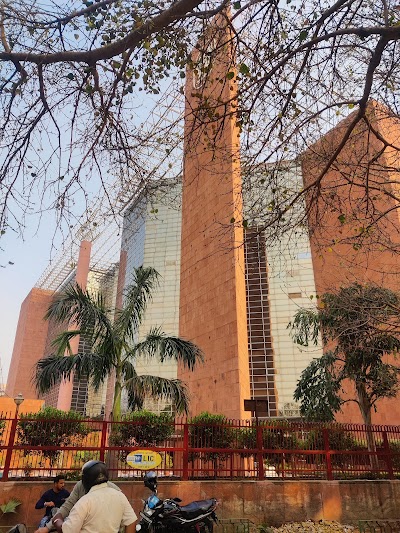
Dinner lands at Connaught Place, a giant white circular arcade the British built as their new capital's centerpiece, and the city never stopped using it. It's a perfect circle big enough to get mildly lost in (bookshops, cafés, neon), and half of Delhi navigates by inner ring versus outer ring.
The empire left, the circle kept trading: buskers in the colonnade, café light on cold stone, the whole city treating it as a front porch. Do one loop on foot, then explore the blocks radiating off the circle, because the interesting shops hide there. Book weekend dinner ahead.
Tip: Circle the white colonnade for cafes, bookshops, and street snacks under the neon ring. Arrive by metro to Rajiv Chowk and book a table ahead on weekends when the crowd swells.
Day 3
Day three goes way back in time, then snaps forward: a 1200s victory tower, a 1980s marble lotus, and a temple that pretends it's ancient.
Qutb Minar
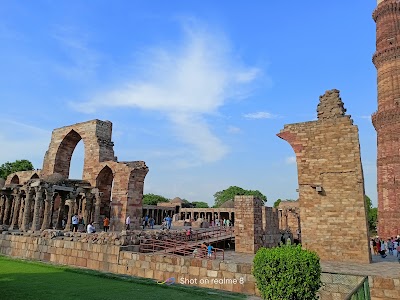
Qutb Minar is a 73-meter fluted stone tower started around 1200 by Delhi's first sultan: a victory announcement, executed in stone. The surrounding archaeological park is a timeline of everyone who came after, with tombs, arches, calligraphy curling up the tower, and parakeets streaking between the ruins.
Find the iron pillar in the courtyard, centuries old and famously unrusted, and know you can only orbit the tower, not climb it. Come at opening because tour buses arrive by late morning, and low winter light makes the carvings readable instead of washed out.
Tip: Arrive right at opening to photograph the 73m tower before the tour bus crowd; book your ticket on the ASI portal in advance and pair it with the neighboring Mehrauli ruins if time allows.
Bahá’í Lotus Temple
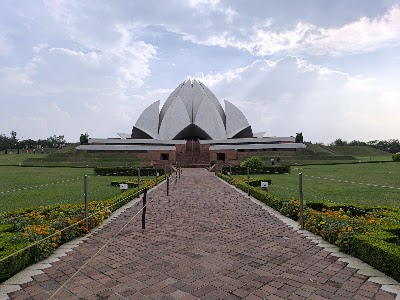
From medieval stone to the Lotus Temple, a marble Bahá'í house of worship shaped like a blooming flower, built in the 1980s and open to every faith. Inside there are no sermons, no icons, no rituals, just petal-shaped vaults, filtered light, and silence, in a city that sells everything except that.
The line outside is Delhi's formal rebuttal to all that quiet, so reserve the free entry slot online or it can eat your entire midday. Treat it as meditation rather than sightseeing; forty-five minutes is plenty. It's another Monday-closed one, like the Red Fort.
Tip: Reserve your free entry slot online in advance to skip the midday queue, and check the closed days (Mondays) before you go; keep bags small and phones silent inside the marble prayer hall.
Swaminarayan Akshardham
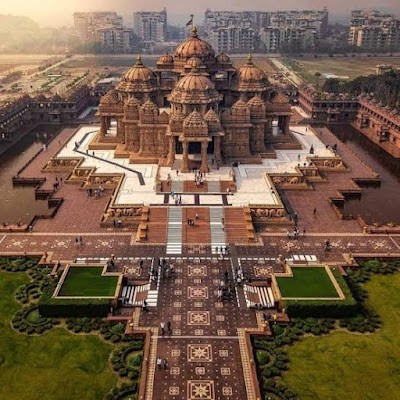
The finale is Akshardham, a colossal carved-stone Hindu temple complex that looks a thousand years old and opened in 2005. Armies of artisans carved it by traditional methods (heritage engineering on demand), and the scale genuinely needs walking to believe.
It rewards the back half of the day: exhibitions first, the temple glowing at dusk, then the water show after dark. Phones and cameras are banned inside, so leave them at the hotel. The trip's most photogenic building survives only in memory.
Tip: Reserve exhibition tickets online in advance, arrive before 4 PM, and stay for the evening water show. Phones and cameras are banned inside, so leave devices at your hotel or use the lockers.
What to book ahead
- Book ASI e-tickets for Red Fort, Humayun's Tomb, and Qutb Minar (1–2 weeks before trip) - Print or screenshot the QR codes; all three monuments are closed on Mondays
- Reserve Lotus Temple free entry slot and Akshardham exhibition tickets (3–5 days before Day 3) - Akshardham bans phones and cameras inside; plan lockers or leave devices at the hotel
- Book weekend dinner tables in Connaught Place or Hauz Khas (2–3 days ahead) - Popular rooftops and cafes fill fast on Friday–Sunday evenings
- Arrange airport transfer and metro smart card (Arrival day) - Buy an Airport Express smart card for discounted metro rides across all 3 days
What to pack
Essentials
- Warm jacket or layers - Winter mornings sit at 8–12°C with a chill that lingers until noon
- Scarf or muffler - Doubles as head cover for Jama Masjid and Gurdwara visits and blocks morning fog draft
- Comfortable walking shoes - Old Delhi bazaars and monument grounds mean 10k+ steps a day
- Small cash notes - Street food stalls, rickshaws, and shoe/camera fees are cash-only
- Dust mask (N95) - Winter air quality in Delhi can dip into poor ranges
- Portable charger - Metro navigation, UPI payments, and photos drain phones on full days out
Nice to have
- Sunglasses and sunscreen - Winter afternoons can still be bright on open monument lawns
- Reusable water bottle - Staying hydrated between stops; refill at cafes to cut plastic use
- Compact umbrella - Occasional light winter drizzle and morning mist protection
- Camera - Golden-hour shots at India Gate and Humayun's Tomb deserve more than a phone
Final take
Every dynasty that passed through Delhi left stone behind, and three days is just enough to hear all of them still arguing.
Plan this trip
Turn this guide into an editable trip plan
Open the route in Instaboard, adjust the stops, and share the itinerary with your travel group.