Travel Guide
Doha in 2 Days: Museums, Souq Waqif & Desert Dunes
Want the editable version of this route?
Open the Instaboard template and adapt stops, timing, and notes to fit your trip.
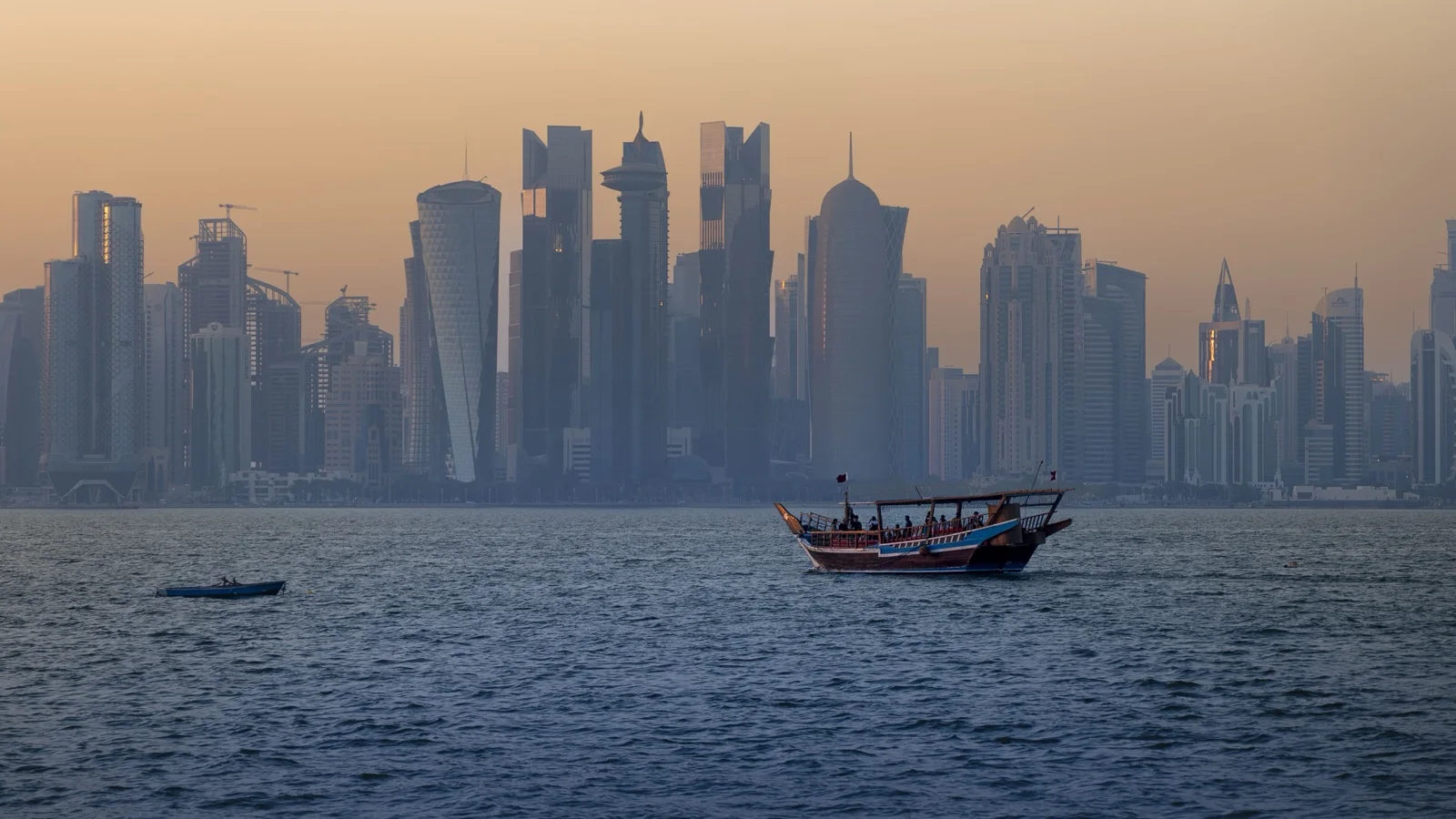
Doha gives falcons their own hospital, sets its famous museum alone on the water, and ends the desert in an inland sea. Two days covers the city, but timing does the heavy lifting: the market's dead in daylight and the desert run only works aimed at sunset.
Aim for December through February, when days sit in the low twenties and evenings run cool. That's the window where museum mornings, souq nights, and a desert afternoon all work.
Day 1
Day one stays in the city: one of the world's great Islamic-art museums, a waterfront lawn with a steel surprise, and a market that wakes when the lanterns come on.
Museum of Islamic Art
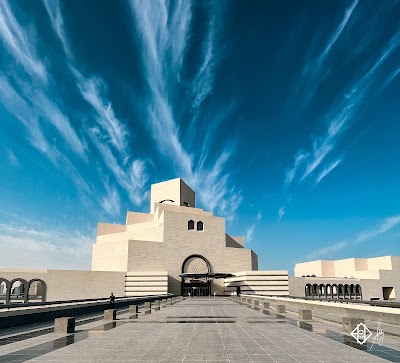
The Museum of Islamic Art holds fourteen centuries of ceramics, metalwork, and manuscripts in a geometric stone fortress that sits alone on its own peninsula. It's by I.M. Pei, the Louvre pyramid guy, who designed it in his eighties and put it in the water on purpose so nothing could crowd it.
Inside it's cool and quiet, with hard geometric light in the atrium and a window of dhows below the glass towers. Yes, you'll photograph the building before the art.
Entry's free but timed. Book online, arrive at opening before the tour buses, and pick your highlights, because two hours doesn't cover fourteen centuries.
Tip: Book the free timed-entry ticket online in advance to skip the queue, then arrive at opening to beat the tour-bus crowds; rotating special exhibitions ticket separately.
MIA Park
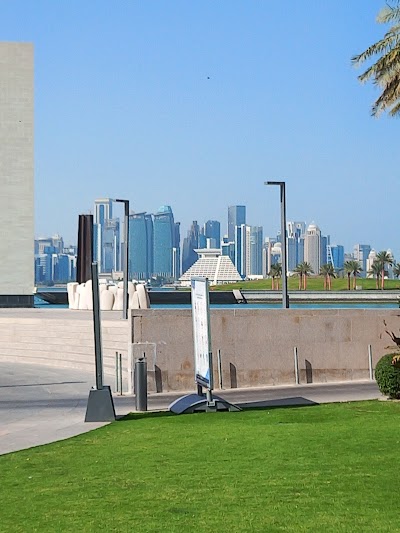
MIA Park is the lawn wrapped around the museum: palms, a dome café, and the best foreground in Doha for the skyline across the water. Walk the crescent to the end for Richard Serra's '7', a lone steel slab at the water's edge, left there on purpose.
Palm shade, sea breeze, and a city that suddenly feels farther away than it is; this is the one season that lawn is actually worth using. The dome café's terrace is the photo perch as the towers light up, but weekend evenings turn the lawn into a family picnic ground.
Tip: Walk the palm-lined crescent after your museum visit; the dome café terrace is the best skyline photo perch, especially near sunset when West Bay glows gold.
Souq Waqif
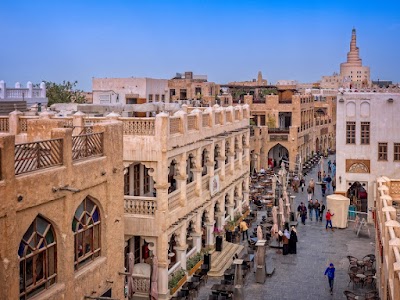
A short walk from the water, Souq Waqif is old Doha's living room, all spice, oud, and grilled meat, rebuilt in the 2000s to look centuries old and pulling it off. The falcon quarter alone is worth the flight: birds on perches in shops, priced like cars, with a working falcon hospital attached, better healthcare than most travelers get.
Get there at dusk for the lantern switch-on and first pick of courtyard tables, because full dark brings the crowds, and weekend dark brings everyone. Slip off the lantern-lit main strip into the falcon, spice, and textile alleys, which are quieter, cheaper, and more the real souq, and carry cash for the stalls.
Tip: Come at dusk when the lanterns switch on; carry cash for the spice and craft stalls, and book dinner in advance because weekend crowds fill the courtyard restaurants fast.
Day 2
Day two chases the desert: a museum shaped like a desert rose, then a long drive south until the asphalt runs out entirely.
National Museum of Qatar
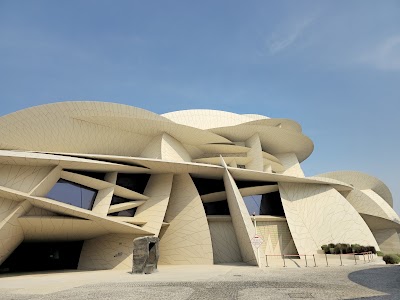
The National Museum of Qatar looks like a pile of giant interlocking discs: a desert rose, the crystal that actually grows in this sand, blown up to building size. Jean Nouvel designed it, and it swallowed the old royal palace on the site rather than demolishing it, the country's past literally sitting inside its present.
The route runs one direction only, from pearl diving to desert life to the oil leap, with discs slanting overhead and films across whole walls; a gallery missed stays missed. Book your timed slot a day or two ahead because weekends tighten, and take the morning, since the afternoon belongs to the desert.
Tip: Book timed-entry tickets online in advance to skip the queue; the gallery route flows one way, so grab a map at the entry desk before starting.
Sealine Sand Dunes
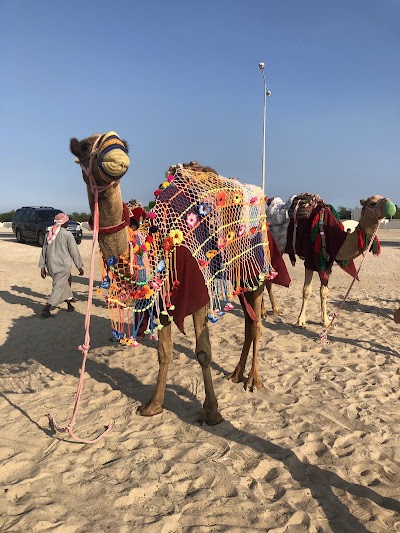
Sealine is where the pavement gives up, an hour south: a strip of cafés and queued 4x4s sitting right at the edge of the sand. The show is the tyre ritual, a row of Land Cruisers airing down at the sand's edge, like a pit lane for a sport played mostly in second gear.
The day changes genre here: engine noise, sand underfoot, a horizon that stops pretending to be flat, and the last snacks and toilets before the dunes take over. Prebook the 4x4 with hotel pickup and confirm the gate time the night before, and leave the driving to the convoy, because soft sand eats ordinary cars.
Tip: Prebook a 4x4 safari that includes dune bashing and an inland-sea transfer; operators pick up from Doha hotels, so confirm your gate time the evening before.
Khor Al Udaid
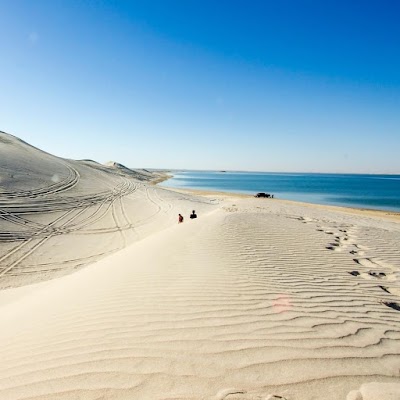
From there the convoy runs the dunes to Khor Al Udaid, the inland sea, where you stand on a wall of sand looking at the ocean it's leaning on. Saudi Arabia sits just over the water, visible but absolutely not walkable, and the sea runs deep into the desert here, with the dunes slowly creeping over it.
You land at sunset, and the payoff is the hush when the engines cut: sand, water, and a landscape that can't decide what it is. One honest warning: the dune run is genuinely violent. Seatbelts are non-negotiable, motion sickness is real, and bring a jacket, because the desert cools alarmingly once the sun drops.
Tip: Tours time the dune run for sunset over the water; layer a light jacket because the desert cools fast after dark, and bring a card for camp extras.
What to book ahead
- Book desert safari with inland sea transfer (3–7 days before) - Confirm hotel pickup, dune-bashing route, and sunset return time.
- Reserve National Museum of Qatar timed tickets (1 week before) - Online advance booking skips the morning queue.
- Reserve MIA timed-entry tickets (2–3 days before) - Free online reservation skips the walk-up queue; some rotating galleries close early.
- Reserve a Souq Waqif dinner table (2–3 days before) - Weekends get crowded; courtyard tables book out first.
What to pack
Essentials
- Light layers - Winter evenings on the Corniche and in the desert cool quickly; a jacket keeps sunset stops comfortable.
- Sunscreen & sunglasses - Low winter sun off the dunes and bay glare demand protection even in mild temperatures.
- Comfortable walking shoes - Souq alleys, museum galleries, and promenade loops mean hours on foot.
- Cash (QAR) - Small souq stalls and street cafés may not accept cards.
Nice to have
- Camera with wide lens - Skyline panoramas and dune-to-sea vistas reward wide framing.
- Scarf or shawl - Handy for sun and wind on dune rides, plus modest coverage in cultural sites.
- Portable power bank - Full-day navigation, safari coordination, and photos drain phones fast.
Final take
Doha sprinted from pearl boats to glass towers, and somehow the quiet beats are the ones that stay: a museum window, lanterns coming on, an empty shoreline at dusk.
Plan this trip
Turn this guide into an editable trip plan
Open the route in Instaboard, adjust the stops, and share the itinerary with your travel group.