Travel Guide
Dubai in 3 Days: Skyline Icons, Old City Lanes & the Jumeirah Coast (Winter Stopover Plan)
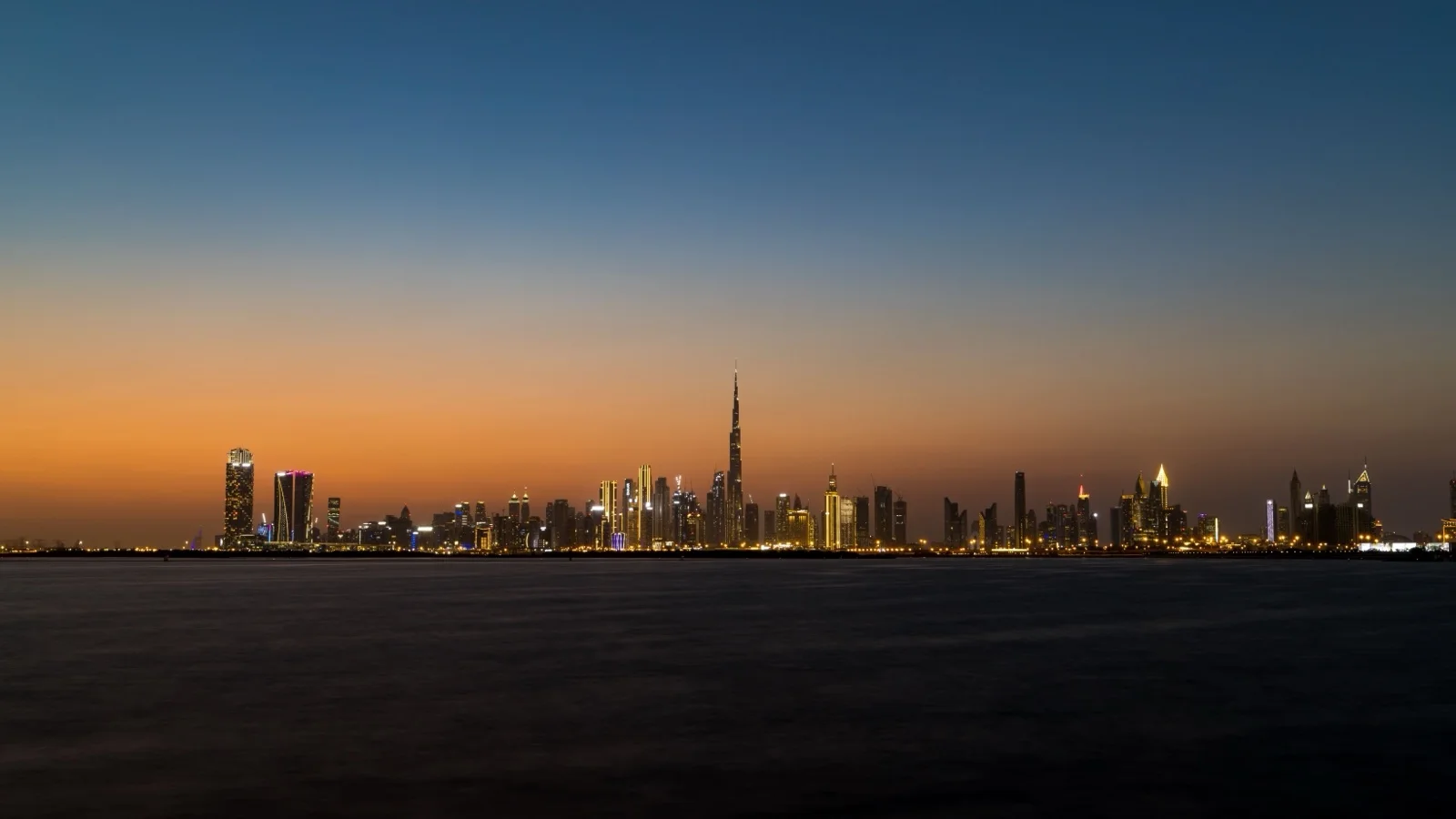
Want the editable version of this route?
Open the Instaboard template and adapt stops, timing, and notes to fit your trip.
This is Dubai, where a pearl-diving creek still runs wooden boats in the shadow of a skyline that looks photoshopped. Three days here can cover both, the glass-and-marble Dubai and the old creek version, if you spend your hours on the right stops.
Winter is the sweet spot here: warm days, cool evenings, the one season where a skyline deck, a heritage walk, and a swim all make sense.
Day 1
Today is the greatest-hits downtown: one very large mall, the world's tallest building, and a lake that dances every half hour.
Dubai Mall
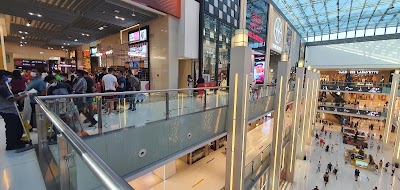
First, Dubai Mall, one of the largest on Earth, planted at the base of Burj Khalifa, and the standard introduction to Dubai the idea. It bundles a giant aquarium tank, a waterfall atrium, and roughly every retail brand on the planet; the scale stops being shopping and becomes civil engineering.
People genuinely get lost in here; the mall hands out maps like a national park, so assume you will be the person holding one. Ride the metro to the Burj Khalifa/Dubai Mall station and give it a lazy afternoon; the aquarium wall and waterfall atrium cost nothing to view.
Tip: Arrive by metro to Burj Khalifa/Dubai Mall station and give yourself at least half a day; the aquarium tank and waterfall atrium are free to view, while add-ons like the VR attractions need separate tickets.
Burj Khalifa
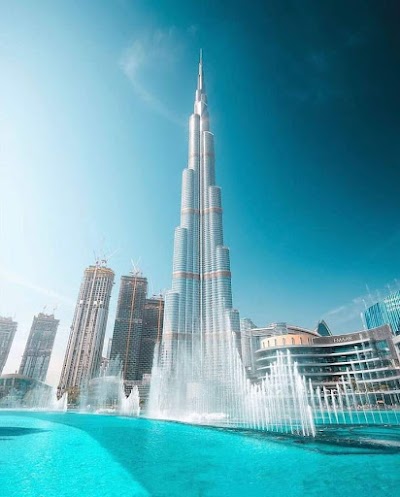
Then there's the Burj Khalifa, the world's tallest building; from the deck you trace the city fading into desert on one side, sea on the other. The elevator ride alone is a legitimate experience: your ears register the ascent before your brain does, then it's glass on all sides and a strange silence.
Prebook At the Top ahead and aim for a sunset slot. Those go first, because one ride buys you day, dusk, and night. Winter is peak visibility, so the desert horizon actually shows up, though the open deck turns windy fast at sundown, so bring a layer.
Tip: Prebook your At the Top ticket online several days ahead for a sunset slot around 5:30 PM; bring a light layer for the open-air deck as evening winds pick up quickly.
The Dubai Fountain
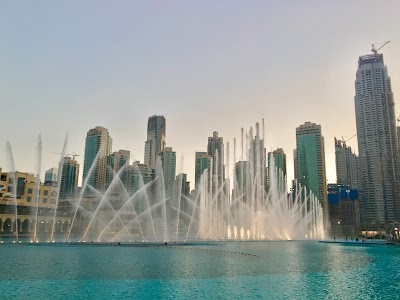
Two minutes from the tower, the Dubai Fountain, a free water, light, and music show on Burj Lake, and this city's default evening ritual. The jets shoot about as high as a mid-rise building, choreographed to music you feel in your chest; a strange sentence, but an accurate one.
Shows run every thirty minutes all evening, like clockwork: engineering applied to pure spectacle, on a lake scaled to match the skyline behind it. Claim a spot on the Souk Al Bahar bridge about twenty minutes early, or pay for the abra and watch from the water; front rows catch spray.
Tip: Shows run every 30 minutes from 6 PM; claim a spot on the Souk Al Bahar bridge 20 minutes early to beat the crowd, or book an abra ride on the lake for water-level views.
Day 2
Now the counterweight: old Dubai, with narrow wind-tower lanes, a fort older than the country itself, and the creek this whole city grew up around.
Al Fahidi Historical Neighbourhood
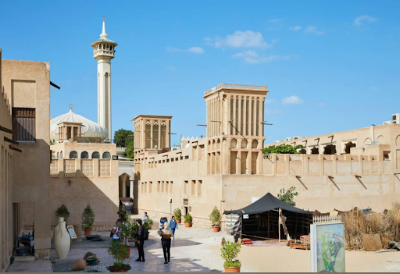
Al Fahidi is the old town, a tight maze of lanes and wind-towered houses, the Dubai that existed before every piece of glass you saw yesterday. The rooftop wind towers were the old air conditioning, built to catch whatever breeze existed; this city solved comfort long before glass did.
Walk it early, before tour groups arrive. The lanes are the whole attraction, and the courtyard cafés and little galleries open around ten. The Dubai Museum sits basically next door, inside the old fort; go, because one small building in there explains the whole neighborhood you just walked.
Tip: Walk the narrow wind-tower lanes early before tour groups arrive; courtyard cafes and galleries open around 10 AM, and the district sits steps from Al Fahidi metro station.
Dubai Museum
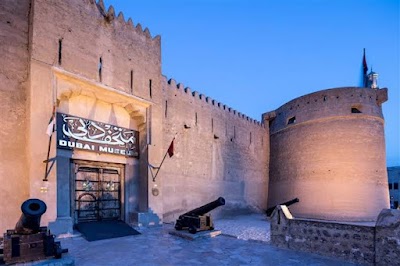
The museum lives in Al Fahidi Fort, built in 1787 to guard the creek; walls so old they predate the country itself. Inside is the fastest timeline in the city: pearl diving, creek trade, then the oil-and-ambition sprint that produced everything you saw yesterday.
Dim galleries, old stone, dioramas. After yesterday's glass and marble, the place reads like the receipts for the skyline. Book timed entry online and keep a little cash; the building is small and fills fast, and it sometimes closes for renovation, so confirm hours.
Tip: Reserve timed tickets online to skip the gate line; cash is easiest at the 1787 fort counter, and an hour comfortably covers the pearl-diving dioramas and multimedia hall.
Dubai Creek
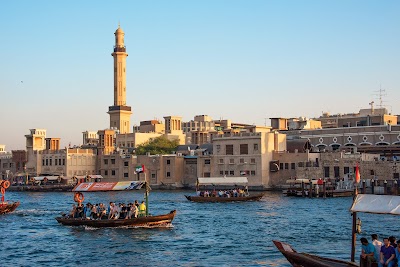
The day ends at Dubai Creek, the saltwater inlet that split the city in two, the water everything else here was built around. Cross it on a wooden abra for about a dirham; boats leave when full, not on a schedule, the most honest transit system in Dubai.
The dhows at the wharves still run trading routes their grandfathers ran: diesel and salt air, cargo nets, the call to prayer drifting across the water. The city sells helicopter tours and gold-plated everything, yet the best ride in town costs less than a bottle of water, so bring a coin.
Tip: Cross on a traditional wooden abra for about one dirham in cash; boats leave the Bur Dubai dock when full, then walk the dhow wharves where cargo has loaded for a century.
Day 3
The last day goes to the sea: a mosque that welcomes outsiders, a resort that rebuilt old Dubai, and a free beach with a famous neighbor.
Jumeirah Mosque
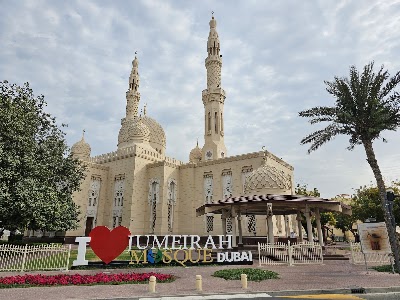
Jumeirah Mosque is the most photographed mosque in the city: stone-white twin minarets and a dome that looks like a render, except people actually worship here. It's also one of the few mosques in the UAE that runs organized visits for non-Muslims, an intentional open door rather than an accident of tourism.
Visits run on fixed morning slots and close Fridays, so book through the Sheikh Mohammed Centre, and treat the guide's Q&A as the actual attraction. The detail that stays with you is the sound: Jumeirah Beach Road traffic on one side of the gates, near-total stillness on the other.
Tip: Guided visits for non-Muslims run on fixed morning hours (typically 10 AM, closed Fridays); prebook through the Sheikh Mohammed Centre and dress modestly with shoulders covered.
Madinat Jumeirah
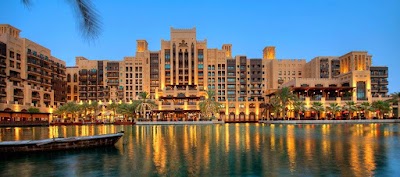
Madinat Jumeirah is a purpose-built canal city: wind towers, souk-style passages, and small abras, a recreation of old Dubai at resort standards. Call it what it is: yesterday's Al Fahidi was the original, and this is the immaculate cover version; same wind towers, wildly different building codes.
It's free to wander, genuinely pretty, and it delivers the classic postcard angle, the sail-shaped Burj Al Arab holding position across the water. Take the canal abra loop past the wind towers for that view, and budget extra walking, because this place is bigger than it looks.
Tip: Entry to the souk-style mall and abra docks is free; taxis drop you at the main gate, and the canal abra loops past wind towers toward postcard Burj Al Arab views.
Jumeirah Public Beach 02 - Walking Board
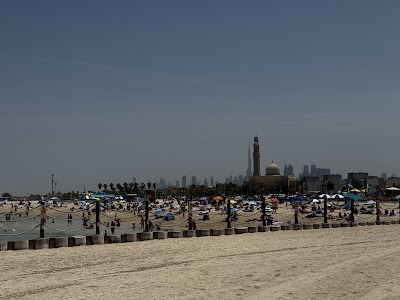
Last stop: Jumeirah's public beach, free white sand, showers and changing rooms on site, and Burj Al Arab standing sentinel just offshore. This is the winter payoff: Gulf water warm enough that swimming is a default, not a dare, with real raked sand underfoot.
Tourists pay hundreds to lunch near that sail-shaped building; from this sand, the identical view costs a swimsuit and a tram ticket. Swim inside the lifeguard hours and mind the flags, then stand in the water a minute, because three days of spectacle should end exactly here.
Tip: The white-sand stretch is free with showers and changing rooms; winter water stays warm enough for swimming, lifeguard hours run until sunset, and Burj Al Arab anchors the horizon.
What to book ahead
- Book Burj Khalifa At the Top sunset slot (2–4 weeks ahead) - Sunset windows sell out first; e-tickets are timed entry, so arrive 15 minutes early.
- Reserve Dubai Museum timed tickets (2–3 days ahead) - Online reservation skips the fort gate line during busy morning hours.
- Reserve Jumeirah Mosque guided tour (3–5 days ahead) - Operated via the Sheikh Mohammed Centre; closed to tours on Fridays.
- Reserve Al Seef creek-front dinner (3–7 days ahead) - Weekend sunset tables facing the water book out fastest.
- Book Dubai Marina dinner cruise (optional) (1 week ahead) - Pickups often include hotel transfer; confirm boarding gate and timing.
- Book desert safari at Al Marmoom (alternative) (1 week ahead) - Only with licensed operators; dune drives close out in peak winter season.
What to pack
Essentials
- High-SPF sunscreen and sunglasses - Winter sun stays intense on open decks, beaches, and desert excursions.
- Light layer or jacket - Evenings on observation decks and the marina get breezy; malls run heavy air-conditioning.
- Modest clothing for the mosque - Jumeirah Mosque guided entry requires covered shoulders and knees.
- Comfortable walking shoes - Old Dubai day covers several kilometers on foot between Al Fahidi, the souks, and Al Seef.
Nice to have
- Swimwear - Winter sea temperatures are comfortable at Jumeirah Public Beach and La Mer.
- Small AED cash reserve - Abra crossings, souk purchases, and small cafes remain cash-friendly.
- Nol card - Tap-and-go card for metro and tram hops across all three days.
- Power adapter (Type G) - UK-style three-pin sockets used across the UAE.
Final take
In three days here you meet both Dubais: the creek town that built the fortune, and the skyline that spends it.
Plan this trip
Turn this guide into an editable trip plan
Open the route in Instaboard, adjust the stops, and share the itinerary with your travel group.