Travel Guide
Geoje 3-Day Island Coast Road Trip
Want the editable version of this route?
Open the Instaboard template and adapt stops, timing, and notes to fit your trip.
Geoje is Korea's second-biggest island, and almost nobody outside Korea has heard of it, which is honestly part of the appeal. Three days here get you a double-decker cable car above an archipelago, a garden island built from bare rock by one couple, and a European castle constructed by a farmer after a typhoon wiped out his land. So the bar for a boring stop is pretty high.
Summer on Geoje is warm, breezy, and built for driving. You will want a car because the island is bigger than it looks, and the best stops are strung along the coast.
Day 1
Day one goes high, then drops you at water level. You start with a cable car ride that shows you the entire island, then wind down to a cliff with a windmill and a beach made of stones.
Geoje Panorama Cable Car
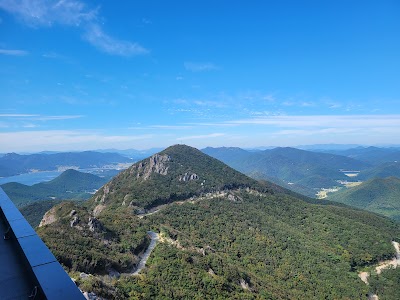
The Geoje Panorama Cable Car runs a double-decker gondola up Nojasan Mountain, and the open-air upper deck is the one you want. The wind hits you directly while dense forest drops away below your feet. At the top, you get 360-degree views of the Hallyeohaesang Archipelago, a national park made almost entirely of sea and scattered green-grey islands fading into haze.
Geoje is Korea's second-largest island after Jeju, but the cable car is really the moment you understand the scale. You are on a giant island surrounded by hundreds of smaller ones. Go early because by midday the base station fills with Busan day-trip groups, and book online ahead of time. The wait at the window on a summer weekend is real.
Tip: Book tickets online in advance to skip the queue. The open-air upper deck delivers 360-degree aerial views over Geoje's coastline and the Hallyeohaesang Archipelago on clear summer mornings.
Windy Hill
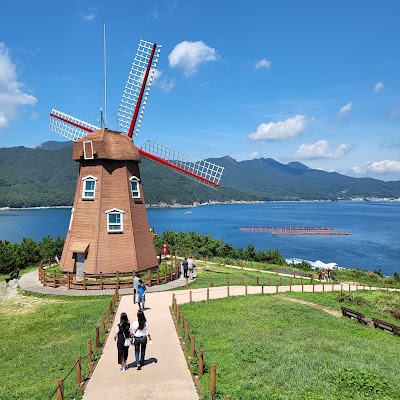
From the summit you head back down to the coast to Windy Hill, a grassy bluff above a fishing village with a single working windmill that looks like someone dropped a corner of Holland onto southern Korea. The panorama sweeps from the pebble beach below to rock islets offshore, and the wind is constant and genuine. Hats leave heads here. The name is not decorative.
Grab a coffee at the shop at the top. The terrace view is the actual attraction, and the soundtrack is waves below, windmill creaking, and K-pop from a speaker nobody can find. Bring a layer even in July. The breeze off the cliff earns the name, and afternoon golden hour is when the light finally does the windmill and the cove justice.
Tip: Arrive before sunset to catch golden light over the Dutch-style windmill and sweeping coastal panoramas. Wear a light layer as the hilltop breeze can be cool even in summer.
함목 Hammok Beach
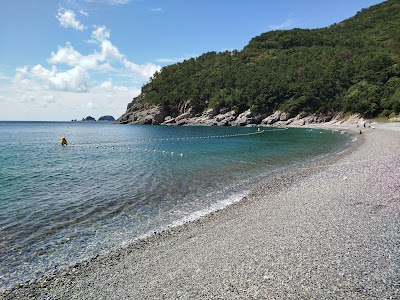
You finish the day at Hammok Beach, which is not a sand beach. It is a shore made entirely of smooth black pebbles, and that contrast against turquoise water backed by pine mountains is the whole reason photographers show up at golden hour. The sound of round stones tumbling in the retreating waves is unlike any sand beach. It is a constant low clatter that is either soothing or startling depending on whether you are sitting or wading.
Walking barefoot on the pebbles is supposed to stimulate acupressure points, and whether or not you believe that, you will absolutely feel things in your feet. Bring water shoes if you want to swim because the entry is still rock, and grab cash for the food stalls along the nearby road. This is where day one quietly winds down.
Tip: Walk along the black pebble shore and bring cash for nearby food stalls. The smooth stones and crystal-clear water make it one of Geoje's most photogenic beaches at golden hour.
Day 2
Day two is the sea day. You take a ferry to a garden island that a Korean couple spent decades building from nothing, then circle a rock islet that locals named after one of Korea's most sacred mountains.
OEDO Botania
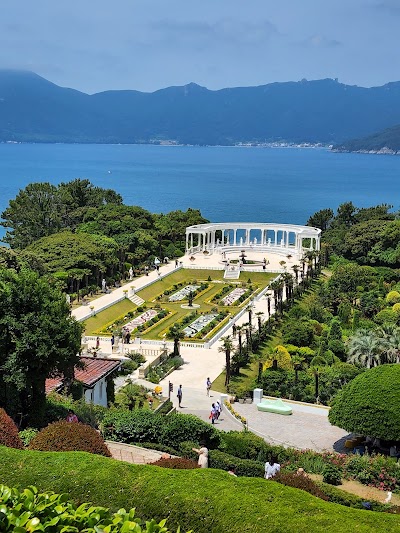
Oedo Botania is an island that was mostly bare rock until a local couple started planting in the 1970s. Decades later it is a terraced botanical garden with cactus terraces, topiary arches, ocean-facing villas, and Venus statues. You arrive by ferry, step onto a stone jetty into salt air, and climb uphill through bougainvillea and palms until the ocean opens in three directions at the top.
It looks like the Amalfi Coast got dropped into the Korean Strait, and the wildest part is that one couple coined the name 'Botania' themselves and just kept building until a barren outcrop became one of Korea's most visited garden destinations. Reserve your ferry ticket in advance because the boat capacity is the bottleneck, not the island. Bring sunscreen since the upper terraces have almost no natural shade.
Tip: Reserve your ferry ticket in advance during summer weekends when crowds surge. The terraced botanical garden features Mediterranean-style villas and ocean-facing floral displays at peak bloom.
Geoje Haegeumgang ("Mount Kumgang of the sea")
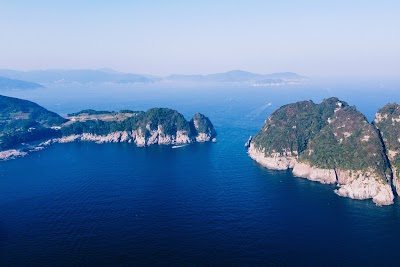
Back on the mainland, the afternoon boat tour circles Haegeumgang, a dramatic rock islet sitting in turquoise water a few hundred meters offshore that Koreans nicknamed after the Diamond Mountains in North Korea. The boat enters a sea cave carved straight through the rock, and for a few seconds the ocean swell echoes off stone walls above your head before you emerge into open water again.
The formations have names like Lion Rock and Candlestick Rock, and the fact that locals named a sea stack after one of the most revered mountains in all of Korea tells you everything about how they rated this place. Sit on the right side of the boat for the best angles as it circles the islets, and book ahead because summer departures sell out, especially on weekends when everyone boards at the same fixed times.
Tip: Book the afternoon boat tour and sit on the right side for the best sea cave photo angles. This dramatic sea stack is surrounded by turquoise waters and towering rock formations.
Day 3
Day three shifts gears. The morning is the heaviest stop on the trip at a Korean War POW camp, then the afternoon unwinds with ancient coastal geology and a castle one man built by hand.
Historic Park of Geoje POW Camp
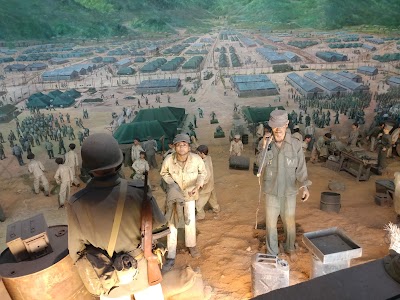
The Historic Park of Geoje POW Camp is where the UN Command held up to 173,000 North Korean and Chinese prisoners during the Korean War, on the same island that now sells ferry tickets to botanical gardens. The camp held five times its intended capacity, with compounds designed for a thousand men jammed with thousands more. Barbed wire separated factions who ran kangaroo courts inside the wire.
The monorail ride up Gyerongsan Mountain gives you the same vantage the guards had. The whole camp basin below and the sea beyond is the view that puts the scale of this place in your gut. Two hours here is enough, and morning is the time to do it because the outdoor exhibits are more manageable before the afternoon heat. Signage is mostly in Korean, so go in knowing the subject matter is heavy.
Tip: Plan about two hours to explore reconstructed barracks and interactive exhibits. Check opening hours as they vary by season. The monorail ride up Gyerongsan adds historical context and panoramic views.
Sinseondae Cliff
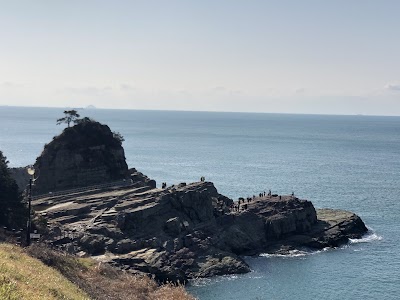
Sinseondae Cliff is the palate cleanser after the POW camp. It is a rugged coastal cliff where bizarrely shaped rocks run in horizontal layers that look like they are holding up the ocean. The name means 'immortal's terrace,' because apparently the rocks were so striking that people decided only supernatural beings could have arranged them. Honestly, standing there, you kind of see their point.
Salt spray hits you as waves crash against flat-topped rocks, wildflowers grow out of stone gaps, and the turquoise water below catches the afternoon light in a way that makes the whole cliff glow. Wear shoes with grip because the trail along the cliff edge is uneven stone, and the entrance is easy to miss. Look for the opening near a gas station off the coastal road. There is no big sign.
Tip: Wear sturdy shoes for the walking trails along the rugged shoreline. The cliff face offers views of turquoise waters, rock arches, and distant islands with fewer crowds than the main beaches.
Maemi Castle
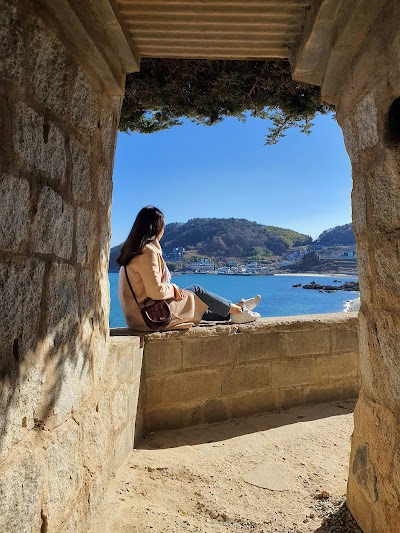
Maemi Castle is the strangest thing on Geoje: a medieval European-style stone fortress perched above the sea, built by one local farmer with no blueprints, starting in 2003. Typhoon Maemi, one of the most powerful storms to hit the Korean peninsula, destroyed his farmland, so he started building a retaining wall. Over the next two decades it just became a full castle with sea views and cherry trees.
Waves roll over smooth pebbles at the base, the stone walls are warm from afternoon sun, and the whole place feels like Korea's answer to the Winchester Mystery House except with better views and no admission fee. Grab the warm crispy corn bread from the roadside stand on the way out. Locals line up for it, and it is a fittingly odd ending to the most unexpected stop on the island.
Tip: Visit in late afternoon for softer light on this quirky European-style stone fortress overlooking the sea. Cherry blossom trees frame the castle beautifully and entry is free with no gate queue.
What to book ahead
- Book Geoje Panorama Cable Car tickets (1-2 days before) - Online booking saves time at the ticket counter, especially on summer weekends
- Reserve OEDO Botania ferry + entry combo (3-5 days before) - Ferry slots sell out fast in peak summer; combo tickets include garden entry
- Book Haegeumgang boat tour (1-2 days before) - Morning departures are calmer and less crowded for photography
- Rent a car or plan bus routes (1 week before) - A car is strongly recommended for a road trip; public bus connections between stops are limited
What to pack
Essentials
- Sunscreen SPF 50+ - Summer UV is intense on open coastlines and cable car decks
- Sunglasses and wide-brim hat - Minimal shade at overlooks like Windy Hill and Sinseondae Cliff
- Waterproof phone pouch - Needed for ferry rides to OEDO Botania and boat tours around Haegeumgang
- Comfortable walking shoes - Uneven terrain at cliff trails and botanical garden terraces
- Swimwear and quick-dry towel - Multiple beach stops with swimming opportunities
Nice to have
- Light windbreaker - Sea breeze can be cool on cable car and hilltops even in summer
- Portable charger - Heavy photo and GPS usage during full-day island hopping
- Snorkel set - Clear waters at beaches like Gujora and 와현 are great for snorkeling
Final take
Geoje is an island that has a botanical garden someone willed into existence, a sea stack named after sacred mountains, a POW camp most foreigners have never heard of, and a castle built by one man after a typhoon. Somehow it still feels like a secret.
Plan this trip
Turn this guide into an editable trip plan
Open the route in Instaboard, adjust the stops, and share the itinerary with your travel group.