Travel Guide
2 Days in Gyeongju: Silla Temples, Royal Tombs & Hanok Streets
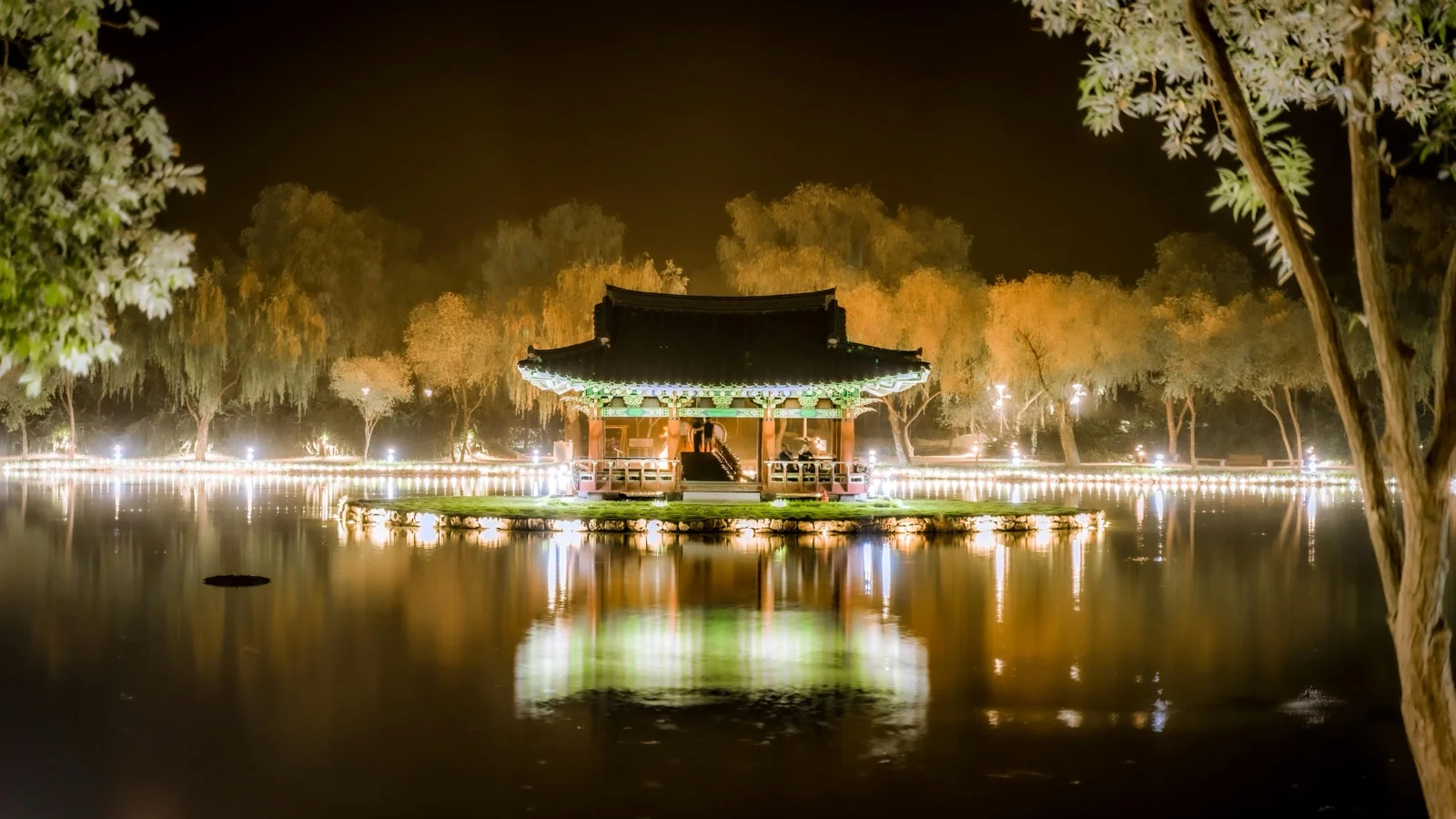
Want the editable version of this route?
Open the Instaboard template and adapt stops, timing, and notes to fit your trip.
Gyeongju is the city where Korean kings ruled for a thousand years, and most travelers outside Korea haven't even heard of it. It's small enough to cover in a weekend, but the heritage is dense enough that showing up with vague plans means you'll burn your best hours on the wrong things.
Spring and fall are the sweet spots: cherry blossoms or red foliage. Even winter here gives you empty temple grounds and sharp, cold air.
Day 1
Day one climbs a mountain to Korea's most important Buddhist temple, then drops into a city park where kings are buried under grassy hills.
Bulguksa
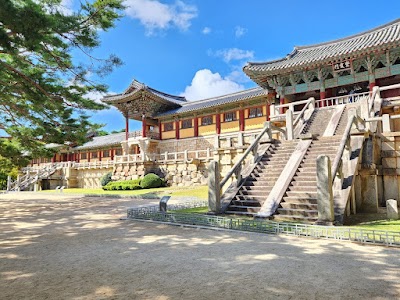
Bulguksa is the Buddhist temple, the one on Korea's 10-won coin, the one every guidebook puts on its cover. The stone pagodas and terraces are genuine 8th-century Silla work; the wooden halls burned in the 1590s and what you see now is a 1970s reconstruction.
That Dabotap pagoda is 10.4 meters of surviving granite, and the 34-step Bridge of Enlightenment is now roped off because too many pilgrims wore down the lotus carvings with their feet. Get here by 8:30 because the light hits the stone terraces beautifully and the tour buses from Seoul roll in after ten.
Tip: Arrive by 8:30 AM to enjoy Bulguksa's stone terraces and twin pagodas before tour bus crowds build. Prebook a combined ticket online to skip the queue at both Bulguksa and Seokguram.
Seokguram Grotto
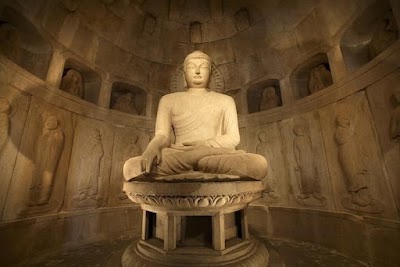
Seokguram is a man-made granite cave near the top of Tohamsan mountain, holding what's considered one of the finest Buddha sculptures in all of East Asia. The 3.5-meter Buddha was carved without mortar, held together by stone rivets. Then Japanese colonial restorers sealed it in concrete and asphalt, and the mold loved it.
You view the Buddha through a glass wall, so this is really about a brief, quiet encounter with something extraordinary, not a long visit. Take the bus from Bulguksa because they share the same mountain. The walk up takes over an hour, and morning means smaller crowds at the glass.
Tip: A winding bus ride up Tohamsan brings you to the granite Buddha grotto. Photography is prohibited inside. Leave your camera in your bag and soak in the panoramic view through the stone entrance arch.
Daereungwon Tomb Complex
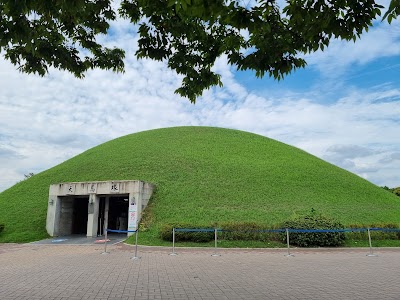
Daereungwon is a park in the middle of the city where 23 royal Silla tombs sit under enormous grassy mounds, right between houses and roads. The Silla approach: pile earth and stone on top, let grass grow over it, dare looters to dig through. Fifteen hundred years later, most of them failed.
Only one tomb, Cheonmachong, is open to walk inside. It yielded a gold crown and a horse saddle painted with a flying horse when they excavated in 1973. This is an easy afternoon stop because the park is spacious and calm, the late shadows across the mounds are beautiful, and you just show up and walk in.
Tip: Walk among the grassy burial mounds of Silla kings and enter Cheonmachong to see a replica gold crown. Carry cash for the tomb entry fee as card readers can be unreliable at the gate.
Day 2
Day two starts with the real gold crowns and a 19-ton bronze bell, shifts to hanok cafe-hopping, and ends at a lantern-lit bridge over the river.
Gyeongju National Museum
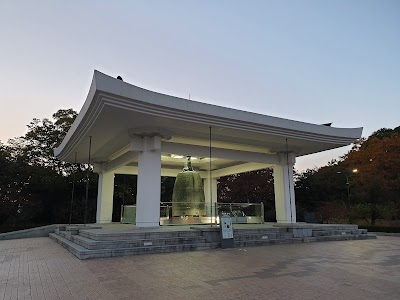
Everything you saw buried or excavated around Gyeongju, the actual originals are in this museum. The Divine Bell of King Seongdeok weighs almost 19 tons, was cast in 771, and survived because nobody could figure out how to steal a 19-ton bell.
The bell hall is the moment: massive bronze, spotlit in a darkened room, sound on a loop. The gold crown gallery glitters against black backgrounds. This is where yesterday clicks into place because you finally see what actually came out of those tombs. Head straight to the gold crowns and bell hall first.
Tip: The museum opens at 10 AM and houses the legendary gold crowns and Divine Bell of King Seongdeok. Reserve a spot for the special exhibition tour in advance; weekend hours draw large crowds.
Hwangnidan-gil Street
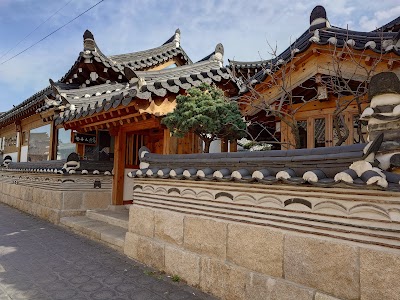
Hwangnidan-gil is where present-day Gyeongju actually lives: a street of hanok-roofed cafes, bakeries, and restaurants that's become the city's social center. Second-floor cafe terraces look out over traditional tile roofs with royal burial mounds visible in the distance. Ancient Silla capital, meet craft coffee.
Warm pastries, the creak of old wooden floors, floor heating under you in winter. This is the break the itinerary needed. Come for lunch after the museum because the popular bakeries start queuing by noon on weekends, and the food here is genuinely good, not just atmospheric.
Tip: Grab lunch at a hanok-turned-restaurant along this trendy street of renovated traditional houses. Arrive before noon on weekends to avoid long lines at the most popular bakeries and cafes.
Woljeonggyo Bridge
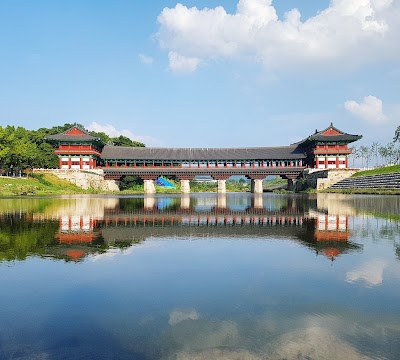
Woljeonggyo is a massive wooden bridge, first built in 760 AD, completely reconstructed and reopened in 2018. At night it becomes one of the most photographed scenes in Korea. At dusk the lanterns switch on and the bridge's reflection in the Namcheon River creates a near-perfect mirror, painted beams and red lacquer glowing against a darkening sky.
The original burned down sometime in the Joseon era, and the modern reconstruction took a decade. Turns out rebuilding a 1,200-year-old wooden bridge is roughly as hard as building one from scratch. This is the evening closer because the lights are the whole point. Walk from the center in about 15 minutes and try to catch the dusk transition.
Tip: Cap your trip with a lantern-lit stroll across the reconstructed Silla bridge as it glows in near-perfect reflection on the Namcheon River. The walk from the city center takes about 15 minutes on foot.
What to book ahead
- Book Bulguksa and Seokguram combined ticket (1-2 weeks before) - Online prebooking lets you skip the ticket queue, especially important on weekends and holidays.
- Reserve Gyeongju accommodation (2-4 weeks before) - Hanok guesthouses in Gyochon Village fill up fast during spring cherry blossom and autumn foliage seasons.
- Check Donggung Palace evening schedule (Day of visit) - Night illumination hours vary seasonally; confirm opening times to time your sunset arrival.
What to pack
Essentials
- Comfortable walking shoes - Temple grounds and tomb parks involve extensive walking on stone paths and uneven terrain.
- Light jacket or layers - Mountain temperatures at Seokguram and evening breezes at Wolji Pond can be cool even in warmer months.
- Cash (Korean won) - Small market stalls and some tomb entry gates prefer or require cash payment.
Nice to have
- Portable power bank - Full-day sightseeing with heavy photo use drains phone batteries quickly.
- Sun hat and sunscreen - Open tomb parks and temple courtyards offer limited shade during midday hours.
Final take
Gyeongju is what happens when a thousand-year kingdom leaves its temples, tombs, and gold crowns lying around a small city, and then the city builds excellent cafes next to them.
Plan this trip
Turn this guide into an editable trip plan
Open the route in Instaboard, adjust the stops, and share the itinerary with your travel group.