Travel Guide
Hue in 2 Days: Imperial City, Royal Tombs & the Perfume River (Spring Itinerary)

Want the editable version of this route?
Open the Instaboard template and adapt stops, timing, and notes to fit your trip.
You get two days in Hue, Vietnam's old imperial capital, the place where one emperor liked his tomb so much he moved in early. Two days covers the whole imperial story: citadel, tombs, river. The right order is the difference between a great trip and a hot, crowded blur.
The trip splits nicely. Day one stays inside the walled capital, day two heads out to the emperors' tombs, and spring's warm, dry mornings make both walkable.
Day 1
Day one stays inside the old capital: a walled citadel, the emperors' actual belongings, and the market where their cuisine went street-level.
Hue Imperial City
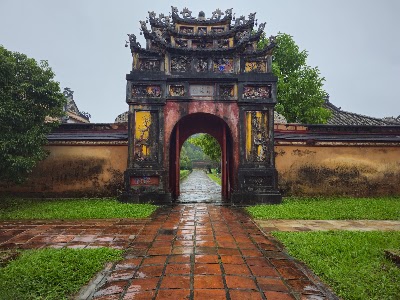
This is the Imperial City, Vietnam's capital under the Nguyen emperors: a citadel inside a citadel, with its own Forbidden Purple City at the center. The dynasty ruled here from the early 1800s until 1945; then fighting in 1968 gutted the inner palaces, and sections are still being rebuilt today.
Go at the seven a.m. opening: soft light, walkable heat, and vast mustard-yellow courtyards before tour buses stack up at Ngo Mon gate. Head deep into the complex first, because the back compounds stay thin all day; then work forward to Thai Hoa Palace as the crowds arrive.
Tip: Enter through the Ngo Mon gate with a prebooked ticket; arrive at the 7:00 opening to beat tour-bus crowds and allow three full hours for the palaces and courtyards.
Hue Museum of Royal Antiquities
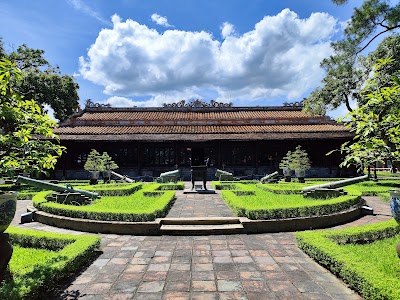
Three minutes east of the citadel exit sits the Museum of Royal Antiquities, a surviving royal residence holding the emperors' actual things at arm's length. Come straight from the citadel, because standing a foot from imperial robes and throne-room relics turns those empty palaces into a lived-in world.
Dim halls, glass cases, mineral-faded silk. The citadel shows how the emperors lived large; this shows the actual wardrobe budget. It's small enough to finish in an hour, weekday afternoons are nearly empty, and the sparse labels reward going slow anyway.
Tip: Walk three minutes east after the citadel; entry is inexpensive and cash-friendly, and weekday afternoons mean quiet halls. Reserve online in advance to skip the desk.
Dong Ba Market
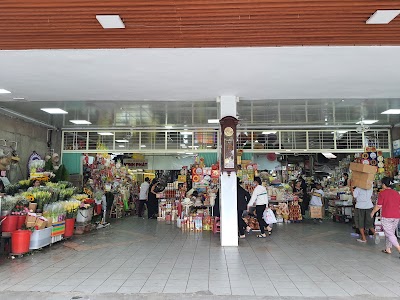
Finish the day at Dong Ba Market, the oldest and most working market in Hue: this is where the city eats, full stop. Come for the bun bo Hue, the chili-heavy beef noodle soup named after this city; the market counters serve the real thing.
Royal sweets from the imperial kitchens share a wet floor with smoking grills, cone hats, and motorbikes threading the aisles like it's normal, because it is. Bring small notes, join whichever bun bo line has the most locals, and know that 'medium spicy' means whatever the vendor decides it means.
Tip: Take a short taxi ride and bring small cash notes for bun bo Hue and banh khoai; go mid-afternoon when stalls are fully open and work the vendor line slowly.
Day 2
Day two heads out of town: two emperors' tombs that couldn't be more different, ending at the river pagoda that defines Hue's skyline.
Mausoleum of Emperor Khai Dinh
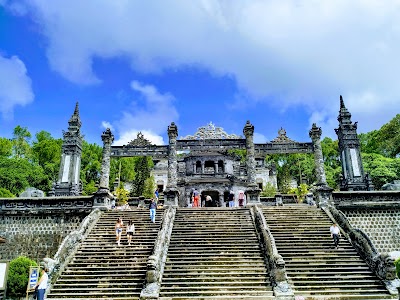
First, the Mausoleum of Emperor Khai Dinh, a forty-minute drive uphill: a grey stone castle with Gothic arches parked on a mountainside. Khai Dinh had French tastes, French backing, and no restraint; critics hated this tomb on sight, which is honestly part of the fun.
Climb the long staircase, step into the dark hall, and look up: a ceiling of gold, glass, and ceramic dragons, years of inlay work. Come early, because morning keeps the staircase cool and tour queues build toward ten; book a driver who'll wait.
Tip: Prebook a car for the 40-minute uphill ride; buy the entry ticket on arrival and climb to the terrace before 10:00, when weekend tour groups start to queue.
Mausoleum of Emperor Tu Duc
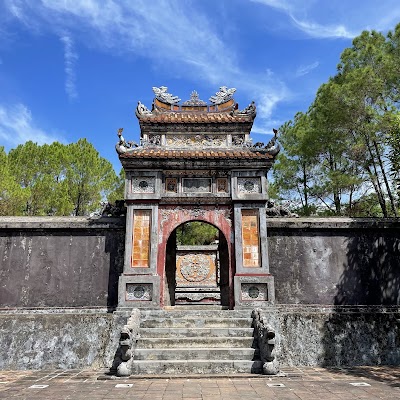
Then the opposite: Tu Duc's tomb, a lakeside garden of pavilions and pines, because after Khai Dinh's maximalism you need an emperor who built for mood. He picnicked here, wrote poetry by the lake, and by legend his actual burial spot is unmarked somewhere in the grounds: privacy, even in death.
By mid-afternoon the morning tomb crowds are gone, shade crosses the pine paths, and the still water doubles every pavilion; this is the quietest large site in Hue. It's sprawlier than it looks, so give it the full ninety minutes and take the lakeside paths, not just the direct walk between buildings.
Tip: Ask your driver to wait and pair it with Khai Dinh on one loop; walk the lakeside paths, which feel almost private on weekday afternoons after morning crowds disperse.
Thien Mu Pagoda
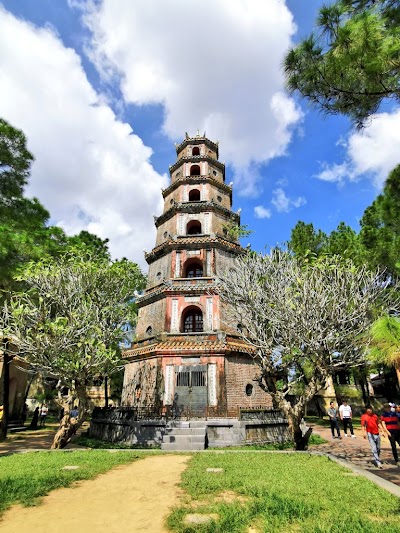
End at Thien Mu Pagoda, Hue's oldest and most famous temple: a seven-story tower on a hilltop above the wide, brown Perfume River. The legend says a celestial lady prophesied a lord would build here; today monks still chant behind incense smoke while the tower stands against the sky.
The grounds also hold the vintage car from 1963, the one a monk drove to Saigon before his self-immolation shocked the world. It just sits there. It closes around five thirty, so go with light to spare; a dragon boat up the river is the proper arrival.
Tip: Arrive by taxi or dragon boat; entry is free, but check opening hours. The site closes around 17:30, and the hillside crowd peaks near sunset for river views.
What to book ahead
- Buy Hue Imperial City entry ticket online (1-2 weeks before) - 200,000 VND adult; show the QR code at the Ngo Mon gate to skip the ticket line.
- Reserve Hue Museum of Royal Antiquities entry (1 week before) - Advance reservation secures timed entry; weekdays after 14:00 are quietest.
- Book private car for the royal tombs loop (3-5 days before) - Khai Dinh + Tu Duc (optionally Minh Mang) loop; roughly $35-50 including waiting time.
- Reserve dragon-boat sunset cruise (2-3 days before) - Arrange via hotel or riverside agencies; departures near Trang Tien Bridge around 17:00.
- Check museum and pagoda opening hours (1 week before) - Royal Antiquities Museum and Thien Mu Pagoda both close in the late afternoon; plan entry before 16:30.
What to pack
Essentials
- Sunscreen and hat - Spring sun is strong on unshaded citadel courtyards and tomb stairways.
- Comfortable walking shoes - Citadel and tomb complexes involve 2-3 hours on foot over uneven paths.
- Small VND cash notes - Market food, tomb tickets, and boat tips are cash-only.
- Shoulder-covering scarf or light layer - Required for modest dress at pagodas and temple halls; doubles as river-cruise warmth.
Nice to have
- Compact umbrella - Occasional spring drizzle can interrupt afternoon walking segments.
- Insect repellent - River cruises at dusk can draw mosquitoes near the banks.
- Camera with wide lens - Gate symmetries and lagoon sunsets reward wide framing.
Final take
Two days in Hue and you've met the emperors twice: once in their walls, once in their gardens, with a river running through all of it.
Plan this trip
Turn this guide into an editable trip plan
Open the route in Instaboard, adjust the stops, and share the itinerary with your travel group.