Travel Guide
Jaipur in 3 Days: Palaces, Forts & the Pink City
Want the editable version of this route?
Open the Instaboard template and adapt stops, timing, and notes to fit your trip.
This is Jaipur, the Indian city that painted itself pink for one royal visit and then just never stopped. Three days here get you palaces, hilltop forts, and a thousand-year-old stairwell, unless bad timing hands you tour buses instead, so let's set the order.
Come November through February and Jaipur is at its best: warm days, crisp mornings, and fort walls you can stand on without melting.
Day 1
First up, the old city on foot: a five-story wall of windows, a palace still partly someone's home, and sundials the size of buildings.
Hawa Mahal
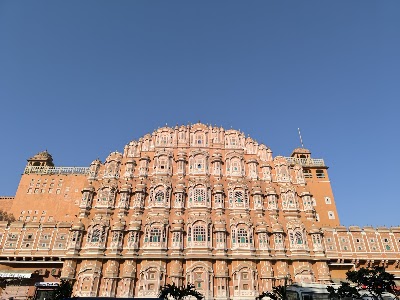
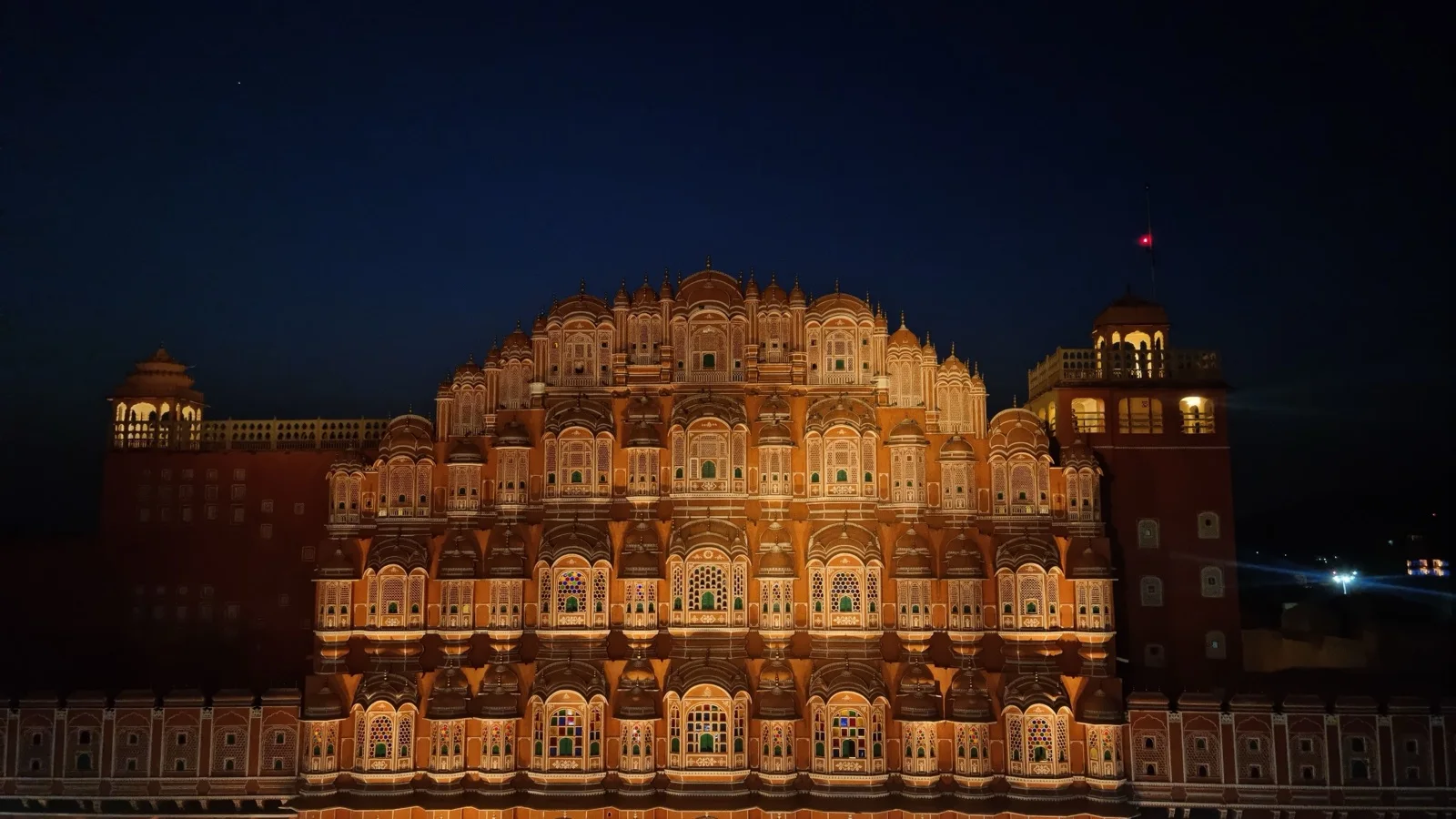
Hawa Mahal is the Jaipur postcard: a five-story pink sandstone wall honeycombed with 953 tiny windows, right above a busy old-city street. It was built as a one-way screen. Royal women could watch the street below, and nobody could ever watch them back.
Stand opposite before eight because the light's soft and the street's still calm. By midmorning the tour buses own it. Inside it's narrow and stair-heavy anyway; honestly the facade is the show, and the pink itself was a 19th-century publicity stunt that stuck.
Tip: Arrive by 7:30am to beat tour buses and shoot the 953-window facade in soft sunrise light from the street opposite; no ticket needed for photos, so head inside right at the 9am opening for window-level views.
The City Palace
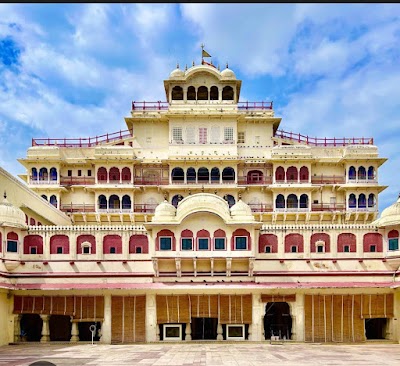
The City Palace is a short walk away, and it's partly a museum, partly an actual royal residence. Jaipur's royal family still lives there. My favorite detail: two giant silver urns, each the height of a tall man, made to carry river water overseas for a homesick maharaja.
Past the gate it goes quiet: cool courtyards, wedding-cake gateways, painted walls that December sun makes pop. Book your City Palace entry online to skip the gate line, and sort out which ticket tier you want before you reach the counter.
Tip: Book your entry ticket online in advance to skip the ticket line at the gate, budget extra for the Royal Grandeur gallery, and carry some cash for guide tips in the courtyards.
Jantar Mantar
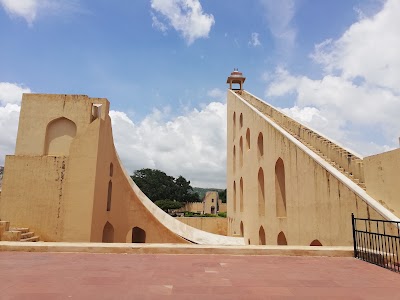
Five minutes later you're at Jantar Mantar, an 18th-century open-air observatory where the astronomer-king who founded Jaipur built his equipment at architectural scale. The centerpiece is the world's largest stone sundial, and it still works. Hang around and you can actually watch its shadow crawl.
There's zero shade on the whole site, which is why the afternoon slot is right: white stone, carved scales, moving shadows, no griddle. These are working instruments, not decor, so a guide or audio genuinely earns its fee. Hit the big sundial first, before your attention fries.
Tip: Walk over in five minutes from City Palace and stand beside the giant sundial at the entry; go early afternoon before the stone instruments get too hot to touch.
Day 2
Today climbs: a military garrison in the morning, a palace you can only look at, and a sunset ridge with all of Jaipur below.
Jaigarh Fort
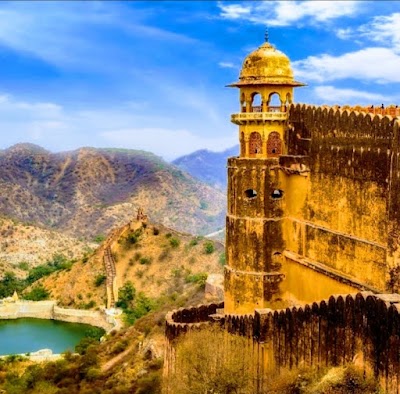
Jaigarh Fort is the muscle above the Amer valley. The palace downhill was the showpiece, this hilltop garrison was the army. You can walk the thick ramparts and long empty corridors, with wind, circling birds, and sightlines running for miles over dry hills.
Its celebrity is the Jaivana cannon, the world's largest on wheels: reportedly fired exactly once, then retired into being a very heavy deterrent. Go at opening because the ramparts are nearly empty then, and take the short taxi up from the Amer road instead of the steep climb.
Tip: Arrive at the 9:30am opening to have the rampart walks nearly to yourself and see the giant Jaivana cannon before tour crowds build; a short uphill taxi ride from Amber saves the steep climb.
Jal Mahal
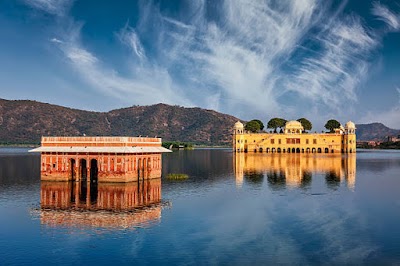
Jal Mahal is the palace that appears to float on Man Sagar Lake: a low sandstone pavilion sitting out in the water, entirely alone. You can't go inside, and that's genuinely fine. This is a look-don't-touch stop, forty-five minutes on the lakeside promenade, tops.
In late light the facade glows pink against still water, while the road right behind you does a solid impression of a highway. It sits right on the way up to Nahargarh, so it costs you nothing. And anyone selling 'entry' here is selling you nothing too.
Tip: Entry inside the water palace is closed to visitors, so treat it as a photo stop from the lakeside promenade; late afternoon light makes the facade glow on the drive back toward the city.
Nahargarh Fort
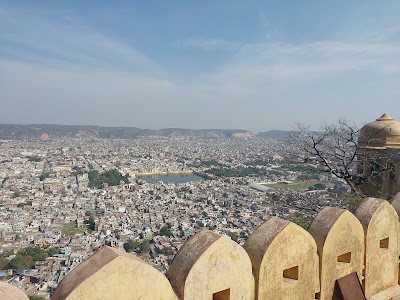
Nahargarh Fort is the ridge lookout where Jaipur finally clicks: the whole pink sprawl below you, and street-level chaos turning into geometry. Local legend says a prince's spirit kept sabotaging the construction until it was appeased. That's literally where the fort gets its name.
Arrive an hour before sunset because that one timing buys you three views: the city in daylight, the sunset, and the lights coming on. Bring a jacket for this one. The ridge turns cold fast after dark, and everyone descends that same winding road at the same time.
Tip: Time your arrival about an hour before sunset for the best light over the city, bring a warm layer for the windy ridge after dusk, and note the café's opening hours if you want chai while you wait.
Day 3
The last day swings wide: a rainbow gate built for photos, a two-hour drive to an ancient stepwell, and dinner in a village that isn't one.
Patrika Gate
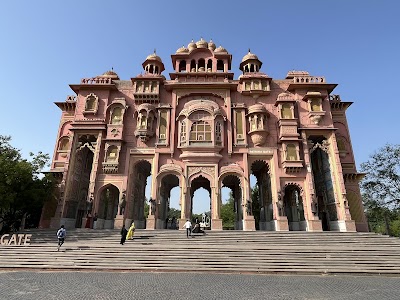
Patrika Gate is that rainbow arch you've already seen on Instagram: nine painted arches at Jawahar Circle, and it's modern, not ancient. It doesn't lead anywhere in particular. Its entire purpose is being photographed, and honestly, it's excellent at its job.
Stand dead center and the arches stack into a kaleidoscope; the painted ceiling squeezes all of Rajasthan into one walk-through. It's free and open, but on weekends it's a queue for the frame itself. A weekday before nine is the entire trick.
Tip: Arrive before 9am on a weekday to dodge the weekend photo queue, and walk through the arches for the famous painted ceiling and symmetrical frame shots.
Chand Baori, Abhaneri
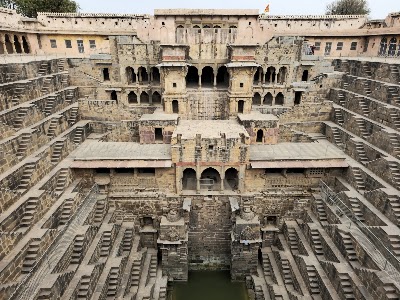
Chand Baori, two hours out at Abhaneri, is a thousand-year-old stepwell: an inverted pyramid of about 3,500 steps descending to green water. Stepwells stored water and doubled as cool gathering spots on the plains. Stand at the rim and cooler air still rises out of the ground.
It looks like an M.C. Escher drawing, or the prison pit from The Dark Knight Rises: stairs on stairs in perfect triangles, going down. The drive is the real cost, so book a car for the afternoon because it balances the evening dinner show, and head back before dark.
Tip: Prebook a private taxi or day tour with transfer included; the drive takes about two hours each way. Carry water and cash for the small entry fee at the gate.
Chokhi Dhani - The Ethnic Village
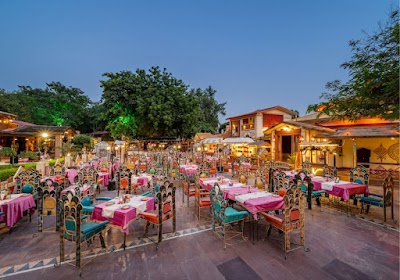
Chokhi Dhani is Rajasthan as dinner theater: a purpose-built village resort where folk performances and an enormous Rajasthani thali share one evening. It's commercial, not ancient, and it knows its audience, but the food is genuinely excellent, the easiest great Rajasthani meal of the whole trip.
Torches, drumming, camels, and waiters refilling your thali faster than any polite refusal can land, so pace yourself early. Reserve the evening ahead, especially on weekends. Get there around seven for the puppet and folk-dance schedule, and carry cash before the camel rides find you.
Tip: Reserve your evening entry in advance, especially on weekends, arrive by 7pm to catch the full puppet and folk-dance schedule, and carry cash for the games, camel rides, and tips inside the village.
What to book ahead
- Book City Palace entry tickets online (1-2 weeks before) - Skip the gate line; add the Royal Grandeur gallery ticket if you want the silver urns.
- Reserve Chokhi Dhani evening entry (3-7 days before) - Mandatory on weekends and holiday season; arrive by 7pm for the full show schedule.
- Prebook private taxi for Chand Baori day trip (2-3 days before) - Confirm a two-way transfer with driver wait time; depart Jaipur by 9:30am.
- Arrange Nahargarh sunset transport (Day of) - Taxis and autos thin out on the ridge after dark; keep your driver's number.
What to pack
Essentials
- Warm layer or light jacket - Winter mornings and ridge-top sunsets drop near 8-10°C, especially at Nahargarh after dusk.
- Comfortable walking shoes - Old City days, fort ramparts, and bazaar browsing are all on foot.
- Sunscreen and sunglasses - Winter Rajasthan sun is strong during midday fort visits.
- Small cash notes (INR) - Bazaar bargaining, site entry fees, tips, and Chokhi Dhani extras run largely on cash.
Nice to have
- Wide-angle lens - Patrika Gate arches and Chand Baori's 3,500 steps reward wide symmetry shots.
- Scarf or shawl - Useful for temple visits like Birla Mandir and against dusty ridge winds.
- Reusable water bottle - The Abhaneri excursion is a four-hour round trip with few reliable stops.
Final take
That's Jaipur, a city that painted itself pink for one royal visit and never stopped; three days of forts, windows, and one very deep stairwell.
Plan this trip
Turn this guide into an editable trip plan
Open the route in Instaboard, adjust the stops, and share the itinerary with your travel group.