Travel Guide
Jeju Island 4-Day Road Trip Itinerary: Volcanoes, Waterfalls & Coast
Want the editable version of this route?
Open the Instaboard template and adapt stops, timing, and notes to fit your trip.
Jeju is a volcanic island south of the Korean mainland where waterfalls pour straight into the sea and the cafes rival the geology. Four days is enough to cover the highlights, but only if you don't burn half the trip guessing which coast has what.
Jeju is bigger than people expect. It's a proper island you drive around, and each coast has a completely different personality.
Day 1
Day one is the east coast. You'll climb a volcanic crater at dawn, walk a headland by lunch, then collapse at a beach cafe.
Seongsan Ilchulbong
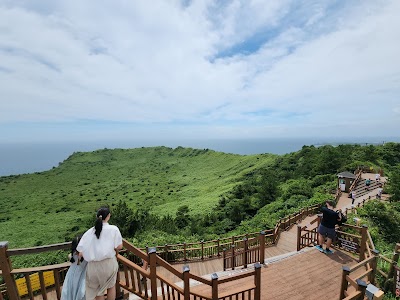
This is Sunrise Peak, a volcanic cone on Jeju's eastern shore that rises out of the water like the island's own logo. The crater at the top is roughly 600 metres across and 90 metres deep. It looks like a stadium that magma built.
You climb over a thousand steps in the dark because the sunrise waits for no one, and yes, hundreds of strangers are doing the same. Book entry online before you go. Daily visitor numbers are capped, and showing up without a ticket is how you get turned away.
Tip: Arrive before dawn to catch the sunrise from the crater rim. Prebook your entry ticket online, and wear warm layers because the summit is windy year-round.
Seopjikoji
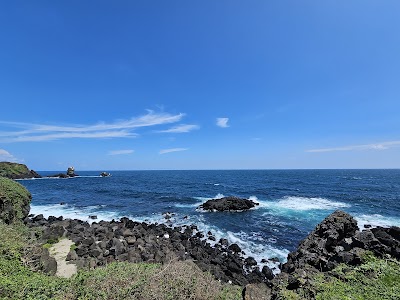
A quick drive down the coast gets you to Seopjikoji, a grassy headland that juts out toward the horizon like a natural runway. Black volcanic rock on one side, open ocean on the other, and Sunrise Peak behind you looking even better from out here.
There's an abandoned building that was a set for the Korean drama 'All In,' and honestly, more people photograph that than the actual geology. Grab tangerines from roadside vendors on the drive, and bring cash. This flat, easy walk is exactly what your legs need after those stairs.
Tip: Walk the grassy coastal trails past volcanic rock formations toward the lighthouse, with sweeping views back toward Sunrise Peak. Bring cash for the roadside tangerine vendors along the drive.
Woljeongri Beach
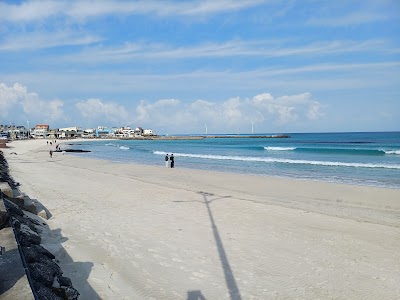
Woljeongri is where Jeju's younger crowd goes to be seen. Minimalist cafes front shallow, genuinely turquoise water, and some have floor-to-ceiling glass walls so you can stare at the ocean without leaving your chair.
Jeju has ancient craters, sea caves, and a volcano you can climb, but the thing everyone actually posts is their latte next to turquoise water. Come on a weekday if you can, because weekend parking fills by noon and the cafe queues get silly.
Tip: Pull over at one of the minimalist seaside cafes for an emerald-water coffee break. Most accept card, but arrive before noon on weekends to snag parking.
Day 2
Day two shifts south to Seogwipo. Waterfalls, hexagonal cliffs, and a forested gorge with its own mythology.
Seogwipo Jeongbang Waterfall
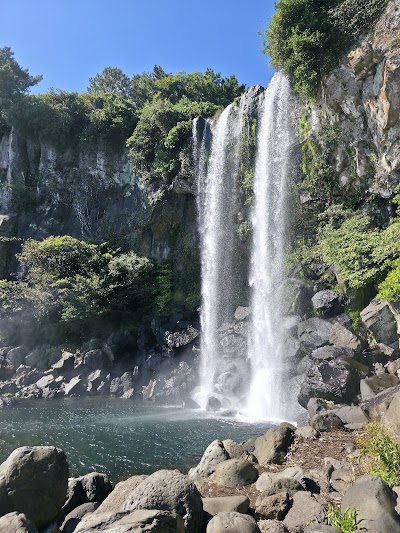
Jeongbang pours 23 metres off a pine-covered cliff straight onto the rocky coast. It is one of very few waterfalls in Asia that empties directly into the sea. The sound shifts from forest quiet to thunder as you descend, and mist hits your face at the bottom whether you want it or not.
Standing at the base getting sprayed by cold water while holding your phone above your head to keep it dry is the universal Jeongbang pose. Wear shoes with grip for the slick rocks, and get here early because the viewing area is small and tour groups fill it fast.
Tip: Walk down the short stairway to stand near the base where the cascade meets the ocean, and wear shoes with grip for the slick rocks. Arrive early to avoid weekend crowds.
Jusangjeolli Cliff
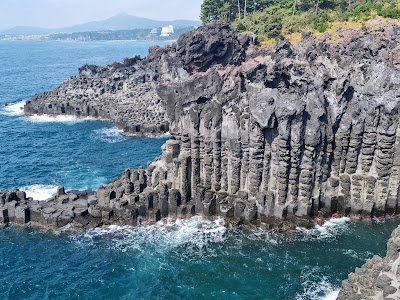
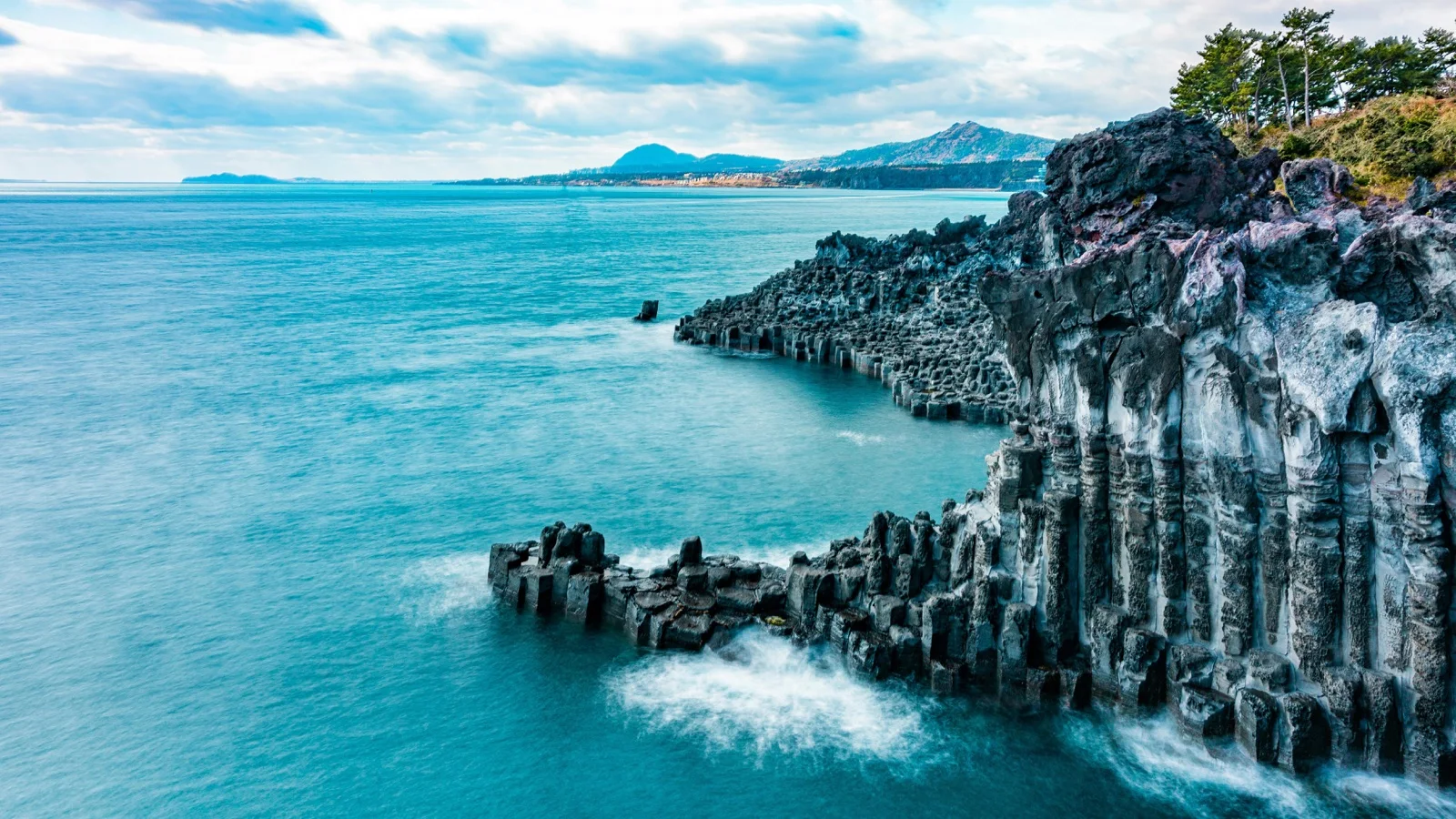
When lava from Hallasan met the ocean and cooled fast, it fractured into hexagonal basalt columns. Now waves slam against them like nature's architecture. They look machine-cut, but it's the same physics behind the Giant's Causeway, except here the ocean is actively smashing into them.
The geometry of those stone columns against the chaos of the surf is the whole show. Stand on the viewing platform and just watch. Budget less time than you think, because this is mainly a viewing platform, not a hike. Forty-five minutes to an hour is realistic.
Tip: Watch waves crash against the hexagonal basalt columns from the viewing platform. No advance ticket is needed, and timing your visit near sunset gets the best light on the columns.
Cheonjeyeon Waterfalls
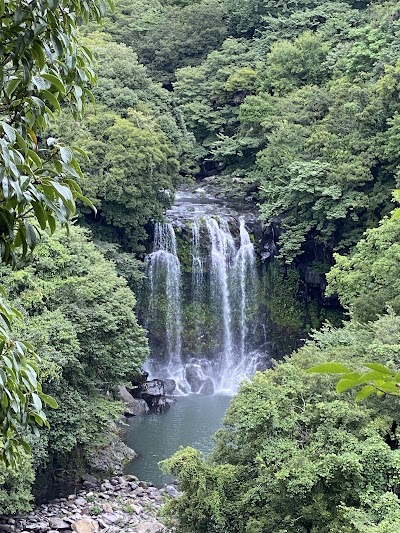
Cheonjeyeon is a three-tiered waterfall system flowing through a forested gorge. The name translates to 'Pond of the Emperor of Heaven,' and the legend says seven nymphs descended from heaven to bathe here. The arch bridge spanning the gorge has them carved into the stone.
Most visitors stop at the first two falls, but keep going to the third because that's the biggest pool and the quietest spot. The park closes at sunset, and climbing back up those gorge stairs takes more out of you than you'd expect after a full day.
Tip: Descend the forested trail through three tiers of waterfalls connected by an arched bridge, and keep going to the bottom pool. Plan to arrive by mid-afternoon because the park closes at sunset.
Day 3
Day three flips to the west coast. Absurdly turquoise shallows, green tea fields, and a sandstone dragon that only shows up when the tide drops.
Hyeopjae Beach
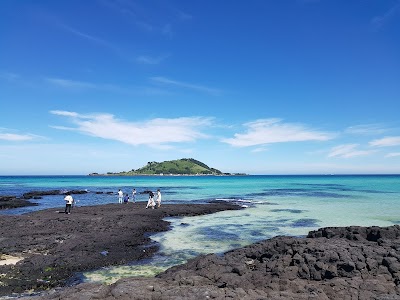
Hyeopjae is the beach that makes people double-check they're still in Korea. White sand, shallow turquoise water, and Biyangdo Island sitting on the horizon. At low tide the water is knee-deep for so long you can walk out absurdly far toward Biyangdo before it even reaches your waist.
You flew to a volcanic island in the Korea Strait and you're standing in Caribbean-coloured shallows staring at what looks like a toy island. Mornings are calmest, because afternoon wind picks up fast on this exposed coast, and outside summer that open beach gets genuinely cold.
Tip: Walk the shallow turquoise shallows out toward Biyangdo at low tide, and bring warm clothes if visiting outside summer. The beach has free entry, but the street-food stalls only take cash.
Osulloc Tea Museum
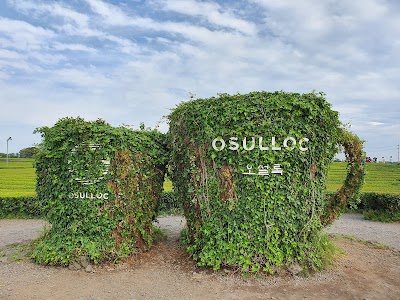
Osulloc is Korea's first tea museum, built by AmorePacific on their own Jeju plantation. Rolling green tea fields backed by a sleek modern building, and the smell of green tea hits you before you walk in. The cafe's matcha desserts are genuinely excellent, not just photogenic.
The tea fields are smaller and more manicured than photos suggest. This is a polished commercial experience, but the matcha cake earns its queue. If you want a tea-tasting workshop, book ahead through their website because walk-in spots aren't guaranteed and the booking site can be tricky in Korean.
Tip: Book a tea-tasting workshop in advance through their website, then stroll the rolling green tea fields outside. Expect a short queue at the cafe during peak weekend hours.
Yongmeori Coast
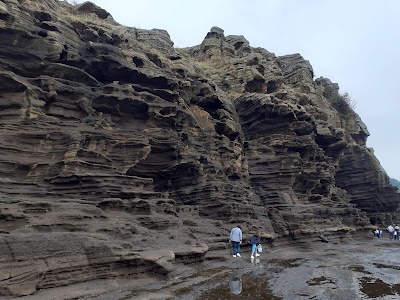
Yongmeori means dragon head, and once you see the layered sandstone at the foot of Sanbangsan Mountain, the name makes total sense. A monument here honours Hendrick Hamel, a Dutch sailor shipwrecked on Jeju in the 1650s whose account became one of the first European descriptions of Korea.
You're walking on the ocean floor during low tide. Wet sandstone, waves crashing into caves, the smell of tidal pools, zero shade. Check tide tables before you drive out, because this stop only exists at low tide. Wrong timing means a locked gate and a wasted drive.
Tip: Walk the tidal pathway along dragon-head sandstone formations only accessible at low tide. Check tide hours before you go, and bring cash for the small entry fee at the gate.
Day 4
The last day is the big one. South Korea's tallest mountain in the morning, then a village where people still live under thatched roofs.
Hallasan National Park
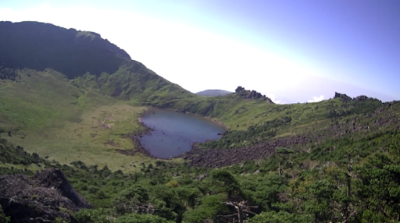
Hallasan is the volcano that built Jeju. It stands 1,947 metres, South Korea's tallest mountain, with a crater lake at the summit and ocean visible from every side. The lower trails wind through mossy forest that feels prehistoric, then above the treeline it's bare rock and wind with a summit that's cold year-round.
Start by eight because park rules require a checkpoint by midday, and reserve your free timeslot online beforehand. No reservation, no mountain. You came to a beach island and spent your last day climbing South Korea's tallest mountain because someone said it was doable. It is.
Tip: Start the Seongpanak or Gwaneumsa trail by 8 AM, and prebook your park entry online during peak season. The summit can be cold even in summer, so pack warm layers.
Seongeup Folk Village
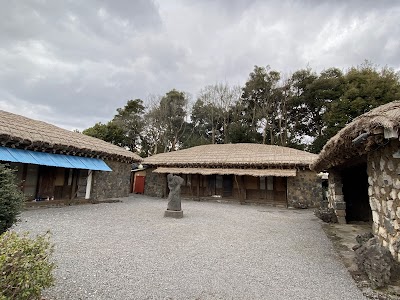
Seongeup is what Jeju looked like before the resorts. Thatched stone houses, lava-rock walls, ancient zelkova trees, and people who still actually live here. Unlike reconstructed folk villages elsewhere in Korea, this one isn't a replica. The architecture is real domestic design and residents go about their actual lives.
Volcanic rock walls line narrow lanes and thatched roofs smell like dried grass. It's quiet in a way nowhere else on Jeju manages. Wander at your own pace because there's no set route, and if a resident offers you honey, buy some. You just photographed their house.
Tip: Explore thatched-roof stone houses and the Confucian school at your own pace. Entry is free, the village never truly closes, and the ancient zelkova trees offer shade on a warm afternoon.
What to book ahead
- Rent a car (2-3 weeks before) - A car is essential for covering Jeju's dispersed sights in 4 days; book early for peak spring/autumn.
- Book Seongsan Ilchulbong entry (1-2 weeks before) - Advance online reservation is required; sunrise time slots sell out first.
- Reserve Hallasan hiking permit (1-2 weeks before) - Mandatory during peak season via the Korea National Park website; choose Seongpanak for easier grade.
- Book Osulloc tea workshop (1 week before) - Tea-tasting workshops have limited seats and sell out on weekends.
- Book return ferry or flights (3-4 weeks before) - Jeju airport can get fully booked on holiday weekends; secure return early.
What to pack
Essentials
- Comfortable hiking shoes - Essential for Hallasan summit trails and crater stairs at Seongsan Ilchulbong.
- Windbreaker or light jacket - Coastal winds and mountain summits are chilly year-round on Jeju.
- Sunscreen and hat - Open volcanic terrain offers little shade; UV exposure is high even on overcast days.
Nice to have
- Waterproof phone pouch - Handy for waterfall spray shots and shallow beach wading at Hyeopjae.
- Towel and swimsuit - Useful if you plan to swim at Hyeopjae or Woljeongri beaches.
- Portable charger - Full-day road trips with heavy photo use drain phone batteries quickly.
Final take
Four days on Jeju and you've stood inside a volcanic crater, walked a dragon's head at low tide, and climbed the mountain that made the whole island.
Plan this trip
Turn this guide into an editable trip plan
Open the route in Instaboard, adjust the stops, and share the itinerary with your travel group.