Travel Guide
Jiuzhaigou 3-Day Autumn Itinerary: Turquoise Lakes, Waterfalls & Huanglong
Want the editable version of this route?
Open the Instaboard template and adapt stops, timing, and notes to fit your trip.
There's a valley up in western China where the lakes are so blue they look fake, and no, it's not a filter. Three days here come down to timing: sell-out entry, shuttle waves, and one light window per lake, so here's the version that gets you the good stuff.
Mid-October into early November is the peak: golden larches, crimson maples, mirror-still lakes. The cold nights and thin mountain air are simply the entry fee.
Day 1
Day one goes straight at the headline: Long Lake before the wind picks up, the loudest little pond in the valley, and the waterfall everything flows through.
Jiuzhai Valley National Park
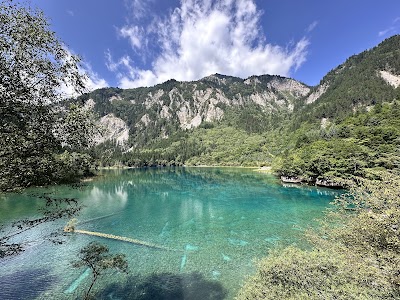
Jiuzhaigou is a Y-shaped valley of impossibly clear turquoise lakes stacked high in the mountains, and Long Lake, the biggest and deepest, is your first stop. The name means Valley of Nine Villages, and Tibetan villages still sit inside the park. It's been UNESCO-listed since the early nineties.
The water really is that color, and you start here because Long Lake goes mirror-flat before ten: snow peaks, gold larches, near-total quiet. One admin note: park entry is capacity-capped, real-name, and fixed-date, and autumn slots sell out weeks ahead. Sort that before anything else.
Tip: Ride the first shuttle bus up Zechawa Gully and arrive before 10am to find Long Lake mirror-flat under snow-dusted peaks. Pack a warm layer for the 3,100m chill and prebook park entry online; autumn daily caps sell out weeks in advance.
Wucai (Five-Colour) Pond
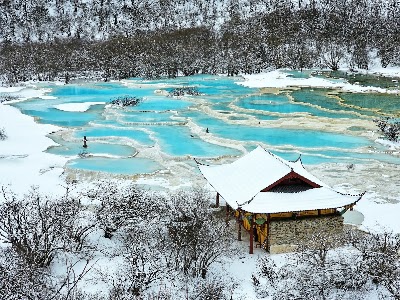
Five-Colour Pond sits a short stepped walk below Long Lake, the valley's whole palette concentrated into a pond small enough to take in at a glance. That palette is geology at work: mineral-heavy water is still building terraces and dams here, one drip at a time.
The light angle is the whole game. Before midday the shallows glow, later the color flattens and the railing bottlenecks right after each shuttle arrives. Stay on the wooden path, because the banks are closed to protect a formation millennia in the making, and let a shuttle load pass if the steps jam.
Tip: Walk the short stepped boardwalk down from the Long Lake shuttle stop. The pond's turquoise-to-sapphire shift is most vivid before midday, and the fragile banks are closed to foot traffic, so stay on the wooden path.
诺日朗瀑布
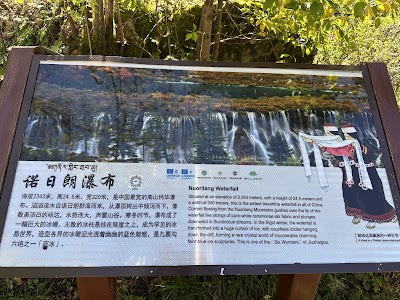
Nuorilang is the valley's crossroads: 270 meters of travertine cascade where all three gullies meet and every shuttle route passes through. It's a waterfall still under construction, as the mineral-heavy water keeps widening the shelf, which is how it rebuilt itself after the 2017 earthquake.
You'll transfer here anyway, so hop off between buses. An hour covers it, and the decks on either side frame the shelf completely differently. Afternoon is kinder since tour groups move through before noon, and yes, you may end up photographing it while queueing for the bus.
Tip: Nuorilang is the valley's central shuttle transfer hub, so hop off between buses and give the 270m-wide travertine cascade an hour. Viewing decks draw big crowds before noon, so an afternoon stop means shorter photo lines.
Day 2
Day two runs quiet, then loud: mist over a bamboo lake at opening, the postcard lake at noon, and a waterfall with a warm-up act.
箭竹海瀑布
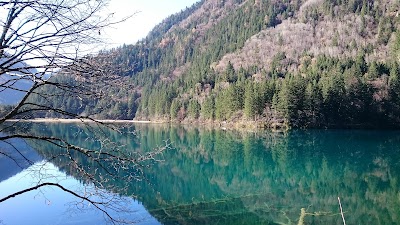
Arrow Bamboo Lake is the calm twin next door to famous Panda Lake: same blue water, bamboo groves, a fraction of the people. It's a lake that exits through its own waterfall, so you get two sights at one stop, and most people only ever see the first.
Catch the first shuttle at opening: mist hanging over the bamboo, birch gold on the banks, boardwalks nearly empty until midday. Walk the full path down to the falls, because the best stretch is the part crowds skip, and early mist can hide icy step edges.
Tip: Be at the gate for park opening and ride the shuttle straight to Arrow Bamboo Lake while morning mist still hangs over the bamboo groves. You will share the boardwalk with far fewer crowds than at neighbouring Panda Lake.
Five Flower Lake
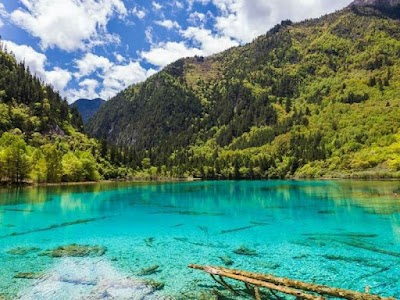
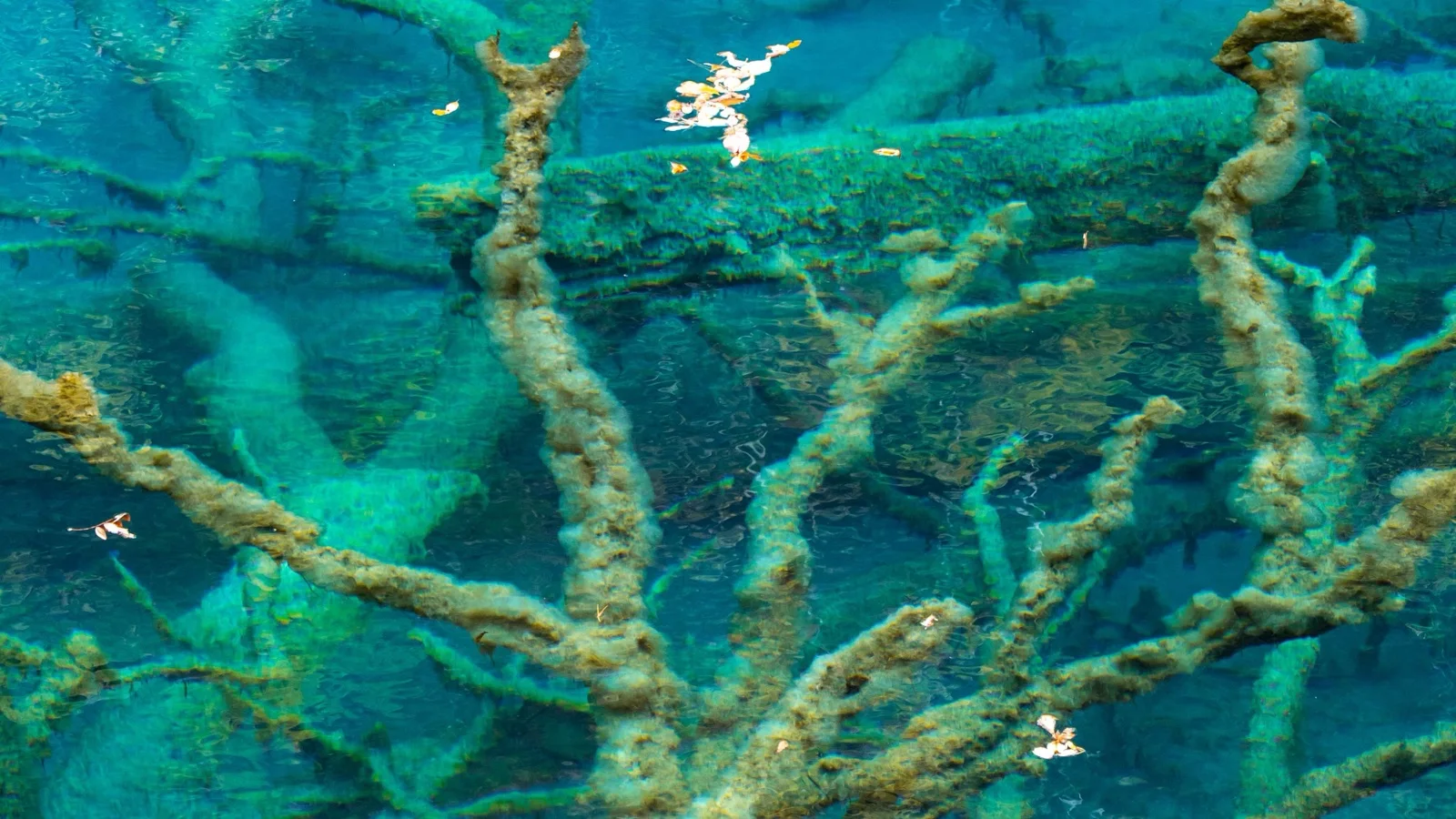
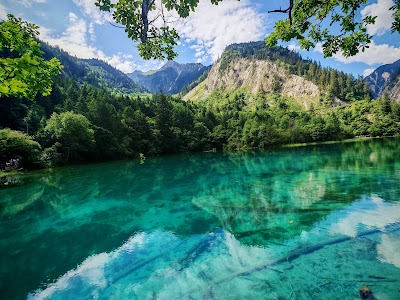
Five Flower Lake is the most photographed lake in China's most photogenic valley, the original source of whatever your feed showed you. The water is clear enough to read as air, with fallen trunks laid out below the surface like a sunken forest diorama.
Here's the honest trade: midday light is what makes the shallows glow, and that's precisely when the photo rails queue deepest. Arrive late morning, walk past the first railing (angles improve, the line shrinks), and accept you're queueing to shoot a lake that photographs itself.
Tip: The park's signature view, multi-hued shallows over fallen ancient trunks, glows best in direct midday light, so time your shuttle to arrive late morning. Expect a queue at the prime photo railings on October weekends.
珍珠滩瀑布
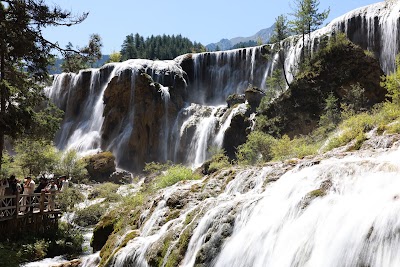
Pearl Shoal is the park's most theatrical waterfall: water sheets across a pearl-white travertine shoal, then drops 21 meters in a skirt. It's also TV royalty, since the classic Journey to the West filmed here, so generations of Chinese viewers know this water as a set.
Enter from the Five Flower end, because the upper boardwalk is one-way and walking it against the crowd is the classic rookie mistake. Afternoon thins the jam, the lower decks throw cold spray, and you will hum the Journey to the West theme. So will the group behind you.
Tip: Walk the pearl-white travertine shoal boardwalk downstream to where the sheeting water drops 21m at the Journey to the West filming spot. The upper boardwalk is one-way, so enter from the Five Flower end to avoid walking against the crowd.
Day 3
Day three trades lakes for a different format: a terraced mountainside, a high pass between parks, and a 600-year-old walled town to end in.
Huanglong
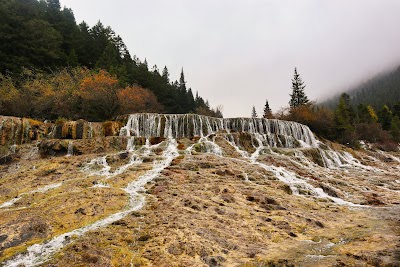
Huanglong is a second UNESCO park a few hours on, trading lakes for terraces: turquoise pools stacked like rice paddies up a mountainside. The name means Yellow Dragon, and from across the valley the gold terraces really do read as a dragon lying in the trees.
Reserve online and target the first cable car, because the lines stack mid-morning and the afternoon mountain weather has opinions. Five-Color Pond sits at 3,600 meters, where stairs convert fit adults into slow-motion philosophers. Go slow, and carry more water than feels reasonable.
Tip: Reserve Huanglong tickets online in advance and queue for the first cable car. The climb to Five-Color Pond at 3,600m demands a slow pace, a warm layer, and more water than you think; altitude bites harder here than in Jiuzhaigou.
Jiuzhaigou National Geological Park
The drive between the parks crosses high Minshan meadows under snow peaks, with roadside pull-offs you'd queue an hour for anywhere else. This is the one viewpoint in China with no ticket, no queue, no schedule, just wind with a cold opinion and gold grass flattened by it.
These mountains are genuine panda country, which explains all the bamboo, though you will not spot one from the road. Time it late: low sun gilds the peaks before the descent to Songpan, while the same stop at midday runs flat and hazy.
Tip: Break up the transfer drive with a stop at these high-meadow ridge viewpoints on the Jiuzhaigou to Huanglong road. The pull-offs sit roadside so no extra ticket is needed, and late light gilds the Minshan snow peaks before the descent to Songpan.
Songzhou Ancient City
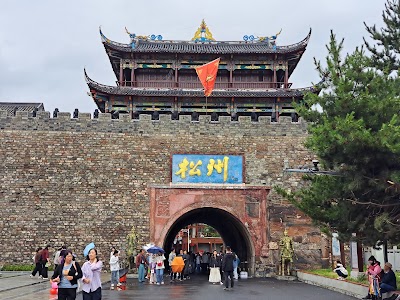
Songpan's old town is a roughly 600-year-old Ming garrison where Tibetan, Hui, and Han quarters meet along one street, a real town, not a rebuild. The walls were built for frontier wars and the tea-horse trade: horses went one way, tea went the other, everybody haggled.
Expect cold dusk on old stone, woodsmoke, and horses near the trek stables. After three days of park crowds, the quiet is the attraction. Arrive before dusk, because shops roll down early: six centuries of frontier defense, now the backdrop to your noodle dinner.
Tip: Wrap the trip at these 600-year-old Ming walls where Tibetan, Hui, and Han quarters meet along the tea-horse-trade main street. The old gates are free to walk through, and shops begin to close by 9pm so arrive before dusk.
What to book ahead
- Book Jiuzhaigou park entry and shuttle (2-4 weeks ahead for October dates) - Real-name tickets tied to passport; daily caps sell out on the official portal
- Reserve Huanglong tickets and cable car (1 week ahead) - Cable car line can exceed an hour after 10am
- Book Zhangzha hotel near the park gate (1 month ahead for autumn weekends) - Walking distance to the gate saves early shuttle queues
- Arrange Day 3 private car or driver (3-7 days ahead) - Huanglong plus Songzhou loop with luggage; taxis are scarce at the parks
- Confirm Jiuzhai Huanglong Airport (JZH) transfer (With flight booking) - Airport is ~1.5 hours from Zhangzha; prebook shared vans
What to pack
Essentials
- Warm down layer - Valley nights drop below freezing even when afternoons are sunny; days span 2,000-3,600m
- Comfortable waterproof walking shoes - Boardwalks and travertine trails cover 10+ km per park day
- Sun protection (hat, sunglasses, SPF) - High-altitude UV is fierce even in cold autumn air
- Altitude remedies and water - Days spent between 2,000-3,600m; slow pace and hydration prevent sickness
- Power bank - Long park days with heavy photo use and few charging points
Nice to have
- Binoculars - Birds and occasional wildlife across the alpine meadows
- Thermos - Yak-butter tea refills keep hands warm on morning shuttles
- Trekking poles - Huanglong's ascent to Five-Color Pond at 3,600m
- Snacks - Park food options are limited and pricey inside the gates
Final take
What lingers is water clear enough to distrust, mountains quietly building their own scenery, and a walled town to come back down to earth in.
Plan this trip
Turn this guide into an editable trip plan
Open the route in Instaboard, adjust the stops, and share the itinerary with your travel group.