Travel Guide
Kathmandu in 3 Days: Temples, Old City Lanes & a Nagarkot Sunrise (Autumn Itinerary)
Want the editable version of this route?
Open the Instaboard template and adapt stops, timing, and notes to fit your trip.
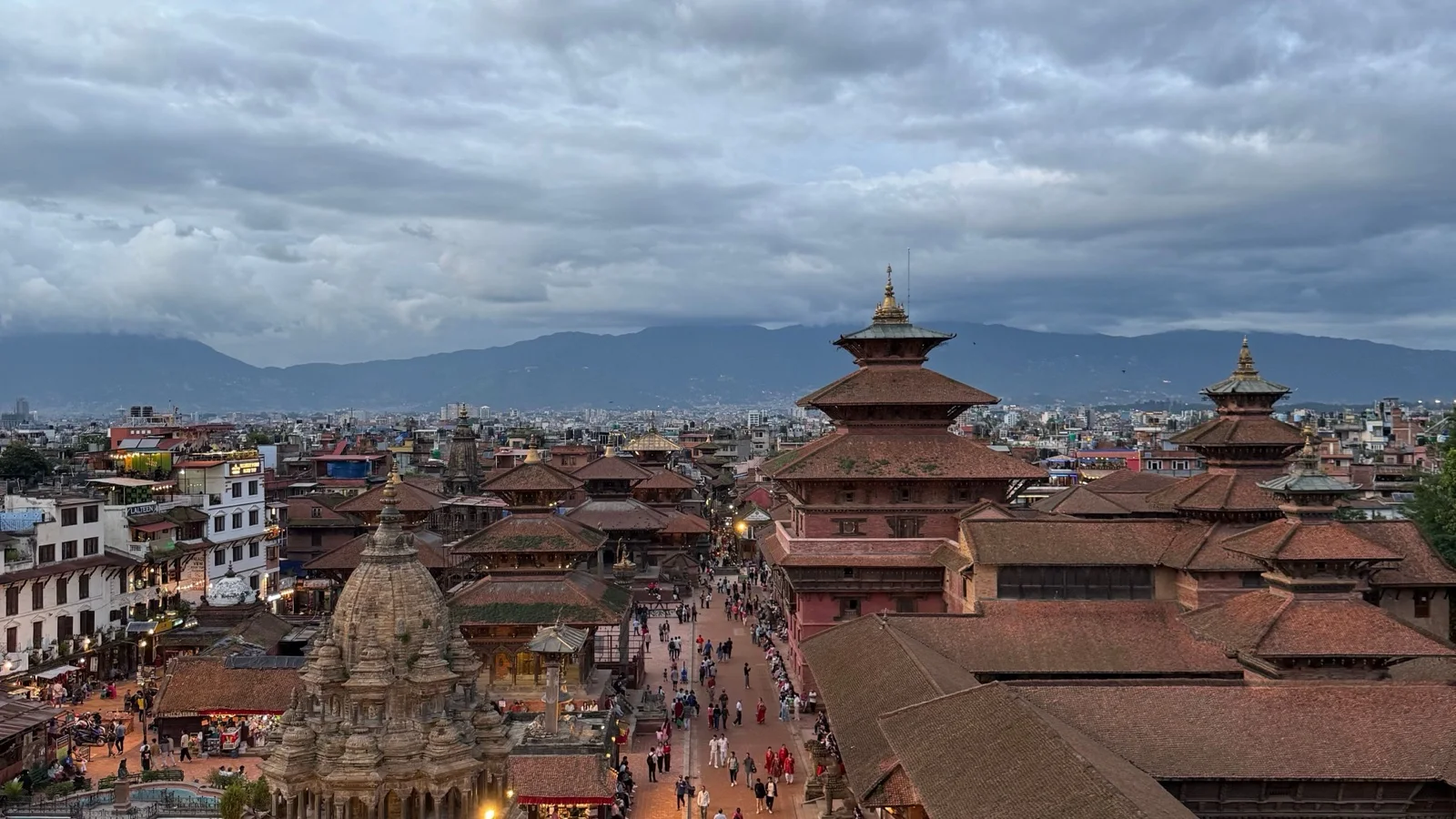
This is Kathmandu, where a child revered as a living goddess might appear at a window, and autumn hands you the Himalaya. Three days covers the valley's royal squares and a Himalayan sunrise: good timing gets you all of it, bad guesses cost you mornings.
Come in autumn and the valley switches on: monsoon haze gone, warm afternoons, cold nights, and festival season rolling through the old squares.
Day 1
Today is old-city Kathmandu: a royal square, a market running on marigolds and motorbikes, and a garden where the noise stops at the gate.
Hanumandhoka Durbar Square
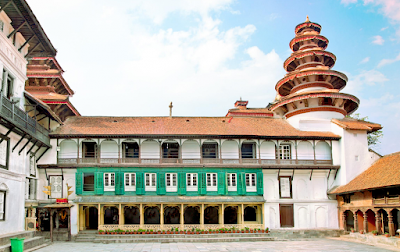
This was Kathmandu's original seat of power: a royal palace, stacked pagoda temples, and the Kumari's house, home of a living goddess. Kumari sightings are brief, silent, and photo-free, closer to a state appearance than a tourist show, which is rather the point.
Look closely and the square is still repairing itself from the 2015 earthquake: scaffolding against temple tiers, morning light raking the roofs, bells everywhere. Come at opening because you get soft side-light and an empty square. By mid-morning the buses arrive, along with self-appointed guides you can politely decline.
Tip: Start at the Hanuman gate around opening time; buy the foreigner ticket with cash or card before tour groups arrive, when morning side-light makes the pagoda tiers glow.
Ason Bazar
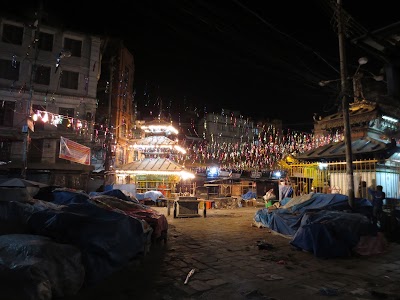
A few minutes' walk away, Ason is where actual Kathmandu shops for spice sacks, grain, and marigold garlands, in lanes trading long before tourism existed. The shrines here aren't attractions; they're obstacles the shopping flows around, small temples wedged between stalls like part of the inventory.
Chili powder, incense, and motorbike horns: I watched a scooter thread the crowd at walking pace, and somehow everyone survived. Aim for mid-morning, when trading energy peaks; earlier, half the stalls are still setting up, so carry small notes and yield to the scooters.
Tip: Walk the crossroads mid-morning when spice and flower sellers hit peak energy; carry small cash notes for street snacks and step aside for motorbikes threading the crowd.
Garden of Dreams
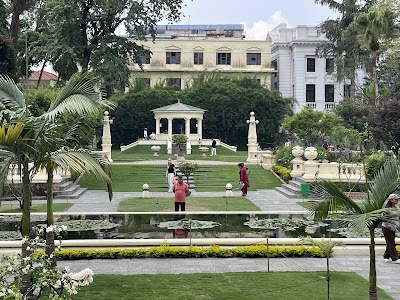
The day's exhale: Garden of Dreams, a walled neoclassical garden from the Rana era, sitting right at the edge of Thamel's loudest streets. A European-style garden in the middle of Kathmandu is the whole experience: clipped lawns, white pavilions, fountains, and birdsong instead of horns.
Set expectations at park bench, not botanical wonder; locals come here too, which keeps it a functioning garden rather than a tourist holding pen. You pay a small gate fee to hear birds instead of motorbikes, honestly good value. Claim a shaded pavilion and let the afternoon slow down.
Tip: Enter through the gate facing Thamel; tickets are sold on the spot and cards are accepted, so claim a shaded pavilion for a calm reset between temple blocks.
Day 2
Day two is Patan, the valley's crafts capital, where the carving is so dense the woodwork is the architecture, plus a museum that decodes it all.
Patan Darbar Square
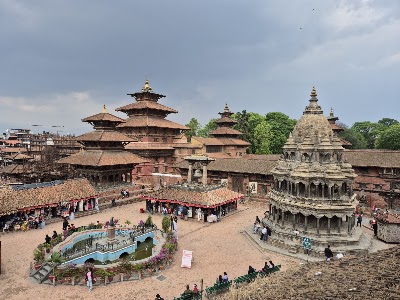
The valley had three rival royal capitals, each building its own square to outdo the others; Patan's is the one people mean by craftsmanship. Here the carving isn't decoration: the doorframes, struts, and window frames are the buildings themselves, dark wood set against red brick.
It's still a living square: residents cut straight through it on their shopping runs, and workshop alleys radiate off every side. Get there at opening because tour buses land mid-morning; that's also when light rakes the carved windows, and the combined ticket covers the museum.
Tip: Arrive at opening to beat the tour crowd and buy the combined ticket that also covers Patan Museum at the southern entry office; carved windows photograph best in morning light.
Patan Museum
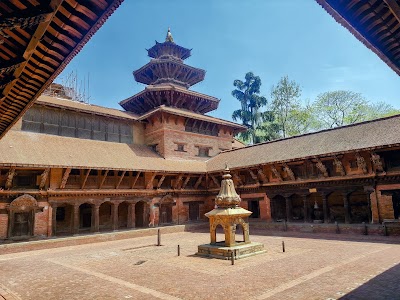
Inside the old royal palace itself sits one of South Asia's better museums of sacred art; the building is part of the collection. Twenty minutes here makes every temple in the valley legible: the bronzes, gestures, and symbols stop being noise and start being a language.
The labels explain what things were actually for, not just how old they are; start upstairs in the bronze gallery, where figures catch the lamplight. One heads-up: peak autumn weekends can carry timed entry, so check Patan Museum's hours and booking terms before you build the morning around it.
Tip: Reserve or book timed entry online in advance for peak autumn weekends; confirm opening hours, pay by card at the counter, and start with the bronze gallery upstairs.
Hiranya Varna Mahavihar
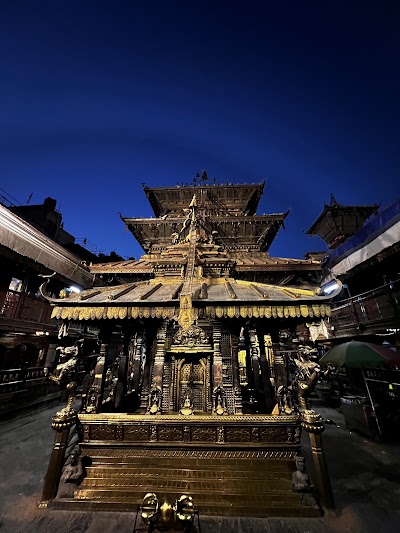
Two minutes north of the square, this is a working monastery with twelfth-century roots: small, alive, and easy to walk straight past. The courtyard facade is covered in gilded metalwork, and low autumn sun makes it blaze with butter-lamp smoke, chanting, and tortoises that outrank every visitor.
Monks live and study here, so the ritual isn't performed for you; you're just near it, which is a different thing entirely. Come in the afternoon, when the sun angle flatters the gold; shoes off at the door, voice down, small note for butter lamps.
Tip: It sits a two-minute walk north of the square; remove shoes at the door and bring a small cash donation for butter lamps beside the courtyard tortoises.
Day 3
The last day goes big: a pre-dawn bet on the Himalaya, a medieval town that still makes its own pottery, and a stupa watching everything.
Nagarkot
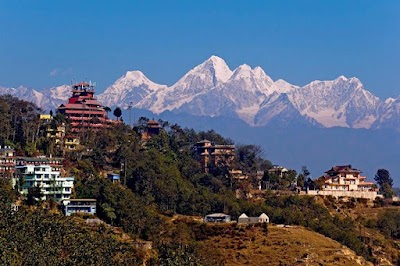
Nagarkot is the valley's classic dawn lookout; on genuinely clear autumn days, the Himalayan line runs from Annapurna toward Everest. It's a gamble by design: a pre-dawn alarm with no guarantee, and locals will tell you cloud is normal; clear is season plus luck.
Picture a crowd in down jackets staring politely at fog, pretending not to be devastated; then one ridge surfaces and everyone becomes a poet. Arrange the sunrise transfer through your hotel the day before, and dress for near-winter cold on that ridge; optimism is not a layer.
Tip: Prebook a sunrise transfer with your hotel the day before; pickups run from about 4:45am, so bring a warm layer for the cold ridge while autumn air sharpens the range.
Bhaktapur Durbar Square
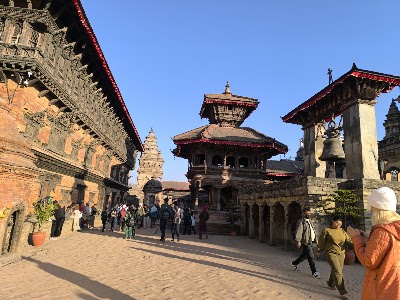
Bhaktapur is a whole medieval town core, not just one square: red brick lanes, a five-story temple, and a pottery square that's actually working. Nyatapola's stacked tiers are the valley's tallest temple and anchor its whole skyline, the one temple photo everyone takes, and nobody regrets.
The local delicacy is juju dhau, a yoghurt so serious it carries a royal title, served in its own little clay pot. Come straight here after sunrise because day-trippers flood the lanes from late morning, and hang onto your ticket, since the old city is ringed by checkpoints.
Tip: Enter through the ticket gate with cash or card, walk straight up to Nyatapola before the midday crowd, and try juju dhau from the lanes near pottery square.
Buddha Stupa
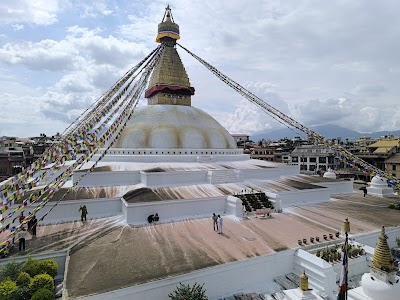
The finale is the Buddha Stupa, one of the world's largest, its painted eyes staring out on every side, orbited by an entire neighborhood. Dusk is the show: pilgrims circling clockwise, butter lamps coming alive, prayer wheels clicking under your palm, rooftop cafes framing the dome.
Four directions, one gaze, no blinking, and the kora is lived-in worship; you're joining a circuit that runs with or without you. Time the taxi from Bhaktapur to land before dusk, then join the kora clockwise and finish at a rooftop table while the lamps do the rest.
Tip: Time the taxi from Bhaktapur to arrive before dusk, then join the clockwise kora as monks light butter lamps beneath the painted eyes; rooftop cafes ring the dome.
What to book ahead
- Prebook Nagarkot sunrise transfer (1-2 days before) - Hotel or agency private car; confirm 4:45am pickup and Bhaktapur drop-off after the viewpoint.
- Book Patan Museum timed entry (2-3 days before Day 2) - Online reservation recommended in peak autumn season; card accepted on site.
- Exchange cash for entry tickets (On arrival) - Durbar Square and Bhaktapur tickets are payable in cash or card, but street stalls and taxis need notes.
- Book final-night rooftop dinner (Before Day 3) - Boudhanath rooftop cafes fill at butter-lamp hour in peak autumn season.
What to pack
Essentials
- Layered clothing - Warm afternoons but cold pre-dawn ridge starts and windy hilltop sunsets.
- Small NPR cash notes - Temple tickets, street snacks, and taxis run largely on cash.
- Slip-on shoes - You remove footwear at every temple and monastery courtyard.
- Scarf or dust mask - Old-city lanes and construction dust get thick in dry autumn air.
- Sunscreen and sunglasses - Strong high-altitude autumn sun, especially at Nagarkot.
Nice to have
- Headlamp - Handy for 4:45am Nagarkot pickups and unlit lane sections.
- Light rain shell - Occasional late-autumn showers; packs flat.
- Power adapter (Type C/D/M) - Nepali sockets vary by building age.
- Small daypack - Shoe storage and layers while temple-hopping.
Final take
However it hits you, Kathmandu sticks: a valley where gods live in the market lanes and the mountains show up when they feel like it.
Plan this trip
Turn this guide into an editable trip plan
Open the route in Instaboard, adjust the stops, and share the itinerary with your travel group.