Travel Guide
Lijiang in 3 Days: Old Town Mazes, Jade Dragon Snow Mountain & Naxi Villages (Yunnan, China)
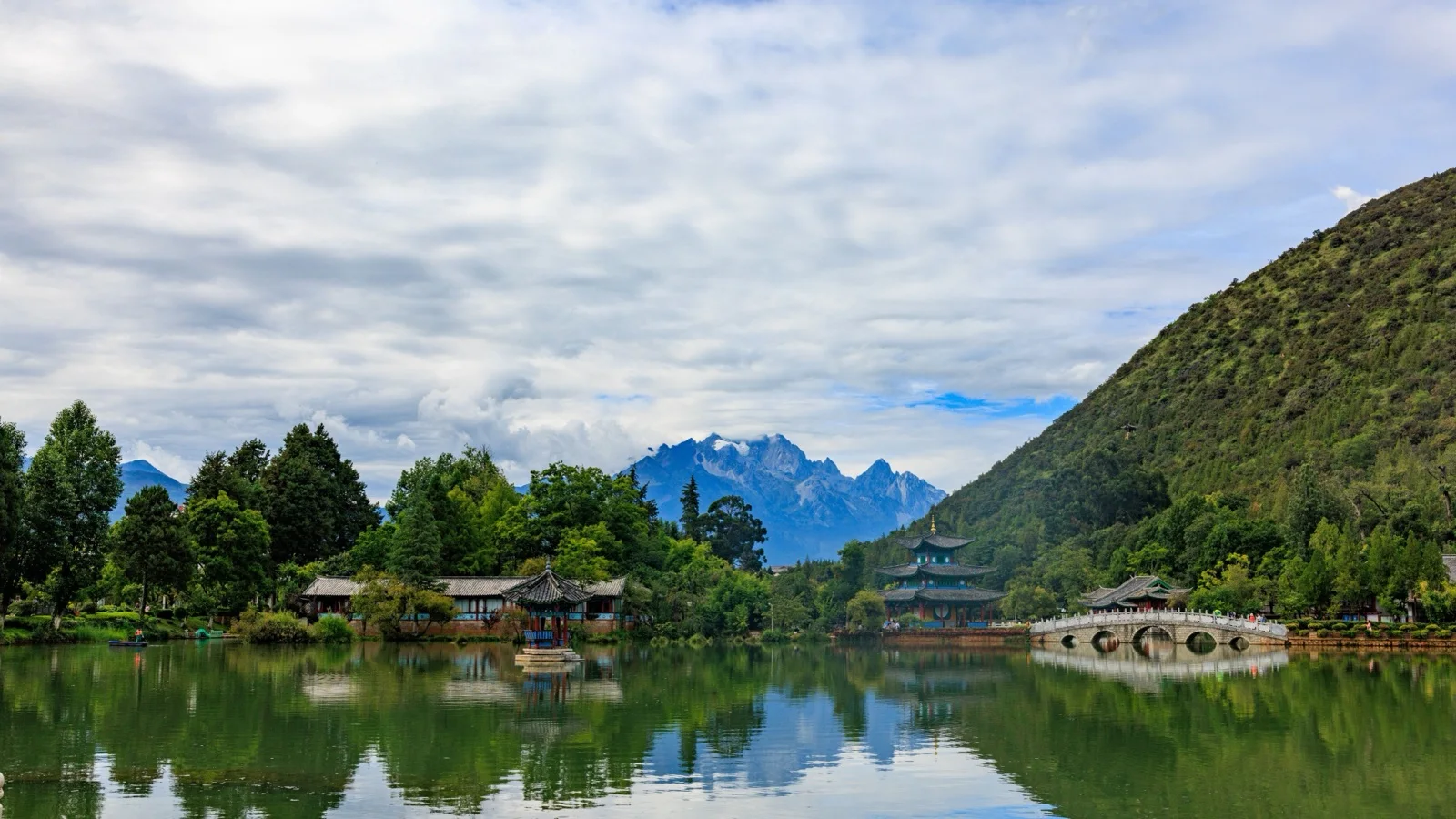
Want the editable version of this route?
Open the Instaboard template and adapt stops, timing, and notes to fit your trip.
Lijiang is a maze of canals and wooden houses in the mountains of southwest China, with a glacier-covered peak parked behind it. Three days gets you the maze, the glacier at 4,506 meters, and the villages most people skip. Good timing is what buys the view.
Spring is the sweet spot here: clear mornings, mild days in the old town, and the mountain stays visible before the summer clouds move in.
Day 1
Day one belongs to the old town itself: a UNESCO-listed maze built by the Naxi people, ending with a rooftop view over all of it.
Old Town of Lijiang
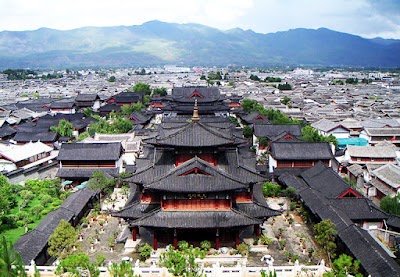
This is the Lijiang from the postcards: no cars, no grid, just cobblestone lanes, fast green canal water, and gray-tile roofs over wooden Naxi houses. The Naxi built this town along the old tea-and-horse trade routes, and a 1990s earthquake rebuild kept the wooden street plan intact.
Walk before 9:00, because by mid-morning the lanes belong to matching tour hats and the same stroll costs double the patience. Drop a pin at your hotel gate early, because these lanes defeat memory and phone maps equally.
Tip: Arrive before 9:00 to stay ahead of tour groups, then walk outward from Sifang Square along the canals; the lanes are a maze, so drop a pin at your hotel gate before exploring.
木府
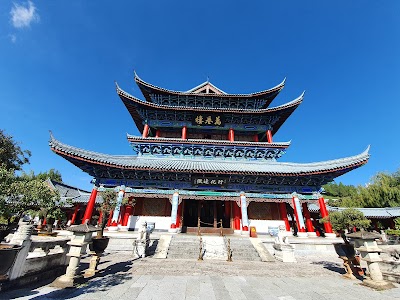
The Mu Family Mansion is the palace of the Naxi rulers who ran this region for centuries: imperial-style halls with local craft everywhere you look. The Mu family stayed in power for generations by paying tribute to whoever held the throne, which is political survival built in wood.
Climb to the top terrace, that's the payoff: the whole old-town roofline spread out below you, a wall of gray tiles. Tour groups move through in pulses, so if a hall fills up, wait ninety seconds and it's yours again.
Tip: Buy your ticket at the gate and save energy for the climb to the rooftop terrace. Last entry is about an hour before closing, and card pay works at the counter.
万古楼
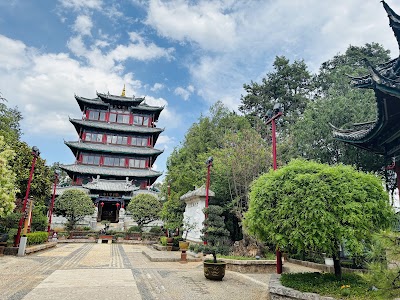
Wangu Tower is a wooden tower on the old town's high shoulder, and because Lijiang bans tall buildings here, it doubles as the observation deck. It's a modern reconstruction, impressive joinery rather than ancient stones, and honestly the view is the point anyway.
Time it for sunset, when low golden light hits the tiles and the lanes below have already emptied of day-trippers. From the gallery you'll see the snow mountain holding court behind town; yes, it's real, and it outdates the tower, the town, and the question.
Tip: Climb just before sunset for a 360-degree view over gray-tile rooftops toward the snow mountain, and bring a warm layer for breezy decks. The modest entry fee accepts cash or QR pay.
Day 2
Day two goes up: a cable car to 4,506 meters on Jade Dragon Snow Mountain, a peak nobody has ever summited, so bring your warm layer.
Jade Dragon Snow Mountain Resort
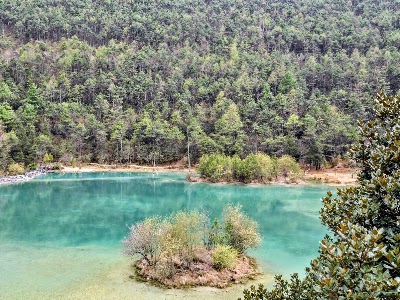
Jade Dragon Snow Mountain is sacred to the Naxi, and the big cable car lifts you to a glacier summit station at 4,506 meters. Take the first morning slot, because daily permits are capped and clouds routinely stack up by midday; early means both a ticket and a view.
Up top there are roped boardwalks over the ice, breath arrives in shorter installments, and the sun glares off snow that laughs at sunscreen. Move slowly and take the walk in stages; they sell canned oxygen at the base, which is the mountain's way of doing merch.
Tip: Prebook the big cable car for the first morning slot, since permits are capped daily, then queue early, dress in a warm layer, and ascend slowly at 4,506 m.
Blue Moon Valley
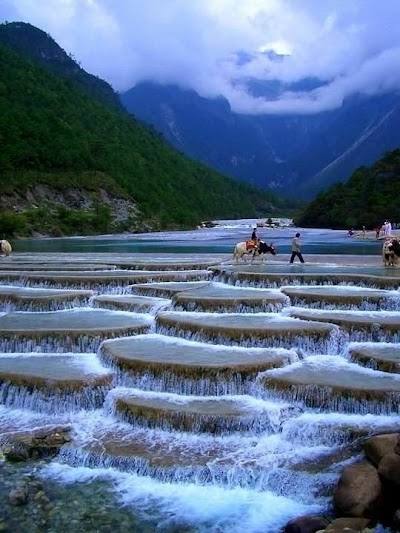
Back at the base, an eco-bus shuttles you to Blue Moon Valley, terraced turquoise pools sitting right under the snow mountain. The boardwalk runs along the water, and the color really is that absurd teal you've seen in photos, with no filter doing the heavy lifting.
The midday buses bring the crowds, so head for the upper decks of the valley, where it thins out along with the people. This is the calm exhale between the summit and the afternoon show: easy walking, water noise, and the mountain still overhead.
Tip: Hop the eco-bus from the cable car base to the valley stop, then walk the boardwalk past terraced turquoise pools; crowds build after the midday buses, so head for the upper decks.
Impression Lijiang Theatre
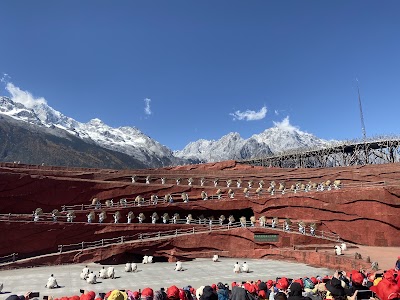
Impression Lijiang is an open-air spectacle by Zhang Yimou, who directed the Beijing Olympics opening ceremony, with the snow mountain itself as the set. Around five hundred local performers fill a mountainside with horses, drums, and mass choreography: no roof, no fake scenery, just scale.
Book the midday show ahead, because good seats vanish on spring weekends and noon light is when the mountain face looks its best. Sun cooks one cheek while wind chills the other, the stands vibrate when the full cast moves, and the horses get a better view than you.
Tip: Book the midday show in advance, because premium seats sell out on spring weekends, and bring a warm layer plus sunscreen; the open-air theatre at 3,100 m gets strong sun and cold wind.
Day 3
Day three slows way down: older villages, centuries-old murals, and the quiet side of the Naxi world before Lijiang got famous.
Lijiang Baisha Mural Scenic Spot
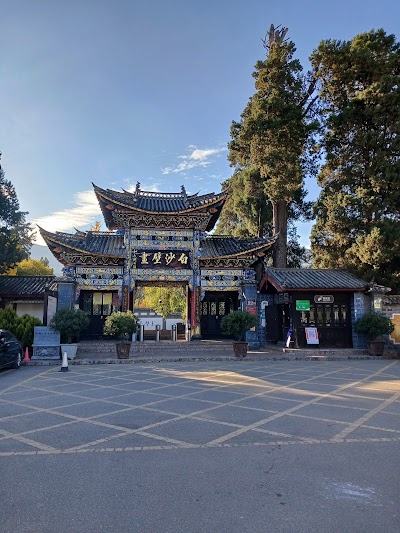
Baisha was the Naxi capital before Lijiang mattered, and its temple halls hold Ming-era murals where Buddhist, Taoist, and Naxi figures share the same walls. Three belief systems painted into one composition by Han, Tibetan, and Naxi artists in one blended style, a mix you basically can't find anywhere else.
The halls are dim and the photos will disappoint, so decide early to look instead of shoot; the detail rewards lingering. Mornings are quietest here, no flash inside, and the village outside is happy to let the murals be the whole event.
Tip: Check opening hours before heading out (roughly 8:00 to 17:30) and carry some cash for the small entry fee; flash photography is prohibited inside, and the blended Buddhist, Taoist, and Naxi imagery rewards a slow look.
Yu Wu Village
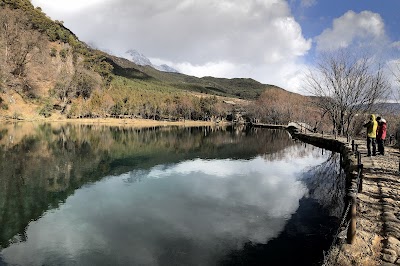
Yu Wu Village is a stone-built Naxi village under the mountain's open south face, where the botanist-explorer Joseph Rock based himself for years. Rock documented this region's plants and peoples for National Geographic in the early twentieth century, and then just kept living here, which tells you something.
Dry stone walls, horses instead of traffic, thin high-altitude light: this is the old town with nothing for sale and nobody performing it. It's a short taxi from Baisha; agree on a pickup time with your driver, because facilities out here are minimal and lunch isn't one of them.
Tip: Take a taxi from Baisha (20 minutes) and walk the stone lanes toward Joseph Rock's former residence; clear-sky mornings give the sharpest photos of the open south face.
Shuhe Ancient Town
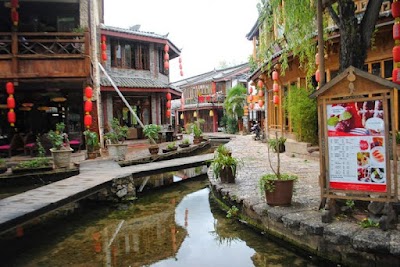
Shuhe is the smaller, calmer ancient town nearby, with the same canals and tea-horse-road roots as Lijiang's old town, but paced for people instead of processions. This was a working stop on the tea-and-horse trade route, the pack horses' town long before it was anybody's photo backdrop.
Follow the canal toward Sifang Street's cafes: slow water under stone bridges, afternoon sun on the tables, the smell of roasting tea. After three days of mazes and stairs, a town whose main activity is sitting down isn't a downgrade, it's the trip respecting your knees.
Tip: Walk in through the main gate in early afternoon and follow the canal toward Sifang Street's cafes; the town stays lively into sunset, and its flatter lanes make an easy, relaxed finale before dinner.
What to book ahead
- Book Jade Dragon Snow Mountain entry + big cable car (3-7 days before) - Spring permits are capped daily; use the official channel or your hotel and pick the earliest morning slot.
- Reserve Impression Lijiang show tickets (1 week before) - Choose the midday performance; premium seats have the best sightline to the mountain backdrop.
- Reserve Naxi Ancient Music evening seats (1-2 days before) - Ask your old-town hotel to book the 8:00 pm session.
- Book a boutique stay inside Dayan old town (2-4 weeks before) - Spring weekends fill fast; a room near Sifang Square keeps day 1 fully walkable.
- Arrange private driver for days 2-3 (1 week before) - Confirm a 7:30 pickup for the scenic area and a southern loop via Baisha-Yuhu-Shuhe on day 3.
- Check the mountain weather window (2-3 days before) - Shift the cable car morning if clouds or high winds are forecast; early spring often has the clearest skies.
What to pack
Essentials
- SPF 50+ sunscreen - High-altitude UV is intense even on overcast spring days.
- Down jacket or warm layer - Summit platforms at 4,506 m stay near freezing year-round.
- Comfortable walking shoes - Cobblestone lanes and boardwalks dominate every day.
- Sunglasses and lip balm - Snow glare and dry highland air.
- Portable oxygen canister - Buy one or two in Lijiang before riding the big cable car.
- Passport or ID - Required for scenic-area entry tickets and cable car registration.
Nice to have
- Sun hat - The open-air show and meadow stops have little shade.
- Power bank - Full-day outings with heavy photo and navigation use.
- Compact umbrella - Spring showers can pass through quickly.
- Motion-sickness remedy - Winding mountain roads on days 2 and 3.
Final take
Three days in Lijiang stays with you: stone and water below, ice and thin air above, and one mountain looming over all of it.
Plan this trip
Turn this guide into an editable trip plan
Open the route in Instaboard, adjust the stops, and share the itinerary with your travel group.