Travel Guide
Lombok in 4 Days: Beaches, Rinjani Views & the Gili Islands (Indonesia Itinerary)
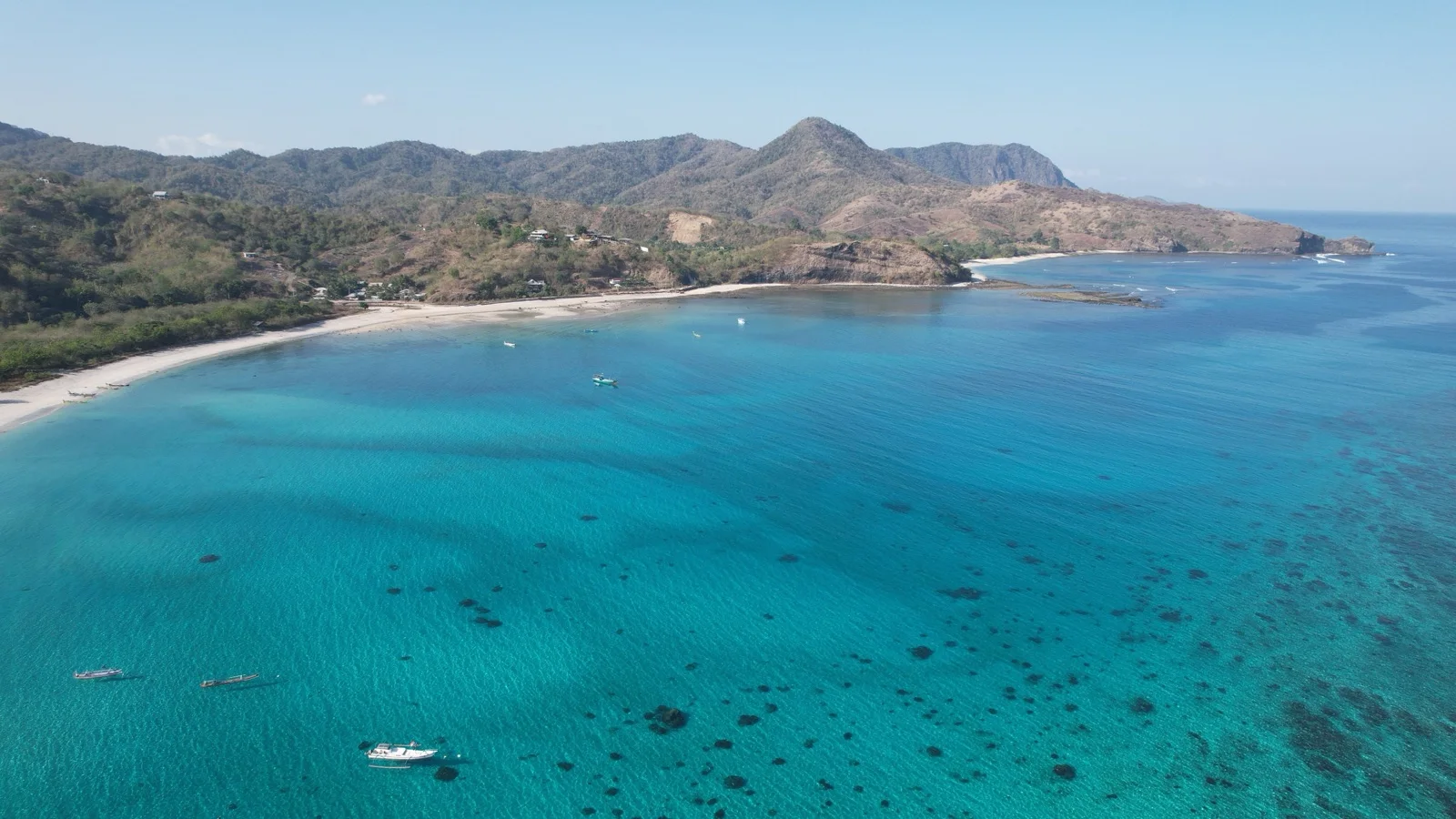
Want the editable version of this route?
Open the Instaboard template and adapt stops, timing, and notes to fit your trip.
Lombok is the quiet island next door to Bali, with a volcano that decides your itinerary and beaches without the crowds. Four days here covers surf bays, a pink-sand coast, a crater, and car-free islands, timed right, which is the part worth getting right.
Dry season is why this window works: calm seas for the boats, clear air for the crater, and cooler evenings once you climb north.
Day 1
The south coast eases you in: one surf town, one learner's bay, one grassy hill that shows you all of it from above.
Kuta Beach
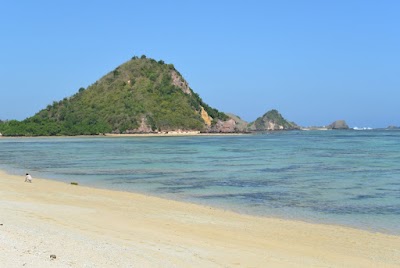
Kuta is not the Kuta you're thinking of. This one's a small surf town on Lombok's south coast, one strip, bays in every direction. It was a fishing and seaweed-farming coast until surfers found the waves and the cafes followed, and you can hear the surf from bed.
Mornings are the move because the surf's calmer, the coffee's fresh, and the sand hasn't started punishing bare feet yet. Rent a scooter on the strip. Cash for the beach warungs, cards work in cafes, and the whole south opens up.
Tip: Start slow with coffee and a board hire along Kuta's main strip. Most cafes open by 8am and accept card, but beach warungs are cash only. Walk the sandy bay between surf sets.
Selong Belanak Beach
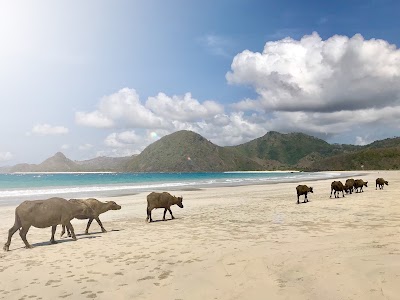
Selong Belanak is the island's learner bay, a long crescent of soft sand where the whitewater folds in slow and forgiving. A hundred first-timers fall off boards in unison, identically, repeatedly. It's the most democratic spectacle on the island.
Come after lunch because the surf-school rush thins out and the light goes soft across the whole bay. The fishing boats still pull in at the south end, where grilled fish warungs take cash only and are worth planning your afternoon around.
Tip: Book a beginner surf lesson in the soft midday waves; the lineup thins after lunch. Fresh-grilled fish warungs at the bay's south end take cash only.
Bukit Merese
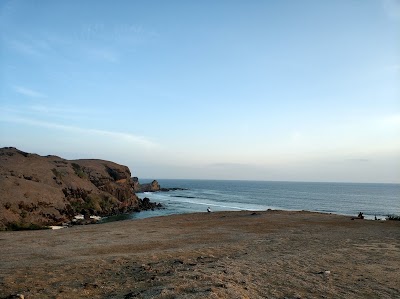
Bukit Merese is a bald grass headland at the bottom of the coast, and a short climb buys a full sweep of every bay. From the top you can name every beach you just drove and every one you haven't: the whole south laid out in gold.
Golden hour is the entire point. Get up there 45 minutes early for the climb, and pick a weekday if you can. Bring a headlamp, because the walk down has zero lighting and the grass turns slippery once the sun's gone.
Tip: Arrive about 45 minutes before sunset for the short grassy hike up the headland; bring a headlamp for the walk down and go on a weekday to dodge weekend crowds.
Day 2
Day two swings east and inland: a rose-tinted beach by boat, then villages where Lombok's actual culture lives.
Pink Beach
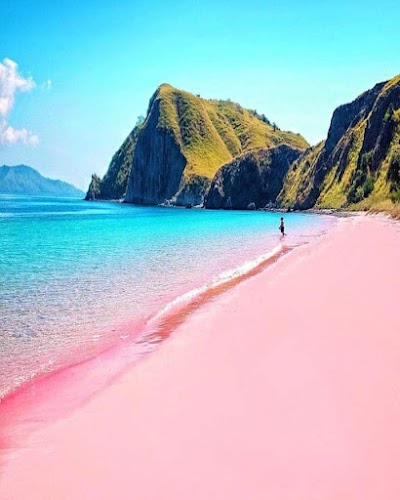
Pink Beach sits on Lombok's dry, quiet east coast. The tint is crushed red coral mixed into white sand, and it's real, just subtle. Honestly, it's pink the way rosé is red: blush, not bubblegum, and the empty boat ride over is half the point.
Go early because the seas stay calm before the wind rises and boats cluster midday, so arrange yours the day before. The snorkeling offshore actually outshines the sand; just know gear rental on the beach is cash only.
Tip: Prebook a local boat from Kaliantant or Tanjung Luar in advance; snorkel gear rental is cash only, and seas are calmest at opening time before the wind picks up.
Sade Village
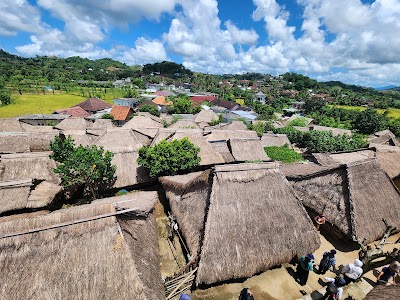
Sade is a traditional Sasak village: woven bamboo walls, peaked thatch roofs built for this heat, and people still living in them. It's part working village, part open-air museum, and the mix is honest. The looms under the houses are genuinely clacking.
Culture is heat-proof in a way beaches aren't, which is why it earns the afternoon slot. Your entry at the gate includes a local guide, so carry cash for the weaving stalls because they don't take cards.
Tip: An entry ticket includes a local guide who explains Sasak thatched architecture and weaving; buy souvenirs with cash since village stalls have no card machines.
SUKARARA WEAVING VILLAGE
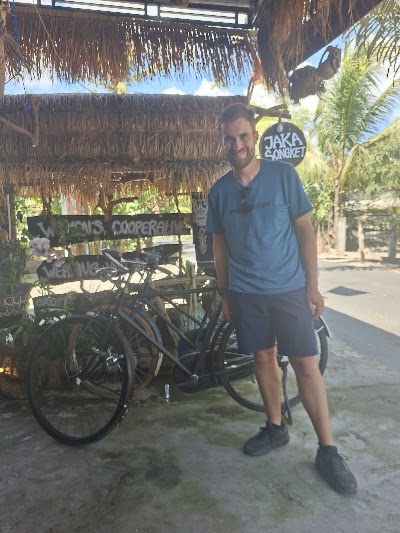
Sukarara is a working weaving village where songket cloth gets made in front of you: gold and silver thread, months per piece. They'll sit you at a loom, and one minute of failing at it teaches more respect for the craft than any plaque.
Her ten seconds produce an heirloom; your ten seconds produce a souvenir-sized error, and everyone leaves humbled. Arrive before four or the looms go quiet, and unusually for this route, the fixed-price shops here take card.
Tip: Watch weavers work songket looms and try one yourself; fixed-price shops take card, and workshops close by late afternoon so arrive before 4pm.
Day 3
North now, into volcano country: Rinjani's slopes in the morning, a jungle waterfall after, and a cliff view that sets up tomorrow.
Mount Rinjani National Park
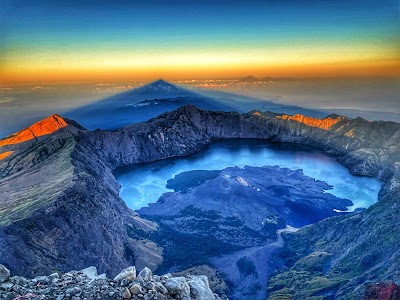
Rinjani is one of Indonesia's tallest volcanoes, its crater lake sitting inside a collapsed caldera, and Senaru gives you the scale without a summit trek. The mountain decides the itinerary: cloudy, it's a hill; clear, it rearranges your priorities on the spot.
Morning is the bet because cloud builds through the day, and when the crater shows, take it, even for ten minutes. Bring a warm layer for Senaru's mornings, and confirm trail access at the park gate because rules here change with the volcano.
Tip: Check opening hours at the Senaru park gate before the crater viewpoint walk; mornings are clearest for lake panoramas, and you will want a warm layer at elevation.
Tiu Kelep Waterfall
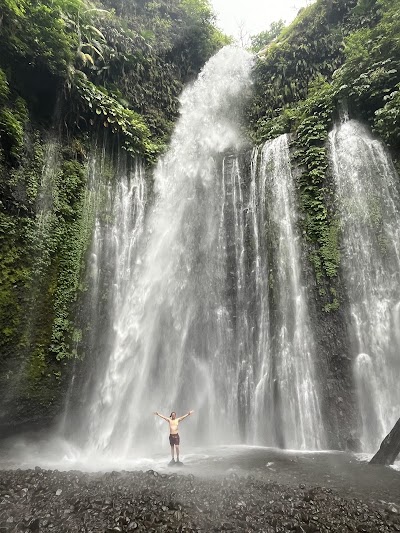
Tiu Kelep is the big waterfall on the mountain's flank near Senaru, and the jungle walk in takes about an hour each way. A local guide is required at the trailhead gate, and in high season booking ahead saves the wait.
It's a proper jungle approach, the kind where you hear the falls long before you see them. After 2pm the midday queue clears, which is why the afternoon slot works: fewer people, same waterfall.
Tip: A local guide is required at the trailhead gate, so book ahead in high season; the jungle trek takes about an hour each way and the midday queue clears after 2pm.
Malimbu Hill
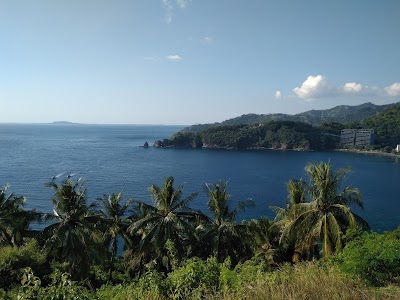
Malimbu Hill is a cliff-top pull-off on the north coast, a two-minute stop from the road with a postcard view over the bays. Tomorrow's islands sit right there on the horizon; this lookout is basically the trailer before the film.
It's strictly a sunset play, so arrive thirty minutes early because the rail spots go first. Stay ten minutes after the sun drops, because the crowd leaves in unison and the light stays good.
Tip: Time your taxi to arrive 30 minutes before sunset at this cliff lookout over the Gili horizon; it gets crowded at golden hour so claim a rail spot early.
Day 4
The last day is the island switch: boats out to the Gilis, where the loudest thing you'll hear all day is a horse cart.
Gili Islands
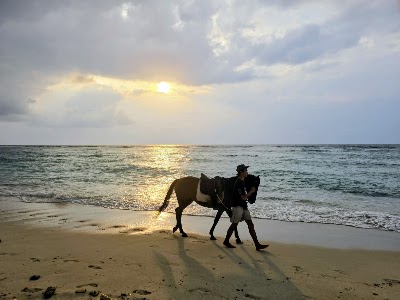
Gili Trawangan, the biggest of the three islands out here, runs on no motor vehicles at all: bikes, feet, and horse carts. Watching luggage get transferred from a boat to a horse cart never stops being the island's best running joke.
Prebook a morning fast boat from Bangsal or Teluk Nara, because the calm crossing and clearest water come before the afternoon wind. Rent a bike at the harbor, loop the whole island, then swim with turtles off the north shore.
Tip: Prebook the fast boat from Bangsal or Teluk Nara in advance for a morning departure; rent a bicycle to loop the car-free track and swim with turtles off the north shore.
Gili Meno island
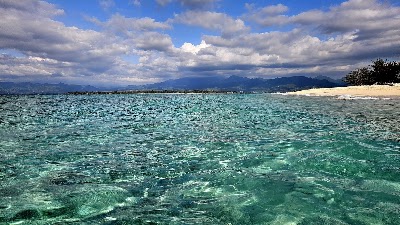
Gili Meno, the smallest of the three, is the quiet one: same strait, opposite energy, near-silent tracks. Offshore there's a circle of human figures sunk onto the seabed, and snorkeling over them is genuinely eerie, in the best way.
Small public boats hop between the islands, so confirm times locally and carry cash because Meno has few services. End on the west beach for the trip's last sunset, because the quiet here is the whole point of the finish.
Tip: Hop the small public boat across to snorkel the underwater nest sculpture; bring cash for the modest entry areas and settle on the quiet west beach for sunset.
What to book ahead
- Book fast boat tickets to the Gili Islands (3-7 days before) - Morning departures sell out in dry season; hotel pickup usually included
- Reserve Rinjani National Park entry and Senaru guide (1 week before) - Park permits and guided waterfall treks are managed at the Senaru gate
- Arrange private driver for Day 2 and Day 3 routes (1 week before) - Pink Beach and Senaru involve long transfers; agree on sunset waits at Malimbu
- Book beginner surf lesson at Selong Belanak (1-2 days before) - Morning slots have the softest waves for first-timers
What to pack
Essentials
- Reef-safe sunscreen - Long beach and snorkel days on the south coast and Gilis
- Cash in small rupiah notes - Warungs, boat tickets, and village entry fees are cash only
- Waterproof dry bag - Boat transfers to Pink Beach and waterfall swims
- Warm layer - Cool mornings at Senaru's elevation near the Rinjani gate
- Headlamp - Bukit Merese descent after sunset
Nice to have
- Snorkel mask - Turtle spots at Gili Trawangan and the Gili Meno nest
- Quick-dry towel - Waterfall swims at Tiu Kelep
- Mosquito repellent - Jungle trails and evening golden-hour stops
Final take
Four days, one island: surf you can hear from bed, a volcano that shows up when it feels like it, and total silence at the end.
Plan this trip
Turn this guide into an editable trip plan
Open the route in Instaboard, adjust the stops, and share the itinerary with your travel group.