Travel Guide
Luang Prabang in 3 Days: Temples, Kuang Si Falls & a Slow Mekong Longtail
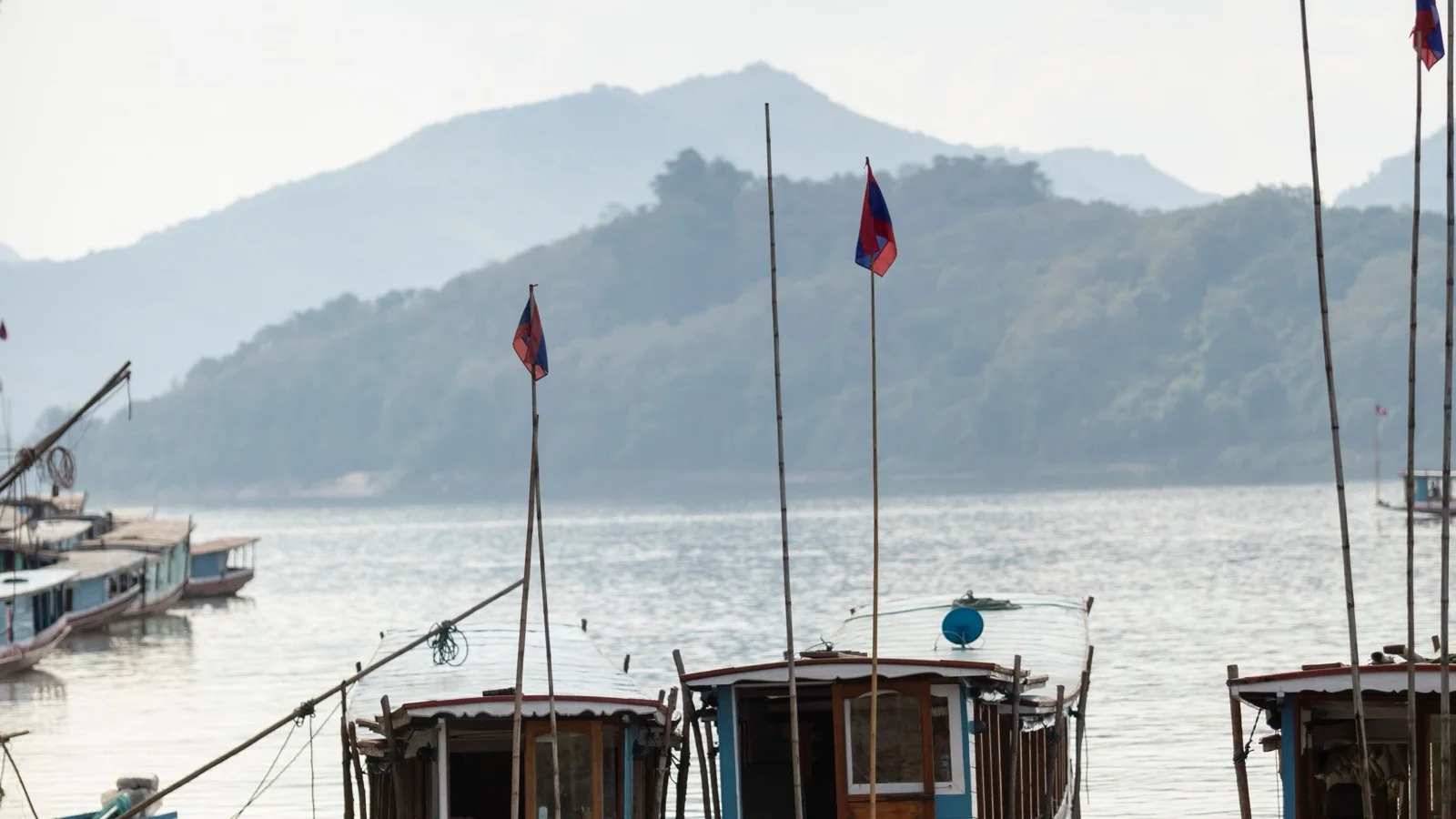
Want the editable version of this route?
Open the Instaboard template and adapt stops, timing, and notes to fit your trip.
This is Luang Prabang, a riverside town in Laos where hundreds of barefoot monks take the streets in silence every dawn. Three days covers it nicely, as long as you know which mornings are worth the alarm and which gold deserves the sunset.
Winter is the move here: crisp mornings around fifteen degrees, sunny afternoons, clear air, and an evening market at full crush.
Day 1
Today is the town's core: monks at dawn, the old royal palace mid-morning, and the country's greatest temple right before sunset.
Alms giving ceremony view
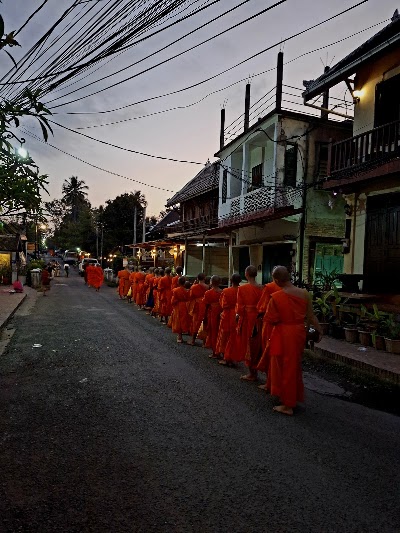
It's called tak bat, and it's Luang Prabang's defining scene: a silent line of monks in saffron walking dark streets, collecting rice at first light. It's a centuries-old exchange between monks and neighbors, and the honest framing is simple. You're a guest at someone's morning practice, not an audience.
I learned this the hard way. Be on a side street off Sisavangvong by five-thirty, because the tour groups land after that. It's the same procession either way, so sit low, no flash, an arm's length back, and let the quiet do its thing.
Tip: Rise before sunrise, claim a quiet spot on Sisavangvong by 5:30am, sit lower than the monks, buy sticky rice in advance, and bring a warm layer.
Royal Palace & National Museum
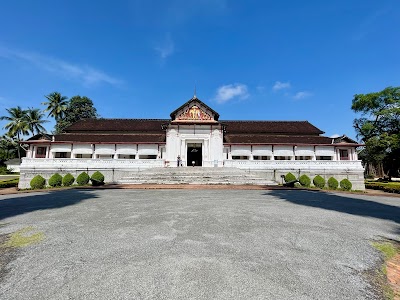
The Royal Palace is now the National Museum, the house where Laos's kings actually lived, frozen mid-sentence when the monarchy ended in nineteen seventy-five. Inside is the Phra Bang, the golden Buddha the town is literally named after, plus a throne room roughly the size of a generous living room.
You'll shuffle sock-footed past the throne holding your sneakers like a cathedral candle: cold tile, dark teak, blinds half-drawn against the courtyard glare. Go at opening, because the first hour is the calm pocket before the guided waves, so get the shoes-and-covered-shoulders routine right the first time.
Tip: Arrive at the 8am opening to beat tour crowds, remove shoes at the entry gate, and carry cash for the ticket desk.
Wat Xiengthong
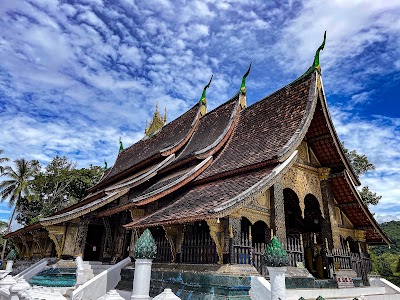
Wat Xiengthong sits at the very tip of the peninsula, where the Mekong and the Nam Khan meet: sixteenth century, and Laos's most significant monastery. Those tiered roofs sweep almost to the ground, and they're not decoration but monsoon engineering. They make the whole building look like it's taking a bow.
Save it for late afternoon, because the Tree of Life mosaic, gold and mirrored glass, needs raking light to actually perform. Walk down Khem Khong along the river instead of the main road, and don't leave the mosaic for last light. Golden hour here compresses fast.
Tip: Walk the riverside lane to the peninsula tip, buy your entry ticket at the gate, and catch golden light on the mosaics before sunset.
Day 2
Today goes turquoise: a waterfall before the crowds, silk looms after lunch, and three hundred steps to earn your sunset.
Kuang Si Waterfall
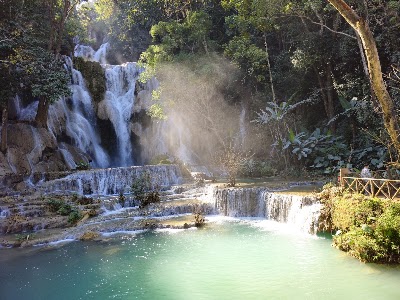
Kuang Si is the northern Laos postcard, a three-tiered waterfall about an hour out of town, with pools in a turquoise that looks retouched. The water built its own sets: dissolved limestone re-depositing into travertine terraces, nature doing hotel landscaping one layer at a time.
Leave town before eight, because the tour-bus wave lands mid-morning. The first hour is near-empty, and the upper falls thin out fastest. Pack a swimsuit; the water's cold enough that bravery lasts about two minutes. The rescue bears near the entrance deserve a stop.
Tip: Prebook a morning minivan or tuk-tuk to hit the 8am opening before crowds, bring a swimsuit, and pay entry cash at the gate.
Ock Pop Tok Living Craft Centre
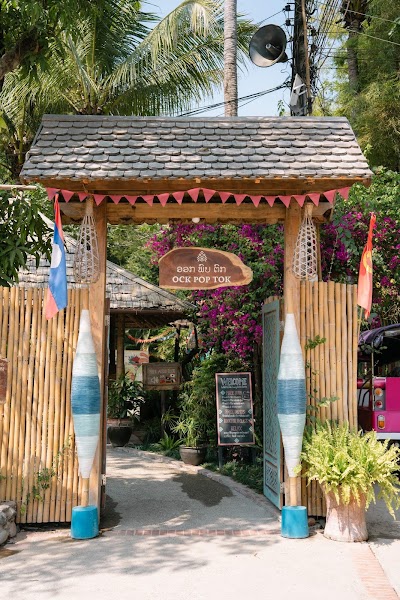
Ock Pop Tok, 'east meets west', is a working weaving center on the Nam Khan: dye gardens, silkworms, and looms you hear before you see. This is where handwoven silk starts making sense: household knowledge passed down generations, and one scarf can take longer than your holiday.
The weavers' indigo-stained fingernails honestly out-credential any guidebook, and your own attempt will look like a potholder next to theirs. Book the weaving or dye class online ahead, because spots are the scarce part, and make the riverside café lunch a meal with a view, not a snack.
Tip: Book a weaving or dye class online in advance, note the free shuttle from town fills quickly, and make the riverside café an easy lunch.
Phousi Hill
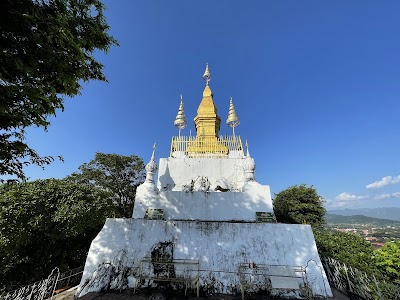
Phousi is the sacred hill dead-center in town, a gilded stupa on top and three hundred-odd steps between you and it. The payoff is orientation: Mekong on one side, Nam Khan on the other, the whole peninsula laid out like a map you just walked.
Shrines and incense stud the climb, and everyone negotiates with their quads in at least five languages. Start well before sunset to beat the gate crush. Coming down is the tricky part: steps vary in height, it's dark within minutes of dusk, and a phone light earns its keep.
Tip: Start the 300-step climb by 4:30pm for a sunset spot at the stupa gate; the ticket is cash only and weekends get crowded.
Day 3
The finale belongs to the river: Buddha caves up the Mekong, a whisky village on the way home, and a slow boat into sunset.
Pak Ouv Caves
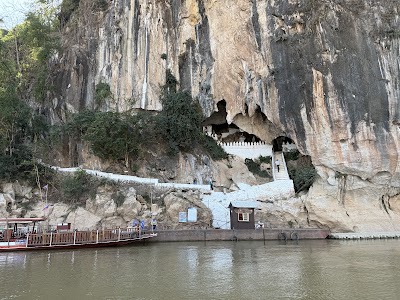
The Pak Ou caves are a cliff-face pilgrimage site up the Mekong, where Buddha images have been left accumulating for generations, reached only by boat. The longtail ride is half the point. In the dry season the river runs low, sandbanks out, and the water slides over them like poured glass.
Arrange a shared longtail at the quay the day before, and carry cash for the cave entry; that's today's one real booking. After two days of gold and noise, the caves are the solemn beat: dark, echoing, unhurried. Then the boat swings back and the tone flips entirely.
Tip: Reserve a shared longtail at the quay the day before, or prebook a tour with hotel transfer, and carry cash for the cave entry ticket.
Ban Xang Hai - café
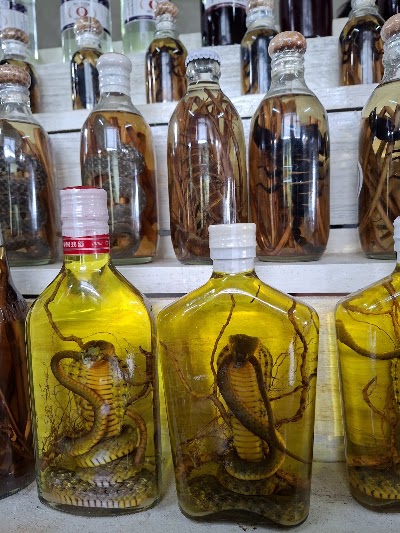
Ban Xang Hai is the whisky village; boats from Pak Ou pull in here on the ride home, steps from stills of lao-lao, rice firewater. You'll watch the old-school distilling, weaving on the porches, and bottles with a coiled snake inside. Tourist bait, sure, but bait with heritage.
The sample arrives alarmingly early in the day, so pace yourself; there's still a boat, a sunset, and your general dignity to protect. You stop here because every Pak Ou boat does, so keep small kip notes handy and a light touch on the souvenirs.
Tip: Watch lao-lao whisky being distilled on the ride home, and keep kip cash for small souvenirs.
Mekong Kingdoms River Cruises
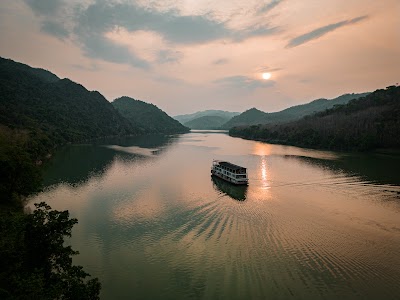
The finale is a slow boat on the Mekong at golden hour. The river is Luang Prabang's original main street, and you've earned a seat. Every dynasty, trader, and teak log in this town's story arrived by water; the river was the highway long before there were roads.
Then the engine drops to idle, the water flattens to copper, and a boat full of tired travelers goes collectively, gloriously quiet. Reserve ahead, because sunset seats book out, sit facing the western bank, and bring a layer because the river goes cold after dark.
Tip: Book sunset cruise seats in advance for winter high season, and arrive at the jetty 20 minutes early with a warm layer.
What to book ahead
- Book Royal Palace museum entry (1–2 days before) - Timed morning slots beat tour groups; occasionally closed for state functions.
- Book Mekong sunset cruise seats (2–3 days before) - Winter departures sell out; confirm jetty location and arrival time.
- Reserve Pak Ou longtail boat or tour (1 day before) - Shared boats leave the quay early; hotel transfer can be added.
- Book Ock Pop Tok craft class (2–3 days before) - Weaving and dye classes cap at small sizes; free town shuttle included.
- Arrange Kuang Si transport (1 day before) - Charter a tuk-tuk or prebook a minivan to hit the 8am opening.
- Confirm sunrise alms-giving spot (On arrival) - Ask your guesthouse for the quietest stretch of Sisavangvong Road.
What to pack
Essentials
- Light layers - Winter mornings dip to ~15°C before sunrise; afternoons warm to 28°C.
- Modest temple wear - Covered shoulders and knees required at every wat and at the alms ceremony.
- Slip-on shoes - You'll remove them at every temple and museum entry.
- Kip cash - Entry tickets, tuk-tuks, boats, and the night market are cash-based; ATMs are sparse on side streets.
- Swimsuit and dry bag - Kuang Si pools are swimmable and at their clearest in the dry season.
- Reef-safe sunscreen - Strong winter sun on the river and at the falls with little shade.
Nice to have
- Sarong or sitting mat - Expected etiquette for watching the alms line at dawn.
- Binoculars - Kingfishers and river life along the Mekong and Nam Khan.
- Small towel - Handy after waterfall swims and humid cave climbs.
- Power bank - Long river days outpace phone batteries on photo-heavy stops.
Final take
Luang Prabang sticks with you: a town that hands you silence at dawn, turquoise at midday, and a copper river at night.
Plan this trip
Turn this guide into an editable trip plan
Open the route in Instaboard, adjust the stops, and share the itinerary with your travel group.