Travel Guide
Miyajima in 3 Days: Shrines, Mountain Trails & Oyster Stalls
Want the editable version of this route?
Open the Instaboard template and adapt stops, timing, and notes to fit your trip.
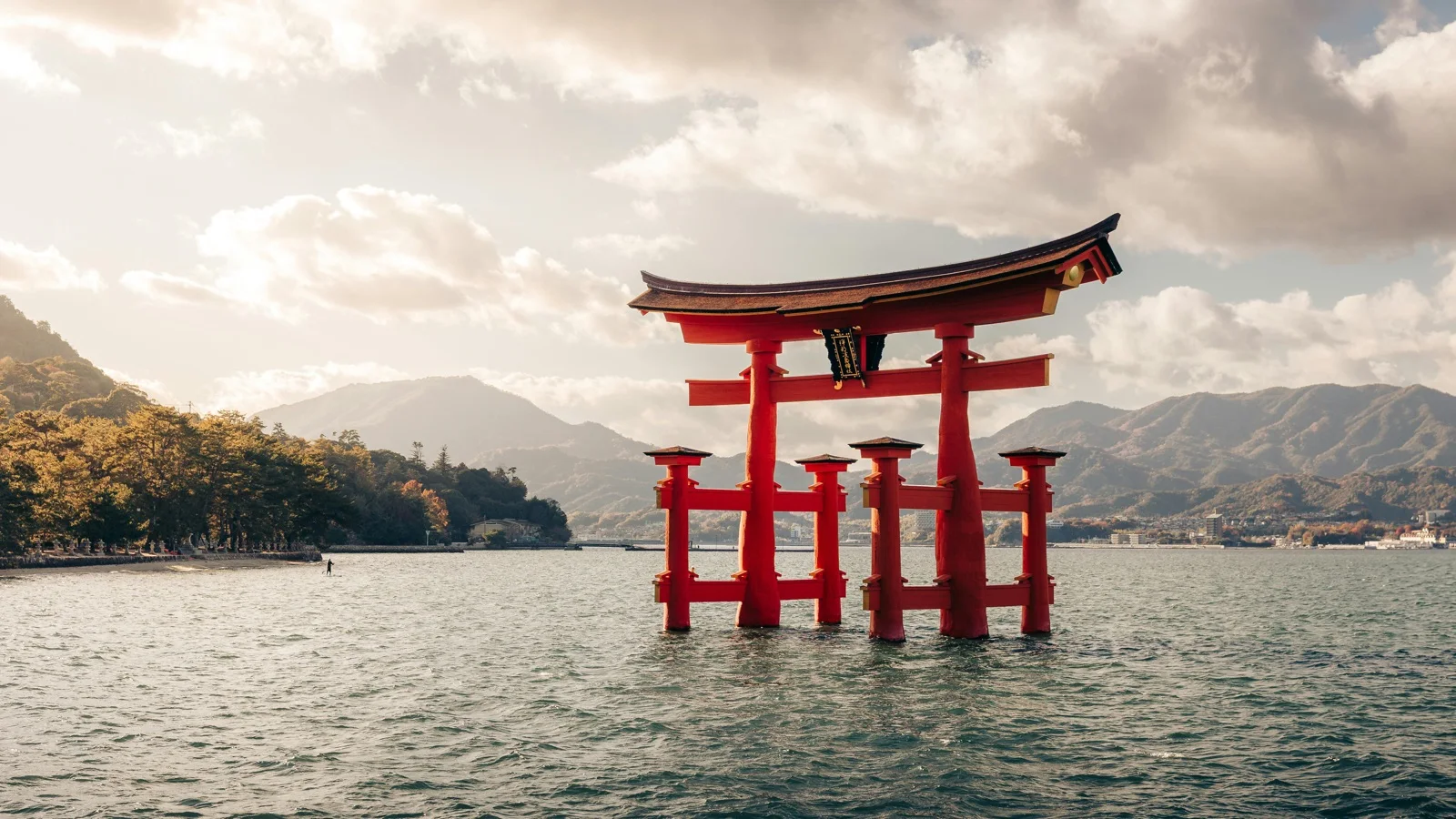
There's an island off the coast of Hiroshima where a giant red gate just stands in the ocean, deer roam the streets stealing food from tourists, and the whole place has been considered too sacred to step on for most of recorded history. Three days is enough to see all of it: the shrine, the mountain, the food lane, even the ferry over to Hiroshima itself, without guessing what order anything should go in.
Miyajima sits in the Seto Inland Sea, so the climate stays mild most of the year. Spring brings cherry blossoms, autumn sets the maples on fire, and winter gives you the shrines nearly to yourself.
Day 1
Day one is the waterfront. That red gate in the shallows, the shrine corridors floating above the tide, and the pedestrian street where grilled oysters and sacred deer compete for your attention.
Itsukushima Shrine Otorii Gate
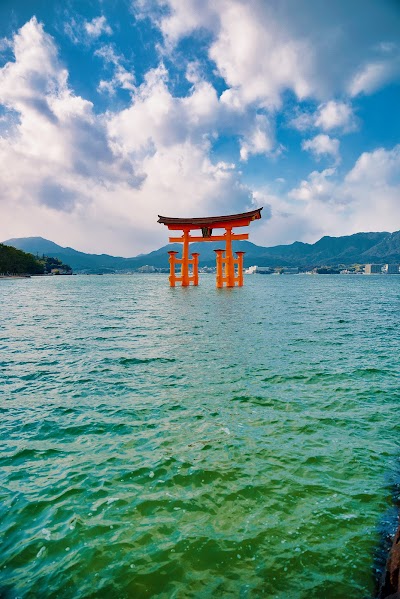
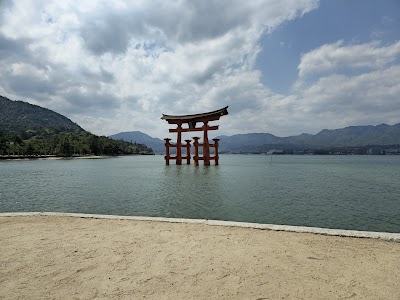
The Otorii Gate is the shot you've seen a hundred times: a sixteen-meter vermilion torii standing in Hiroshima Bay, one of Japan's three most celebrated views, a list that dates back to 1643. The thing weighs about sixty tons and has no foundation. It stands on nothing, held in place by its own weight and whatever stubborn physics keeps old Japanese structures upright.
The experience flips completely depending on the tide. Low tide, you walk out through the mud right up to the barnacle-crusted pillars. High tide, the gate looks like it's hovering, reflected in still water. Get here before ten because the day-trip ferries arrive and the mud turns into a group photoshoot. Check a tide chart beforehand, because you want to know which version of the gate you're walking into.
Tip: Walk out to the torii at low tide to stand directly beneath the massive vermilion pillars. Check the tide schedule online before you arrive so you can time your photos perfectly.
Itsukushima Jinja
A few steps from the gate is Itsukushima Shrine, a whole complex of corridors and pavilions built on stilts over the tide, UNESCO-listed, layout essentially unchanged since the twelfth century. The island was considered so sacred that commoners weren't allowed to touch it until the Meiji era. They had to stay on boats and bow from the water. The shrine was the compromise, built over the sea so nobody stepped on holy ground.
At high tide the floorboards creak under your feet and you can see seawater through the gaps between the planks. The acoustics shift as the water rises, with footsteps echoing differently depending on what's underneath. Grab the combined ticket at the entrance that covers the corridors and the treasure hall. Come early, before the tour groups fill the covered walkways, because the building sounds completely different when it's just you and the wood.
Tip: Purchase a combined ticket at the entry gate that covers both the shrine corridors and the treasure hall. Arrive early to avoid the heaviest crowds and catch the pavilions at their most serene.
Miyajima Omotesandō Shopping Street
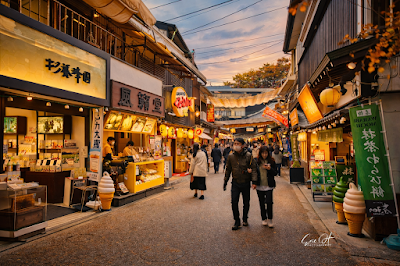
Omotesando is the island's main drag: one pedestrian lane packed with family-run shops grilling oysters, pressing maple-leaf-shaped cakes, and serving conger eel rice. This is where Miyajima eats. The deer here are sacred, free-roaming, and absolutely shameless. They will eat maps, tickets, and plastic bags with genuine enthusiasm. Every tourist ends up in the same standoff, holding a grilled oyster in one hand while fending off a deer with the other.
Hiroshima is one of Japan's major oyster-farming regions, so the grilled version on this street is about as local and fresh as it gets. The smoke drifts between shop fronts and hits different after a morning of cold sea wind. Bring cash, because a lot of the family stalls don't take cards. Whatever you do, protect your food, because the deer are patient and they always win eventually.
Tip: Bring cash as many family-run food stalls don't accept card payments. Grilled oysters and fresh momiji manju are essential stops along this atmospheric lane.
Day 2
Day two goes upward. A twelve-hundred-year-old temple at the base of the mountain, an unfinished sixteenth-century hall halfway up, and then the summit views across the entire Inland Sea.
Daishoin
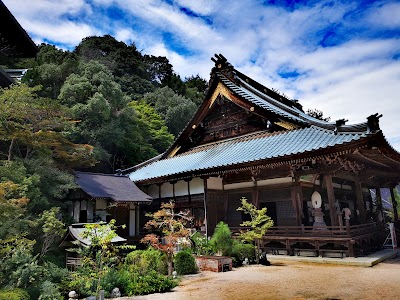
Daishoin is the temple most day-trippers skip. It's a Shingon Buddhist complex at the foot of Mt. Misen with about 1,200 years of history and an atmosphere that makes the waterfront shrine feel like a tourist attraction by comparison. The entrance has a row of spinning prayer wheels you turn as you walk past, a physical, tactile thing you participate in just by moving through. Beyond that, the grounds keep going uphill, cooler under the cedar canopy than down by the shore.
This is the administrative head of every temple on the island, and the guardian of Mt. Misen itself. The founder supposedly lit a fire on the summit that's been burning for over a thousand years. Come early because the tour groups are still down at the torii gate photographing each other. You'll hear incense rattling in the halls and low chanting instead of crowd noise.
Tip: Walk the circuit of spinning prayer wheels at the entrance for a meditative start. The temple grounds open early and feel magical before tour groups arrive.
Hokoku-jinja (Senjokaku Pavilion)
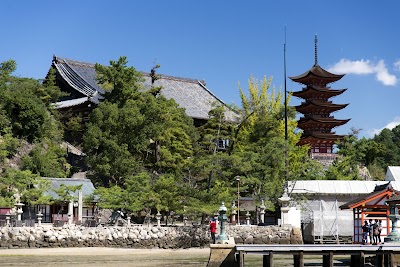
Senjokaku is a massive wooden hall perched on the hillside above the shrine, the 'Pavilion of a Thousand Mats,' commissioned by Toyotomi Hideyoshi in 1587 to recite sutras. Then he died, and nobody ever finished it. Over four hundred years later it still has no ceiling, just open rafters stretching up to the roof, wind passing through the gaps, bare wood everywhere. They eventually gave up and declared it a shrine to his spirit.
The scale catches you off guard. You don't expect this much raw, empty interior space on a small island. Edo-period kabuki actors carved graffiti into the pillars, and it's still visible if you look closely. It takes maybe thirty or forty minutes, because the hall is the whole stop. The hilltop position overlooking the bay is worth the short climb even if you just stand outside.
Tip: A modest entry fee grants access to the vast unfinished wooden hall commissioned by Toyotomi Hideyoshi. The hilltop position rewards you with sweeping views of the bay below.
Mount Misen
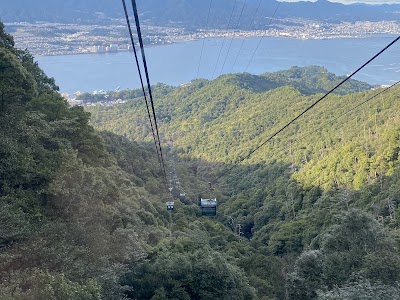
Mount Misen is the island's highest point at 535 meters, and from the summit you can see why people thought this place was divine. The entire Seto Inland Sea is scattered with islands in every direction. Near the top, a fire that Kobo Daishi supposedly lit in the ninth century is still burning. The primeval forest covering the mountain has never been logged. It's part of the UNESCO designation and essentially unchanged for millennia.
You can take the ropeway most of the way up and then hike the last thirty minutes to the summit, or hike the Daishoin trail through cedar and moss-covered stones if your legs are cooperating. Either way, carry water and a warm layer because it gets cold up there. Afternoon light across the Inland Sea is the payoff for doing the temples in the morning. If you're hiking the Daishoin trail down, you'll hit stretches where it's just you and the forest, even on a busy day.
Tip: Prebook ropeway tickets during peak autumn season to skip the queue. If hiking the Daishoin trail, carry water and wear warm layers as temperatures drop near the 535-meter summit.
Day 3
Day three is a quiet morning walk through maple trees before a ferry and a short train ride bring you face to face with the heaviest stop on the itinerary.
Momijidani Park
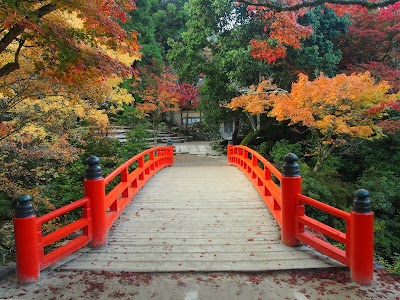
Momijidani Park sits at the base of the mountain. The name literally means 'maple valley,' and if you time it for mid-to-late November, the canopy turns the whole lane into something close to a stained-glass window. The maple trees have been maintained here for centuries, originally planted to beautify the approach to the shrine and the mountain temples. A stream runs through it, stone bridges cross it, and deer graze along the paths in early morning before anyone else shows up.
Outside of autumn it's a quieter, more austere walk: bare branches in winter, stone paths visible without the canopy hiding them. Not the postcard version, but honest. Come early for the stillness and the deer, because this is a gentle farewell to the island before the afternoon shifts the whole tone of the trip.
Tip: Take a gentle walk along the stream in early morning when deer are active and paths are quiet. In autumn the blazing maple canopy is unforgettable.
Peace Memorial Park - Hiroshima
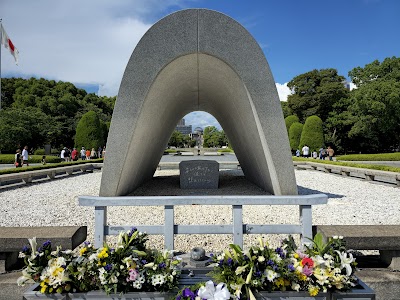
Hiroshima's Peace Memorial Park is forty-five minutes from Miyajima by ferry and train, and it's a completely different weight than everything else on this trip. The Atomic Bomb Dome is the only structure left standing near where the bomb detonated six hundred meters overhead on August 6, 1945. It was preserved in its ruined state on purpose, a decision that took decades of debate, because some survivors found it too painful to look at.
The park itself is landscaped and calm, designed by Kenzo Tange in the 1950s. The contrast between the quiet grounds and what happened here is deliberate. The museum inside is where the weight really lands. It uses timed entry and can sell out during busy stretches, so book online if you can. Give yourself the full afternoon, because the exhibits are graphic and unflinching and not something to rush.
Tip: Transfer from Miyajima via the JR ferry and Sanyo Line to Hiroshima Station, then walk 15 minutes to the park. Allow a full afternoon to absorb the museum exhibits and cenotaph thoughtfully.
What to book ahead
- Book JR Miyajima Ferry + Sanyo Line pass (2 weeks before) - If you have a JR Pass, the ferry from Miyajimaguchi is covered.
- Reserve ryokan or hotel on Miyajima (1-2 months before) - On-island accommodation is limited; Hatsukaichi city is the fallback.
- Prebook Hiroshima Peace Memorial Museum timed entry (1 week before) - Museum requires reserved time slots on weekends and holidays.
- Check ropeway operating schedule (1 day before) - The Miyajima Ropeway occasionally closes for maintenance or high winds.
What to pack
Essentials
- Comfortable walking shoes - Steep trails on Mt. Misen and extensive walking on the shrine corridors require solid footwear.
- Cash (yen) - Many street food vendors and smaller temples are cash-only.
- Sunscreen and hat - Open-air shrine corridors and the Mt. Misen summit offer little shade.
Nice to have
- Light rain jacket - Coastal weather shifts quickly; ferry crossings can be breezy and damp.
- Camera with zoom lens - The torii gate at a distance and panoramic summit views reward a decent lens.
- Tide chart printout - Timing your torii visit around low vs high tide dramatically changes the experience.
Final take
Three days gets you the floating gate, a sacred mountain, oysters worth fighting deer over, and the train ride to Hiroshima that reminds you why any of these places matter.
Plan this trip
Turn this guide into an editable trip plan
Open the route in Instaboard, adjust the stops, and share the itinerary with your travel group.