Travel Guide
Namhae, South Korea: 3-Day Summer Road Trip (Orange Bridge, Rice Terraces & Sea Temples)
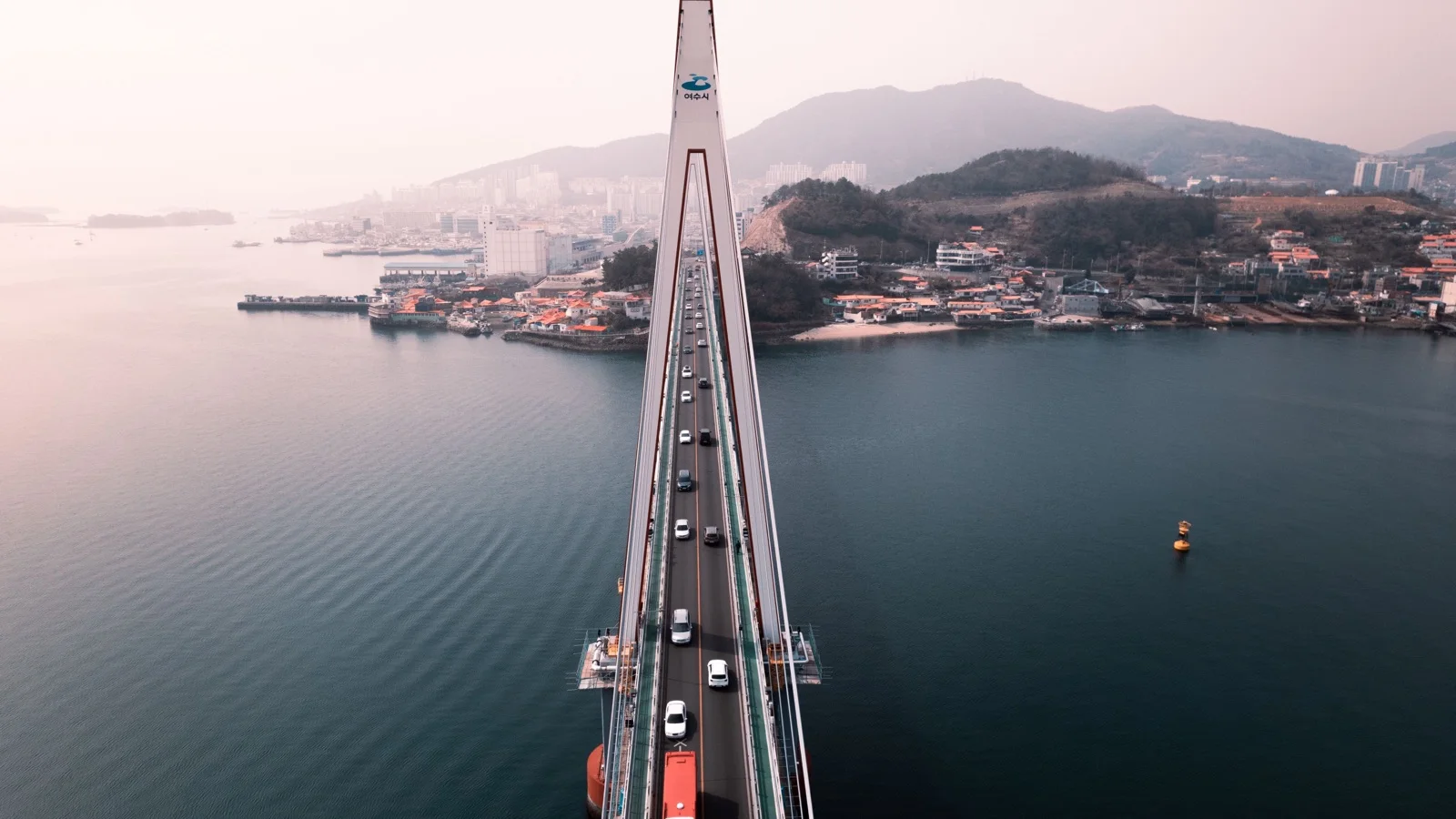
Want the editable version of this route?
Open the Instaboard template and adapt stops, timing, and notes to fit your trip.
Namhae is a small island off Korea's south coast where rice paddies grow on hillsides that drop straight into the sea. Three days here can feel effortless or like a slow loop through weekend traffic, and that mostly comes down to timing.
Namhae is a road-trip island: bluffs, beaches, and viewpoints along a folded coast. Summer is when the rice glows green and the sea turns swimmable.
Day 1
A coastal morning, an aerial afternoon, and a swim at dusk. Day one stacks three different vantage points and ends at the water.
Namhae Bridge
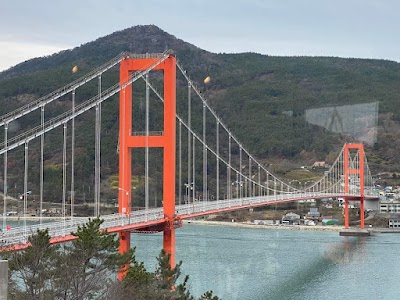
Namhae Bridge is the only road onto the island, a red suspension span over a narrow strait, and you'll cross it whether you stop or not. It's one of Korea's earlier landmark suspension bridges, long called the gateway to Namhae, because until other links existed, this was the crossing.
The funny part is you came for coastline and your first great shot is a bridge, but the red against green hills and grey sea genuinely earns it. Pull off at the viewpoint right after the mainland side, and go early because summer weekends jam that pulloff by mid-morning.
Tip: Stop at the viewpoint pulloff right after you cross from the mainland. The red span is quietest at sunrise, so arrive early to beat the weekend crowd.
Sacheon Ocean Cable Car Gaksan Station
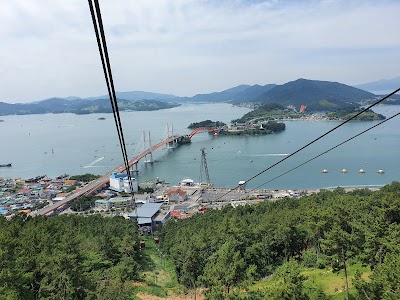
The Sacheon Ocean Cable Car lifts cabins over the coastal strip near Namhae, and from the top you finally see how folded this shoreline is. This is a ria coast, where the sea flooded old river valleys, so from above it's islands and inlets layered into each other, not a clean beach.
You drove all the way to the coast and then paid to float above it, which is either lazy or brilliant, and the view justifies either. Buy tickets online because summer afternoons stack a real queue, and know that coastal wind can shut the cabins with no warning.
Tip: Ride from Gaksan Station for aerial views of the coastline. Buy your ticket online to skip the afternoon queue, and note that strong wind can close the cabins.
Sangju Eunmorae Beach
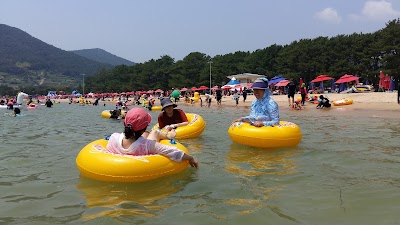
Sangju Eunmorae is Namhae's most popular swimmable beach, with silver sand, a beachfront drive course, and water shallow enough to walk out surprisingly far. The thing you notice is the shallowness: you walk out what feels like too far and you're still standing, which is rare for a beach this busy.
This is peak Korean summer, families, tents, umbrellas, the works, and the charm is exactly that cheerful, crowded ordinariness. Come after five or on a weekday because summer Saturday parking here is its own event, and the beachfront drive is best at sunset.
Tip: The shallow water is perfect for a warm dip. Parking is easiest on weekdays, and the beachfront drive course is lovely at sunset.
Day 2
Day two is where Namhae gets strange: a German village on a Korean hillside, a lone windmill on a bluff, and rice terraces running into the sea.
Namhae German Village
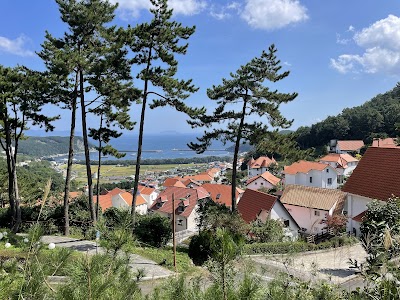
The Namhae German Village is half-timbered, orange-roofed European homes stacked on a hillside above the Korean sea, and nothing else on this coast looks like it. It's here because in the 1960s thousands of Koreans went to West Germany as miners and nurses, and this village was built later to welcome them home.
Now it sells sausage and pretzels to tour buses, the honest gap between a moving origin story and a pastel photo-op, and both are true. Climb to the upper terraces first for the cleanest sea panorama, and go in the morning because by early afternoon the cute corners have pose lines.
Tip: Wander the hillside among colorful homes and cafes, and bring cash for small bakeries. Walk up to the upper terraces for the clearest coastal panorama before the midday crowd.
Windy Hill
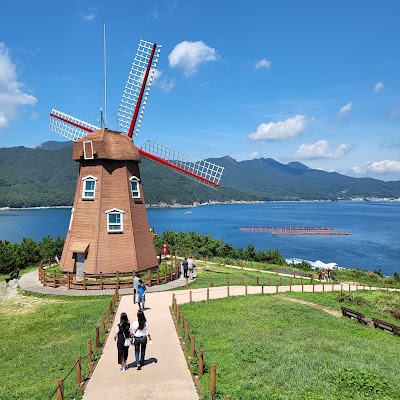
Windy Hill is a single windmill on a grassy headland dropping to open sea: minimal, graphic, and one of the most photographed bluffs on the southern coast. It is not misnamed; the bluff is fully exposed, and standing up there is mostly wind, moving grass, and ocean on three sides.
The catch is geography: Windy Hill sits on Geoje Island, not Namhae, so reaching it means crossing to a different island and budgeting real drive time. It's a five-minute walk from the parking gate, and late afternoon light does the windmill justice because midday summer sun on that exposed rock is punishing.
Tip: The short path from the parking gate takes five minutes to walk. The ocean light is best in late afternoon, so time your visit then.
Darangi Village
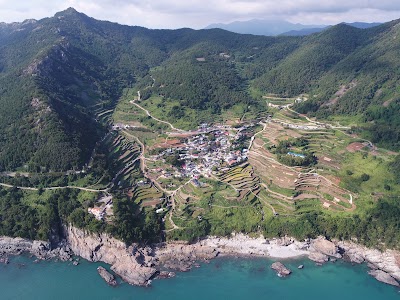
Darangi Village is the image that made Namhae famous: terraced rice paddies stacked like steps down a steep hillside that ends at the ocean. These paddies exist because flat land didn't: generations carved small parcels out of a sea-facing cliff, and what started as stubbornness became one of Korea's signature landscapes.
In summer the rice is a saturated emerald that almost looks unreal, and the farm lanes give you wet-paddy smell, insects, then the sudden blue of the sea. Come at golden hour because the low sun turns the green luminous, just check that the viewing decks are still open, since some close before dusk.
Tip: The terraced paddies glow emerald in summer, so time your visit for golden hour. Park at the lower lot, walk the farm lanes slowly, and check opening hours as some viewing decks close before dusk.
Day 3
Day three earns its views: a ridge hike up a coastal mountain, a cliffside temple at the top, and a slow scenic drive to finish.
Geumsan
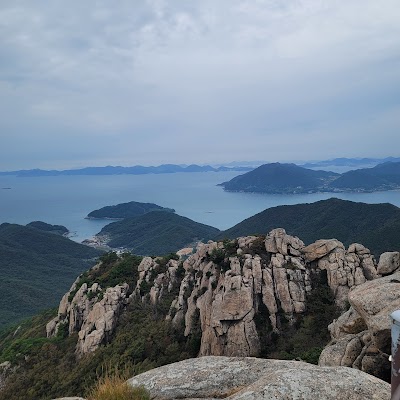
Geumsan is a mountain rising straight out of the coast, ridge on one side, sea on the other, and the top trail is the trip's earn-the-view moment. The payoff isn't just pretty; it's spatial: you're walking a spine of rock with the southern sea dropping away on both sides.
What made this mountain a destination for centuries is Boriam, the temple sitting at its summit, which is exactly where you're headed next. Start early and wear real shoes because the ridge is shadeless and summer midday heat up there is no joke. Finish the loop before noon.
Tip: Hike the ridge trail for dramatic southern-sea lookouts, and start early to finish the loop before midday heat. The exposed summit is windy, so wear a light layer.
Boriam Temple
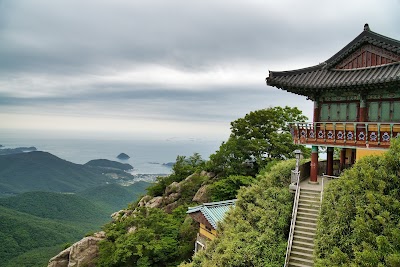
Boriam is a temple perched on the cliffs of Geumsan with the ocean spread below, and honestly, the setting is doing most of the work. It's known as one of Korea's wish-granting prayer temples, which is why people climb up here to pray. That reputation is the hook, not any founding date.
Up close it's incense mixing with sea wind, temple bells, prayer stones, and the long blue drop to the water, devotional and scenic at once. Go on a weekday because weekend crowds here are heavy, and check ahead whether the cable-car access needs booking since wind can close it.
Tip: Reach the temple atop Geumsan for sweeping cliffside sea views, and go on a weekday when crowds are lighter. The temple entry is free, but prebook the cable-car combo online in advance.
Hallyeohaesang National Park
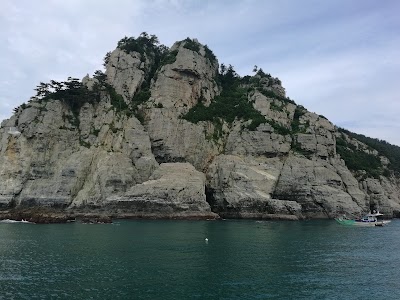
Hallyeohaesang is Korea's largest marine national park, and it's the protected seascape that makes this whole coast look the way it does. It's mostly water, bays, islands, a drowned coastline, which is why you've been seeing sea between every landform for three straight days.
Treat the afternoon as a slow scenic drive between lookouts, because that's the relaxed way to take in the scale after a morning of hiking. No reservation is needed just to drive the coastal road and pull off at viewpoints. Only book ahead if you've confirmed a specific boat tour or guided walk.
Tip: Drive the scenic coastal route between lookout points to take in the scale. Reserve any ranger-guided walk or boat tour in advance during peak summer.
What to book ahead
- Reserve Sacheon Ocean Cable Car ticket (1-2 weeks before) - Online booking skips the queue; check the wind-closure forecast.
- Book Maemuldo ferry (if taking alternative) (At least 3 days before) - Summer sailings sell out; confirm return time.
- Reserve Boriam Temple area tour (3-5 days before) - Peak-season temple-zone access can require advance registration.
- Reserve Hallyeohaesang guided walk or boat (1 week before) - Ranger programs and island boat tours fill up in summer.
- Reserve rental car (2-3 weeks before) - A car is near-essential for Namhae's spread-out viewpoints.
- Check temple and park opening hours (Night before each day) - Some decks and gates close before dusk in summer.
What to pack
Essentials
- Sunscreen and hat - Summer sun is strong on exposed coastal bluffs and beaches.
- Comfortable walking shoes - Temple ridge trails and rice-terrace farm lanes are uneven.
- Light windbreaker - Coastal summits like Geumsan and Windy Hill stay breezy.
- Swimsuit and towel - Sangju Eunmorae Beach has warm, swimmable summer water.
Nice to have
- Snorkel set - Useful if you take the Maemuldo boat alternative.
- Tripod - Sunrise at Boriam and the windmill at Windy Hill are prime shots.
- Reusable water bottle - Long driving days between viewpoints with few refill stops.
Final take
Three days on Namhae and you've watched rice meet ocean, temples meet cliffs, and a coastline that refuses to run in a straight line. That's the whole appeal.
Plan this trip
Turn this guide into an editable trip plan
Open the route in Instaboard, adjust the stops, and share the itinerary with your travel group.