Travel Guide
Seoul in 3 Days: The First-Timer Itinerary You'll Actually Use
Want the editable version of this route?
Open the Instaboard template and adapt stops, timing, and notes to fit your trip.
Seoul is one of those cities where you turn a corner and the entire century changes. Three days is enough to get the shape of it, if you don't waste time guessing which palace matters and which market is actually worth showing up hungry for.
Seoul rewards showing up in spring or autumn: cherry blossoms or foliage, mild temps, clear air. But the city runs hard year-round, so pick your season and know what you're signing up for.
Day 1
Day one is old Seoul. You get the biggest palace in the city, a hillside of traditional houses people still live in, and a street that'll sell you everything your suitcase can hold.
Gyeongbokgung Palace
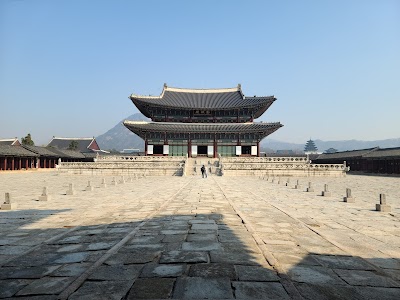
Gyeongbokgung is the palace from every Seoul travel thumbnail: enormous stone courtyards, guards in full traditional armor, mountains rising behind the rear gate. It was built in 1395, burned during the Japanese invasion in the 1590s, sat in ruins for centuries, and was mostly rebuilt in the last hundred years.
A lot of what you're looking at is younger than it pretends to be, but those reconstructions sit on the original foundations, and the throne hall standing alone in that open courtyard is genuinely striking. Get here right at opening for the guard-changing ceremony and the empty-courtyard photos, because by late morning the tour buses roll in and the place fills fast.
Tip: Arrive by 9 am to catch the royal guard changing ceremony at the main gate, then explore the throne hall and palace grounds. Rent a hanbok from nearby shops for free entry to the palace.
Bukchon Hanok Village
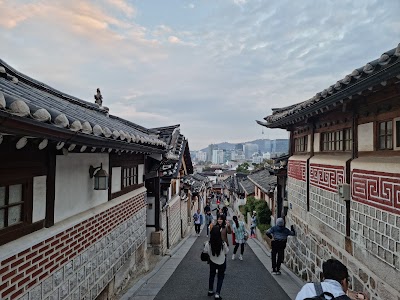
Ten minutes on foot from Gyeongbokgung, there's a hillside packed with traditional hanok homes, with sloping tile rooftops cascading down toward modern glass towers in the distance. Bukchon Hanok Village is not a museum. People actually live here, which creates a slightly awkward dynamic where hundreds of tourists parade through photographing someone's front door.
These homes have survived roughly six hundred years of urban redevelopment because enough residents fought to keep them, even as the rest of old Seoul got flattened. Follow the numbered viewpoints for the rooftop photos, and duck down a side alley when the crowd gets thick. That's where it suddenly goes quiet and smells like old pine.
Tip: Walk the hillside alleys lined with 600-year-old hanok homes between the two palaces. The best photo viewpoints are near the top of the main lane. Go before 4 pm, when weekend crowds thin.
Insa-dong
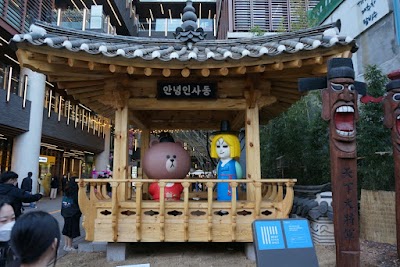
From Bukchon it's a short downhill walk to Insa-dong, a pedestrian street that Seoul basically designates as the gift-shopping district. The main drag is aggressively touristy, with wall-to-wall souvenir shops, but the alleys behind it hide genuine teahouses and small galleries that predate the whole tourist boom.
Those side-alley spots are worth hunting down, especially if your feet hurt from two palace-and-hill stops and you just want to sit on a warm floor with a cup of citron tea. Carry cash, because the best food stalls and artisan vendors don't take cards. Walk deeper than the main entrance, because the stuff near the gate is the same inventory you'll find at the airport.
Tip: Browse traditional galleries, calligraphy shops, and teahouses on the pedestrian-only main street. Carry cash for artisan souvenirs and street-side snacks like hotteok and dragon's beard candy.
Day 2
Day two opens with Seoul's loudest, most honest food market, swings through a building that looks like it dropped from space, and ends on a mountaintop watching ten million people turn their lights on.
Gwangjang Market
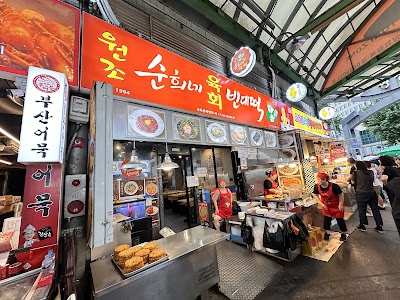
Gwangjang Market has been running since 1905, and it's where Seoul actually eats. Not where tourists eat, where locals eat. The bindaetteok stalls near the south entrance have been frying the same mung-bean pancake recipe for generations. Find the stall with the longest line of Korean speakers and sit down.
It's loud. Ajumma vendors shouting over sizzling oil and fermented soybean steam. It smells incredible, and none of it was built for you, which is exactly what makes it worth your time. Come hungry, bring cash, and show up early, because by late morning the tour groups figure it out and the best stalls already have lines.
Tip: Arrive hungry and queue at the famous bindaetteok stalls near the south entrance. The market is the best spot in Seoul for fresh gimbap and raw beef yukhoe. Keep cash handy.
Dongdaemun Design Plaza (DDP)
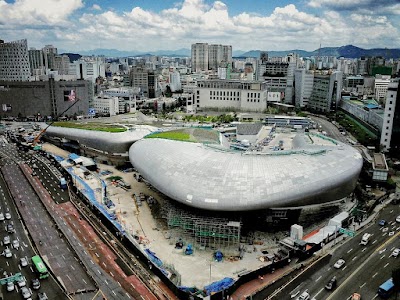
From a century-old market to a building with no straight lines. Dongdaemun Design Plaza is Zaha Hadid's final built work, and it looks less like architecture and more like something that landed. There is not a single right angle in the entire structure; it was designed on software and built with techniques that barely existed a decade before construction started.
The aluminium skin catches light differently every hour, and after dark the LED rose garden on the east plaza glows pink against those silver curves. It's genuinely surreal. The architecture is the attraction here, not the exhibitions inside, which are hit-or-miss. Walk the full perimeter, see the roses after sunset, and don't overspend on whatever's showing indoors.
Tip: Walk the flowing aluminium curves of Zaha Hadid's landmark and explore the design exhibitions inside. The LED rose garden on the east plaza is most striking after dark. Check opening hours.
N Seoul Tower
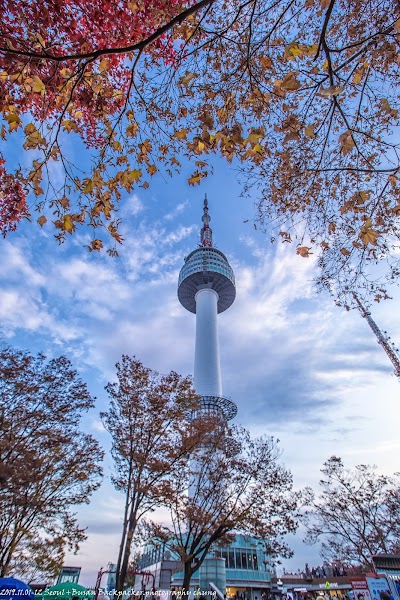
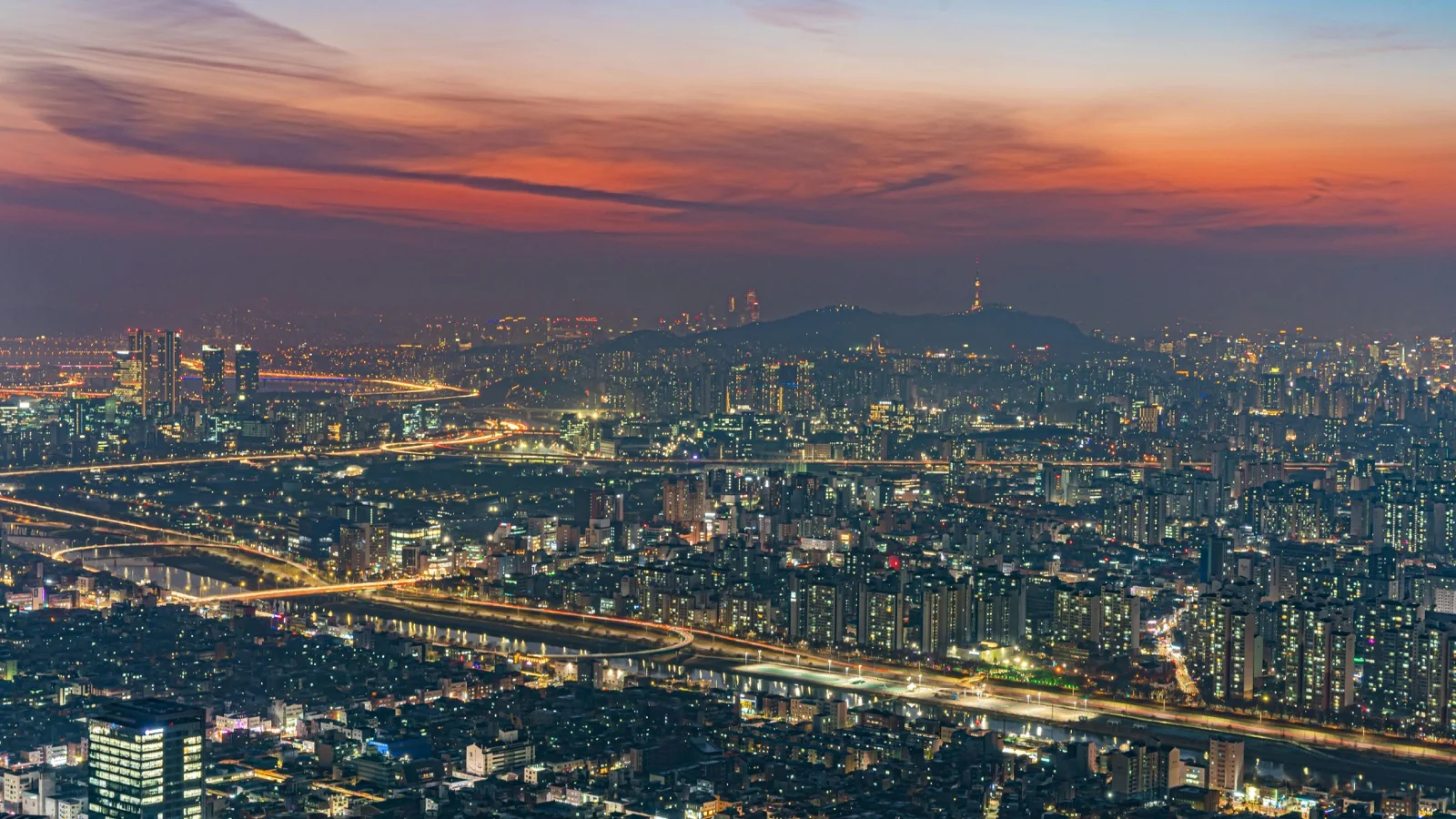
That tower you keep seeing from everywhere in Seoul is this one, on top of Namsan Mountain, and going up is the one view that explains why this city looks the way it does. Seoul sits crammed into a mountain-ringed basin, and from the observation deck you can see all of it. At sunset, you watch ten million people's lights come on at once.
The cable car ride up is half the experience, a slow ascent over the treeline with the city opening up below, but the sunset line is brutal, so book that combo ticket ahead of time. If the cable car queue is absurd, the paved trail up Namsan takes about thirty-five minutes and is honestly pleasant. You'll arrive smug and skip the wait entirely.
Tip: Book the Namsan Cable Car and observatory tickets in advance for sunset. The 360-degree viewing deck fills up fast. On clear evenings the illuminated city basin stretches to the horizon.
Day 3
The last day pairs a quieter, more beautiful palace with the loudest shopping street in Korea and ends with a stream that used to be a highway.
Changdeokgung
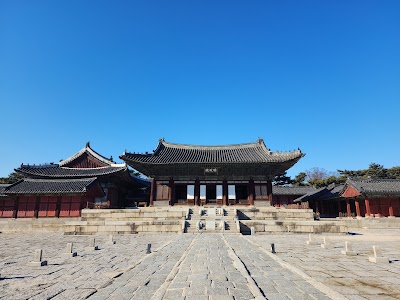
Changdeokgung is the palace UNESCO listed, not because it's bigger than Gyeongbokgung, but because the buildings were arranged to work with the landscape instead of imposing geometry on it. The highlight is the Secret Garden, a walled section behind the palace where Joseon royalty retreated to escape the stress of running a country. Pavilions reflected in still lotus ponds, water over rocks, trees older than the last few governments.
Limited daily access means it actually feels secret, which is rare in a city this dense, but that also means the Secret Garden tickets are time-slotted and they sell out. Book this one online before your trip. If you have to choose between the main palace grounds and the garden, pick the garden. That's the UNESCO-listed part and the reason this palace matters more than the others.
Tip: Prebook the Secret Garden guided tour online. Entry is limited and time-slotted. The palace itself is less crowded than Gyeongbokgung, and the garden's pavilions reflected in lotus ponds are breathtaking.
Myeondong Shopping Street
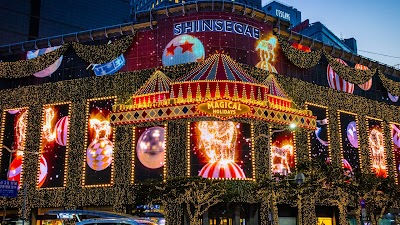
After the quiet of Changdeokgung, Myeongdong hits like a wall of competing K-pop soundtracks, sizzling grills, and store employees pressing free skincare samples into your hands as you walk past. This is K-beauty ground zero: multiple streets packed with cosmetics shops, each one staffed by people whose energy lands somewhere between welcoming and aggressively professional.
The side streets are calmer and have better food, so once you've done your browsing, duck into an alley for egg bread or fish cake skewers and actually sit down for a minute. Bring your passport if you're spending real money, because tax-free counters exist. Maybe set a mental budget, because the packaging is beautiful and the salespeople are extremely good at what they do.
Tip: Take the subway to Myeongdong Station and dive into K-beauty stores, fashion boutiques, and street food stalls. Sample everything from tornado potatoes to egg bread. Side streets are quieter.
Cheonggyecheon
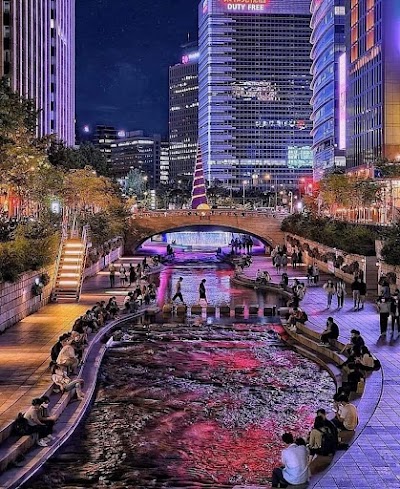
There's a creek running through the middle of downtown Seoul, and the wildest part is that thirty years ago this was a six-lane elevated highway. The city tore down the highway, excavated the buried stream bed, and restored water flow. It was deeply controversial and is now one of Seoul's most beloved public spaces.
You step down from street level into the stream corridor and the noise of the city drops. Just running water between office towers, a completely different Seoul a few feet below the sidewalk. Come after dark, because the waterfalls and lighting are designed for it, and start at Cheonggye Plaza near City Hall. Even thirty minutes walking east along the water is the right way to finish three days here.
Tip: Walk along the restored 11-kilometre stream that cuts through downtown Seoul. Start near Cheonggye Plaza and head east. The illuminated waterfalls and stepping-stone crossings are magical after dark.
What to book ahead
- Book Changdeokgung Secret Garden tour (2-4 weeks before) - Slots are limited and sell out, especially on weekends.
- Reserve N Seoul Tower observatory tickets (1 week before) - Sunset time slots fill fastest — prebook online.
- Download Naver Maps and KakaoTalk (Before departure) - Google Maps has limited accuracy in Seoul; Naver is the local standard.
What to pack
Essentials
- Comfortable walking shoes - You will walk 15,000+ steps daily across palace grounds, markets, and hilly neighbourhoods.
- Portable power bank - Heavy photo and map usage drains batteries fast; outlets are scarce in markets.
- T-money transit card - Essential for seamless subway and bus rides — purchase at any convenience store.
Nice to have
- Hanbok rental outfit - Wearing traditional dress grants free entry to Gyeongbokgung and makes for stunning photos.
- Light rain jacket - Seoul weather can shift quickly; a packable layer keeps you comfortable.
Final take
Seoul is a city that rebuilt itself out of ruins and then kept going. Palaces next to neon, markets older than the country, and a river it put back after burying it under a highway.
Plan this trip
Turn this guide into an editable trip plan
Open the route in Instaboard, adjust the stops, and share the itinerary with your travel group.