Travel Guide
Siem Reap in 3 Days: Angkor Wat Sunrise, Ta Prohm Roots & Banteay Srei
Want the editable version of this route?
Open the Instaboard template and adapt stops, timing, and notes to fit your trip.
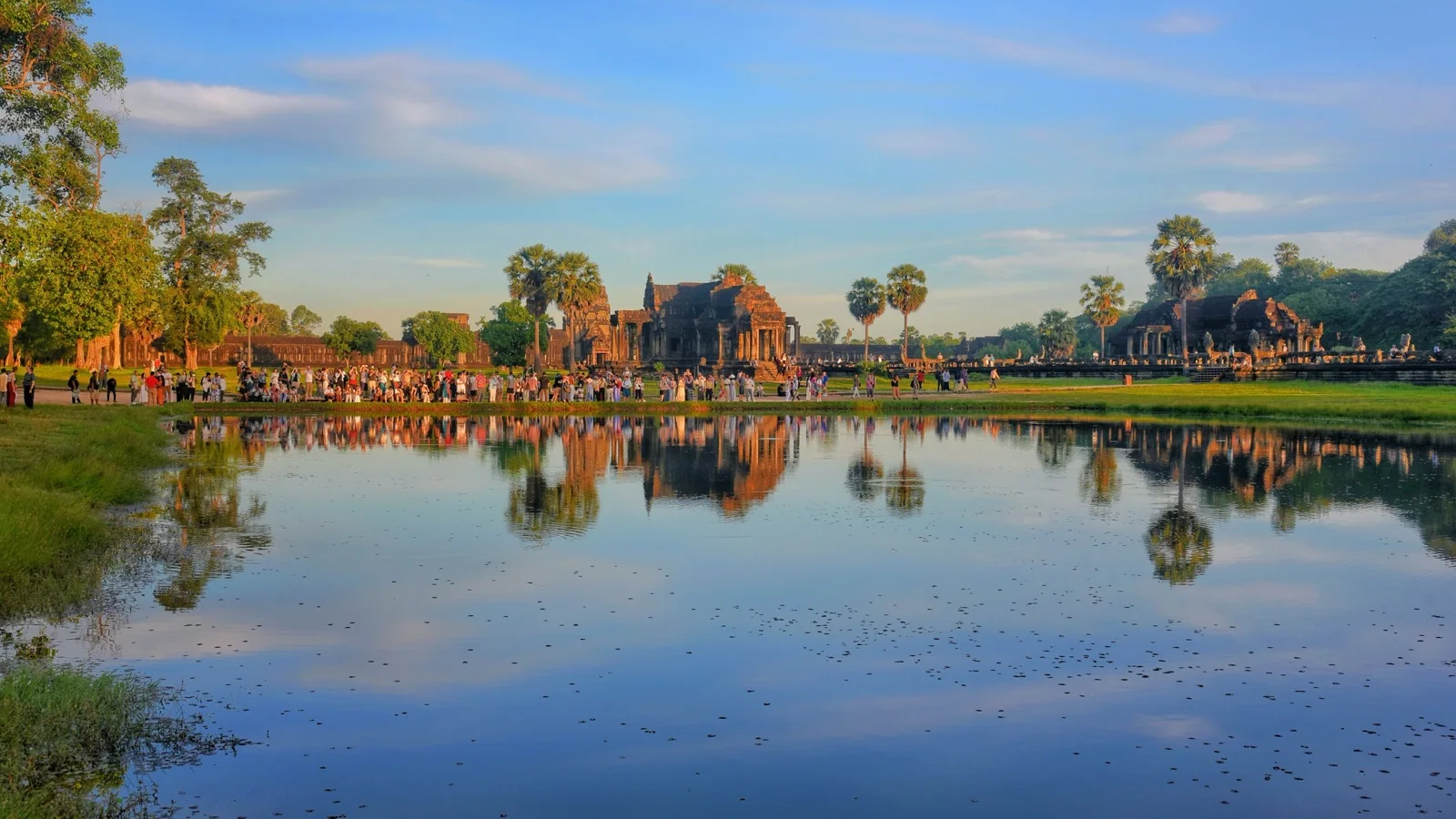
Siem Reap, Cambodia: the town next to the largest religious monument on Earth, important enough to be on the country's flag. Three days gets you sunrise towers, jungle-swallowed ruins, and carvings at the bottom of a river, and this plan has the timing worked out.
Winter is the moment here: dry skies, dawns near twenty degrees, sunrises that actually show up. Since everyone knows it, early starts run the trip.
Day 1
Day one is the famous trio: sunrise at Angkor Wat, a temple the jungle is actively eating, and two hundred stone faces watching you climb.
Angkor Wat
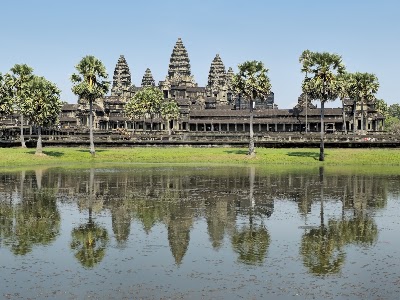
Angkor Wat is the largest religious monument ever built: a stone stand-in for Mount Meru, home of the Hindu gods, ringed by a huge moat. Dawn is the move. Five a.m., stone cold underfoot, the five lotus towers going from silhouette to orange above a reflecting pond turned mirror.
Odd detail: it faces west, designed for sunset, so sunrise happens behind the towers, and thousands show up precisely for that. Come by five because pond front-row space vanishes fast. Buy the pass in advance, then stay past the breakfast exodus for the quiet galleries.
Tip: Arrive at the west gate by 5:00 am to claim a reflecting-pond spot before the sunrise crowd builds; buy your Angkor pass in advance to skip the morning queue, and pack a light layer for the cool dawn.
Ta Prohm Temple
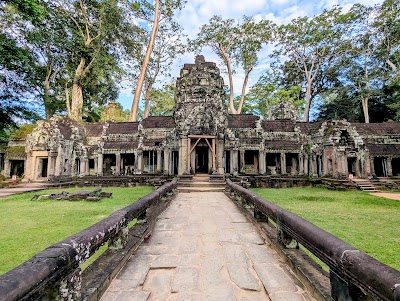
Next, Ta Prohm, the Tomb Raider temple, where strangler fig roots pour over the ruins like the jungle is slowly winning an argument with architecture. It's half-ruined on purpose. Pull the trees and the walls they grip would collapse, so the roots stay on as structural co-architects.
Skip the first root-wrapped doorway everyone queues for. Deeper in, golden morning light through the canopy comes with corridors nearly empty. Be there for the seven-thirty opening, and stay on the wooden walkways: they're protecting the carvings and your ankles, roughly in that order.
Tip: Giant strangler fig roots swallow the Tomb Raider ruins; arrive at the 7:30 am opening to beat the tour-bus waves, and stay on the wooden walkways that protect the carvings.
Bayon Temple
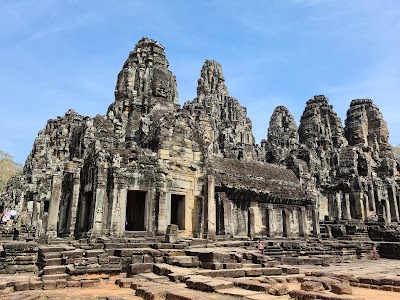
Then Bayon, the centerpiece of Angkor Thom, the walled city that was once the Khmer capital, crowned with towers carved on four sides. Two hundred serene faces gaze outward, so wherever you stand, one is watching back. They're widely read as the Buddha merged with the king who built it.
Morning light rakes across them low, which is when they look most alive. Climb to the upper terraces and meet them at eye level. The outer bas-relief corridors stay calm even at peak, and being watched by hundreds of serene faces is either spiritual or surveillance, depending on your morning.
Tip: Climb to the upper terraces to meet the 200-plus smiling stone faces at eye level; keep your ticket ready at the entry checkpoint and come before 9 am, when crowds flood the galleries.
Day 2
Day two dials the fame down: a labyrinth the tour buses skip, a temple that arrives over water, and one perfect tree to finish.
Preah Khan Temple
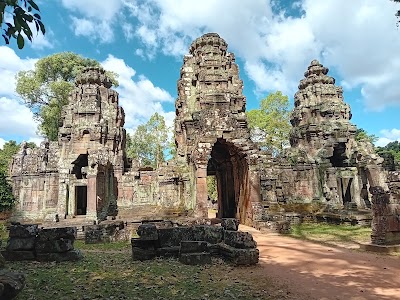
Preah Khan is Ta Prohm's quieter twin: a twelfth-century monastery and center of learning built on the scale of a small city. You walk a straight line west to east through dark corridors, sudden sunlit courtyards, and roots prying the walls apart in slow motion.
It's the rare temple you can actually read: enclosures stacking around a central sanctuary, the building's logic unfolding on foot. Come at the seven-thirty opening because the first hour is the only quiet one. Then exit the east gate, with Neak Poan waiting just beyond.
Tip: Pass the western gate into a labyrinth of root-split corridors; arrive for the 7:30 am opening to get near-empty halls, then exit along the eastern causeway straight toward Neak Poan to avoid backtracking.
Neak Poan Temple
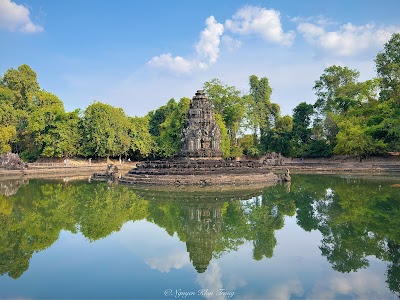
Neak Poan is a tiny island temple in a vast old reservoir, the only Angkor stop that arrives like a dock, not a doorway. The water is the point. This was a healing sanctuary, and the reservoir was infrastructure, not scenery, which reframes the whole park as engineered landscape.
Open sky, wind, water on both sides. After hours of stone corridors, that change of texture alone earns the stop. Go before ten because the boardwalk has zero shade; past that, the sun performs its own healing ritual.
Tip: A long wooden boardwalk crosses the reservoir to this tiny island healing temple; there is no shade on the walk, so go before 10 am, wear sunscreen, and keep the loop short.
Ta Som
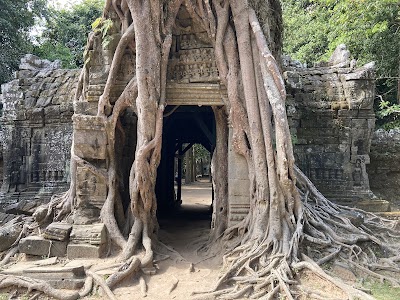
The day winds down at Ta Som, a small quiet ruin whose whole fame is its eastern gate: one fig tree calmly digesting it. One tree, one gate, total absorption. It's the clearest single lesson in what the jungle does here, framed small enough to take in.
It's among the quietest stops on the entire circuit: warm stone, birdsong, low-angle afternoon light making the roots pop. Pair it with a roadside lunch stall beforehand, then linger. Nobody's rushing you, and the gate is the whole point.
Tip: The signature sight is the fig tree strangling the entire eastern gate; it is one of the quietest grand-circuit stops, so linger for photos and combine it with a roadside lunch stall before the afternoon heat peaks.
Day 3
Day three flips the scale: the smallest temple in the park, art at the bottom of a jungle river, then an easy golden-hour finish in town.
Banteay Srei
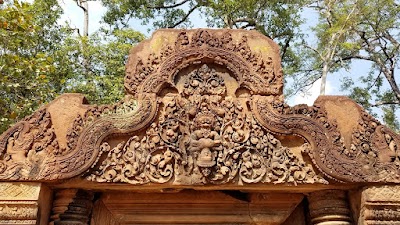
Banteay Srei is the outlier: a small pink-sandstone temple twenty-five kilometers north of the park, carved so finely it looks machine-cut. Every other temple here is about scale. This one rewards standing two feet away, wall carvings dense as lace in rose-colored stone.
Rare for Angkor, no king built it; a court Brahmin consecrated it, which might be why it feels like jewelry, not a monument. Take a private car for the seven a.m. opening, catch the stone glowing, then keep going north because Kbal Spean's trailhead is up the same road.
Tip: The pink-sandstone citadel of women holds the finest bas-relief carving in Angkor; it lies 25 km north, so book a private car in advance, be there for the 7:00 am opening, and catch the stone glowing at sunrise-warm angles.
Kbal Spean
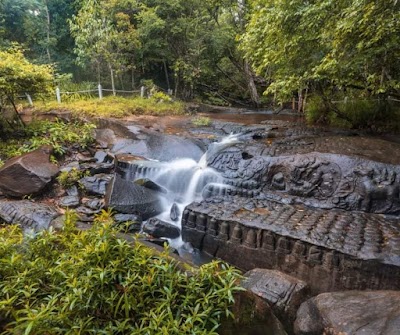
Kbal Spean is the River of a Thousand Lingas: sacred carvings cut straight into a riverbed, hidden at the top of a real jungle trail. It's the only Angkor art you look down at, and the only kind you can hear, water sliding over carvings that blessed everything downstream.
The hike is forty-five minutes uphill: stairs, roots, the works, and honestly, you earn these carvings like a gym membership. Dry season is the quiet hero. The river runs low and the trail stays firm, and lower water shows the carvings better.
Tip: The River of a Thousand Lingas hides at the end of a 1.5 km jungle trail, about 45 minutes uphill; arrive at the trailhead by 9 am, carry a liter of water, and wear grippy shoes.
Steung Siemreap Hotel
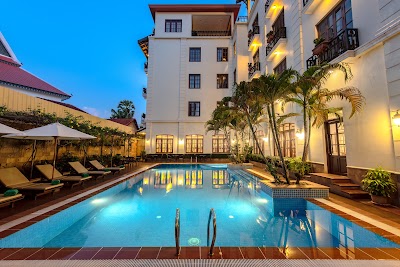
The finale is deliberately soft: back in Siem Reap town for a golden-hour stroll along the leafy riverside toward Wat Preah Prom Rath. The light goes softest right before sunset, colonial shophouses glowing gold, the whole town exhaling after three days of temple marathons.
After ruins the size of cities, the scale turns human again: old shophouses, quiet streets, café chairs out on the sidewalk. Let one of the riverside cafés be your last dinner. It's an unhurried end, and the only morning alarm you won't be setting.
Tip: A farewell golden-hour walk along the leafy riverside past colonial shophouses and Wat Preah Prom Rath; the light is softest just before sunset, and the cafés along the way make an easy final dinner stop.
What to book ahead
- Buy the Angkor Archaeological Pass (3–7 days before) - Purchase the e-pass online from the official Angkor Enterprise site or at the office on Road 60; your photo is taken on site.
- Prebook Phare, The Cambodian Circus (3–5 days before) - Best tiered seats sell out in high season; reserve online for the evening of day 2.
- Arrange a multi-day tuk-tuk or car driver (1 week before) - Agree day rates in cash and confirm a 4:45 am sunrise pickup for day 1.
- Hire a private car for Banteay Srei + Kbal Spean (2–3 days before) - The 50 km round trip on dusty roads is longer than a tuk-tuk can comfortably cover.
- Reserve a Tonle Sap boat tour (if swapping in) (1–2 days before) - Confirm water levels and pickup time with the operator before paying.
- Book a boutique hotel in the old town (4–8 weeks before) - Winter is peak season; riverside stays near Pub Street fill first.
What to pack
Essentials
- Shoulders-and-knees clothing - Required for entry at every active temple site in the Angkor park.
- Sun hat and high-SPF sunscreen - Dry-season sun is fierce on open temple terraces by mid-morning.
- Grippy walking shoes - Steep temple stairs and jungle trails like Kbal Spean are polished and slippery.
- Light long-sleeve layer - Dawns sit around 20°C on open tuk-tuk rides, then warm fast after sunrise.
- Refillable water bottle - Long temple days dehydrate you quickly; refill points sit near the main gates.
- Small USD cash notes - Street food, tuk-tuks, and village fees are cash only.
Nice to have
- Headlamp or phone light - Hands-free lighting for the 5 am walk into Angkor Wat in the dark.
- Sarong or light scarf - Instant modesty cover-up for unplanned temple entry stops.
- Insect repellent - Dusk bites along the river and at Tonle Sap villages.
- Camera with wide lens - Reflection shots at Angkor Wat's ponds need a wide frame.
- Electrolyte tablets - Keeps you steady through full-day temple circuits in dry heat.
Final take
What sticks, three days in, isn't one monument. It's the range: sunrise stone, strangler roots, smiling faces, and a river someone carved blessings into.
Plan this trip
Turn this guide into an editable trip plan
Open the route in Instaboard, adjust the stops, and share the itinerary with your travel group.