Travel Guide
Suncheon 2-Day Itinerary: Wetlands, Temples & K-Drama Sets
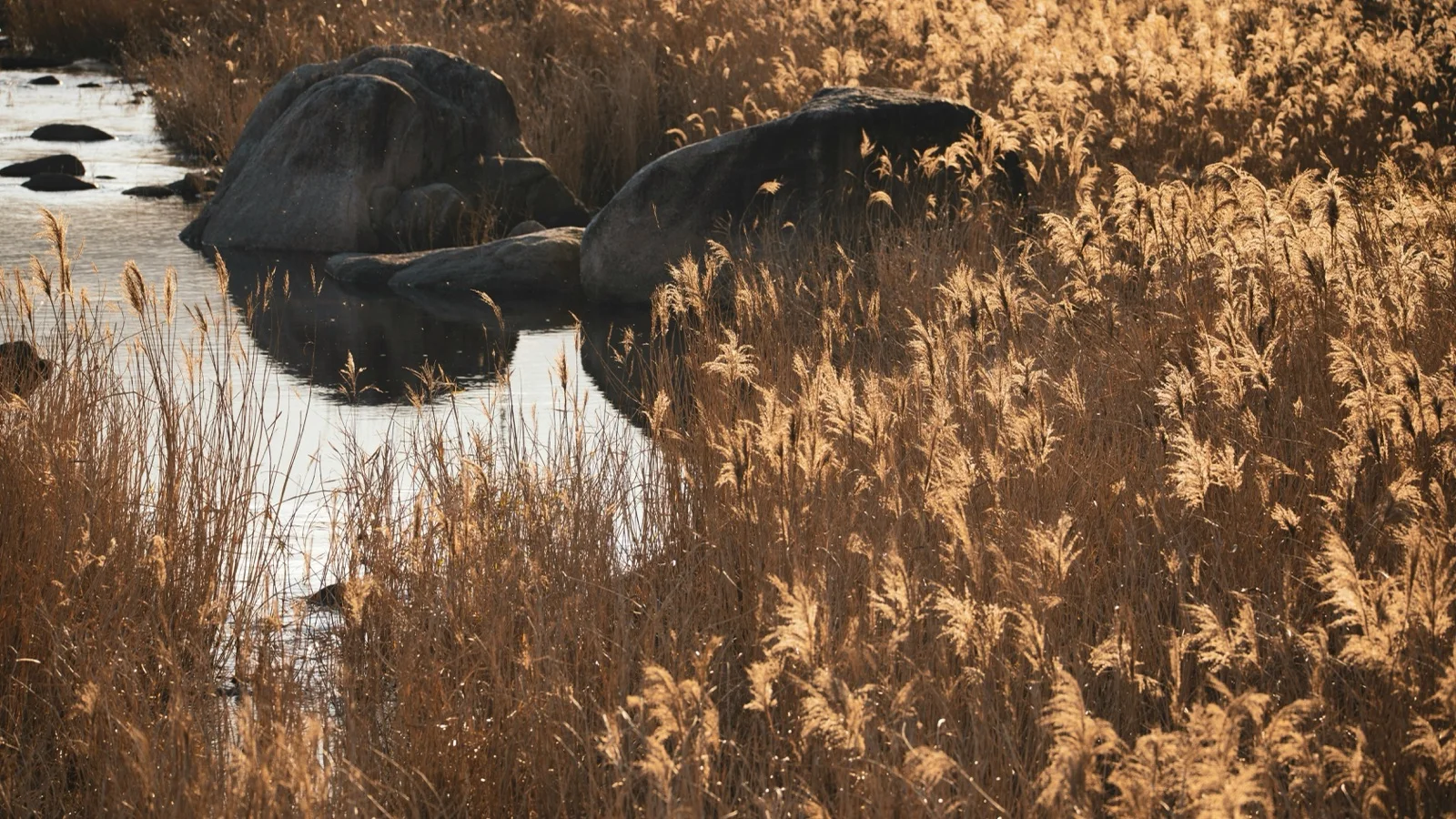
Want the editable version of this route?
Open the Instaboard template and adapt stops, timing, and notes to fit your trip.
Suncheon is a small southern Korean city that basically willed itself into a tourist destination by turning a swamp into a garden and then building a monorail to a sunset view that shows up on postcards across the country. The tricky part isn't whether to go. It's getting the timing wrong, showing up at the wetland at noon, or blowing half a day on logistics you could've sorted in ten minutes.
Spring here means 12 to 22 degrees, cherry blossoms, three million flowers across the national garden, and migratory cranes still hanging around before they head north. Basically the one season where every single stop is operating at full capacity.
Day 1
Day one is Suncheon's ecological greatest hits. You start at the garden that made this city famous, ride a monorail above the reed fields, and end at a wetland observatory watching the sunset turn everything gold.
Suncheon Bay National Garden
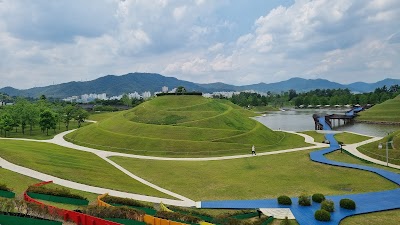
Suncheon Bay National Garden is the reason most people come here. It's Korea's first national garden, built in 2013 for an international exposition, and it covers over a million square meters with themed zones and three million spring flowers.
The whole thing was originally built to protect the wetland next door, but three million annual visitors later, Suncheon has become Korea's self-declared ecological capital, a city that staged-managed nature so well it became the main event.
Walk across the Dream Bridge, covered in drawings by 145,000 children from around the world, and then lose yourself in the Lakeside Garden. It was designed by Charles Jencks and looks like a land art installation that accidentally became a park.
Book your ticket online ahead of time because walk-up lines compete with tour groups, and get here early. The garden is big enough that a fast walkthrough takes three hours, and you want to be at the Skycube before the queue builds.
Tip: Book tickets online to skip the main gate queue. Arrive early, the garden is big enough that even a fast walkthrough takes three hours.
Suncheonman Skycube
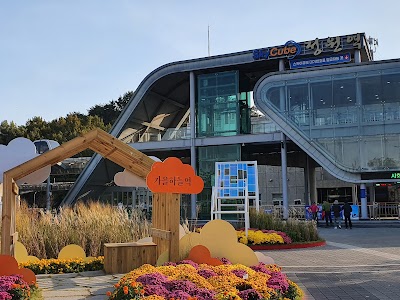
The Skycube is a driverless monorail pod that seats six and glides above the reed fields between the National Garden and the wetland reserve. It's public transit with the energy of a theme park ride.
The ride is only about ten minutes, but the windows are huge and you rise above the treeline, suddenly seeing the full scale of the wetland stretching toward the coast. It's the moment where the geography of this place actually clicks.
They cap tickets at 200 per half-hour window, so weekends between eleven and two can mean a serious wait. If the queue's long, just ride it one-way toward the wetland and grab a taxi or bus back later.
The Skycube runs on a fixed schedule, reportedly until five or six depending on season, so check the closing time before you head into the wetland. Missing the last ride means calling a taxi through a reed field.
Tip: Check the schedule before you ride. Missing the last monorail means calling a taxi through a reed field.
Suncheon Bay Nature Reserve
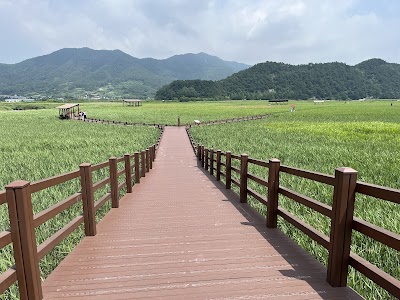
Suncheon Bay Nature Reserve is a Ramsar-listed wetland with Korea's largest reed field, an eight-thousand-year-old tidal ecosystem, and an S-shaped stream that shows up in more photographs than probably any other landscape in the country.
The raised boardwalk winds through the reeds and takes thirty to forty minutes to reach the main observatory. When wind moves through the field, the entire thing sways and rustles, and the silence between bird calls is louder than you'd expect.
This wetland was nearly destroyed by development before a conservation fight in the two-thousands saved it. The National Garden was actually built partly to divert tourist traffic away from this fragile ecosystem.
Get to the observatory before sunset and stay for the last twenty minutes of light. The reeds and the water turn the same golden color, and the S-curve is only visible from up here, not from the boardwalk below.
Tip: Walk the raised boardwalk to the main observatory and time your visit for sunset, when the golden reeds and water glow together.
Day 2
Day two flips from ecology to history and culture: a six-hundred-year-old walled village where people still live, a forest temple with Korea's most photographed stone bridge, and then a film set that's basically fake vintage Seoul.
Nagan Eupseong Folk Village
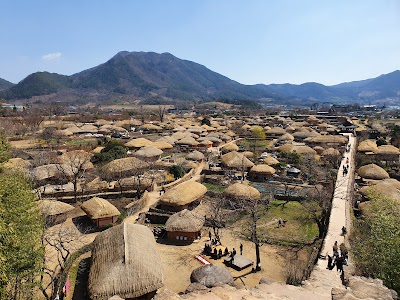
Nagan Eupseong Folk Village is the only remaining walled Joseon-era town in Korea. The fortress walls went up in 1397 to fend off pirate raids, and roughly a hundred households still live inside them today.
Unlike Korea's more famous folk villages, which are basically open-air museums, this one is real. The thatched-roof hanok houses are actual homes, the dirt roads aren't paved for tourists, and the absence of modern signage is genuinely disorienting.
Walk the full fortress wall circuit because it gives you a 360-degree panorama of the village surrounded by rice paddies and mountains. The wall path is exposed and breezy, so bring a layer even in spring.
Get here in the morning before the tour buses arrive, because early enough you can hear roosters. The village is small enough that two hours covers it, which leaves your afternoon open for Seonamsa.
Tip: Walk the fortress walls for panoramic views of the village, rice paddies, and mountains. Bring a warm layer, the exposed path is breezy.
Seonamsa Temple
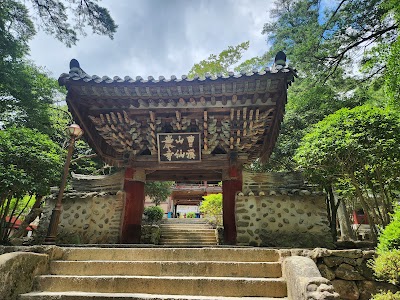
Seonamsa is a UNESCO-listed Buddhist temple tucked into the slopes of Jogyesan Mountain, founded in the sixth century and rebuilt after the Japanese invasions of the 1590s. The reason you come here is Seungseon Bridge.
That bridge was built between 1713 and 1719 by a monk who spent six years on it. A dragon's head carved under the arch faces upstream to scare off evil spirits, and after three hundred years, the spirits seem to have gotten the message.
The approach is a forest trail where you hear the stream before you see the bridge, and then the bridge reflection in the water forms a perfect circle. Spring wildflowers along the banks make the whole walk feel deliberately composed.
Take the shuttle bus from the parking area to the entrance because the walk is long if you're already tired. Check the return schedule so you're not waiting around for a ride back.
Tip: Take the shuttle bus from the parking area to the temple entrance and check the return schedule. Spring wildflowers along the forest stream are a bonus.
Suncheon Drama filming
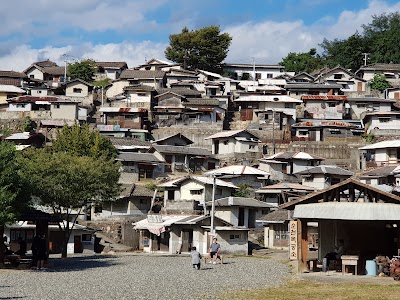
The Suncheon Open Film Set is a working backlot that recreates Korean streets from the 1960s through the 1980s. Over 87 films and dramas have shot here, including Pachinko, Casino, and East of Eden.
It's not a theme park. It's an actual film set where storefronts have signs, alleys have laundry hanging, and shanty-town corrugated metal is dressed and redressed for each new production. Sometimes you can smell fresh paint from the last rebuild.
After a morning in a real six-hundred-year-old village and an afternoon at a real fourteen-hundred-year-old temple, walking through a twenty-year-old fake Seoul built for television is a weird and satisfying way to close the day.
Get here by four in the afternoon because last admission is five and golden-hour light on the facades is the best photo opportunity. Bring cash too, since some food stalls don't take card.
Tip: Arrive before 5pm for golden-hour photos on the period street facades. Bring cash, some food stalls don't accept card.
What to book ahead
- Book Suncheon Bay National Garden tickets (1–2 weeks before) - Online tickets skip the gate queue; spring weekends sell out
- Reserve accommodation near Suncheon Station (2–3 weeks before) - Central location for easy bus and taxi access to all sites
- Check Skycube monorail schedule (1 day before) - Runs on fixed timetable; confirm departure times to plan transfer
- Download offline maps (Before departure) - Bus routes to Nagan Eupseong and Jogyesan temples have spotty signal in mountains
What to pack
Essentials
- Comfortable walking shoes - Extensive boardwalk trails at the wetland reserve and cobblestone paths at the folk village
- Light jacket or cardigan - Spring mornings and evenings are cool, especially on exposed fortress walls and observatories
- Sunscreen and hat - Minimal shade on wetland boardwalks and fortress walls during midday
- Portable charger - Full-day outdoor sightseeing with heavy photo and map usage
Nice to have
- Binoculars - Migratory bird watching at Suncheon Bay Nature Reserve and from observatories
- Rain jacket - Spring showers are possible; wetland trails have limited covered areas
- Tripod or selfie stick - Sunset shots over the reed fields and temple bridge photos
Final take
Two days in Suncheon and you've walked through a garden that reshaped a city's identity, stood above an eight-thousand-year-old wetland at sunset, and wandered through six centuries of real and invented Korean history. Not bad for a place most travelers skip on the way to Busan.
Plan this trip
Turn this guide into an editable trip plan
Open the route in Instaboard, adjust the stops, and share the itinerary with your travel group.