Travel Guide
Suwon 2-Day Fortress + Seoul Side Trip
Want the editable version of this route?
Open the Instaboard template and adapt stops, timing, and notes to fit your trip.
Suwon is the city everyone skips on their way to Seoul, which is a shame, because it has Korea's best 18th-century fortress and a backstory that makes every stone hit different. Two days covers the fortress, a folk village, and a night in Seoul, but the wall walk is long enough that starting in the wrong spot costs you.
Spring is the sweet spot. You get mild walking weather, cherry blossoms along the streams, and night illuminations at the fortress that make the palace courtyards worth seeing twice.
Day 1
Day one walks the fortress story. Museum for context, the king's palace, then a poetry pavilion above a pond that's the best shot on the wall.
Suwon Hwaseong Museum
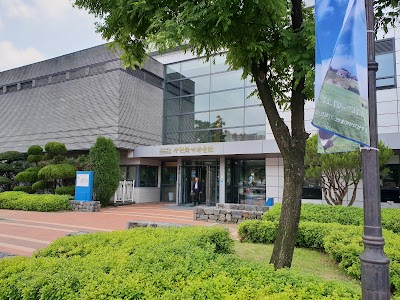
Start at the Hwaseong Museum because if you walk the wall without it, you're just looking at old stones. This place tells you why they matter. King Jeongjo built this fortress for his father, a prince executed inside a rice chest. Once you know that, every stone reads as a son's grief.
The diorama room maps the full wall circuit in miniature, tiny walls, tiny soldiers, genuinely absorbing, and it helps you plan which gates to hit next. Grab the English pamphlet at the front desk because some labels are Korean-only. Give it a full hour. This is the briefing before the mission.
Tip: Start here before the wall walk to understand the fortress's 18th-century engineering. Arrive when the museum opens at 9 AM to enjoy the interactive dioramas without weekend crowds.
Hwaseong Haenggung
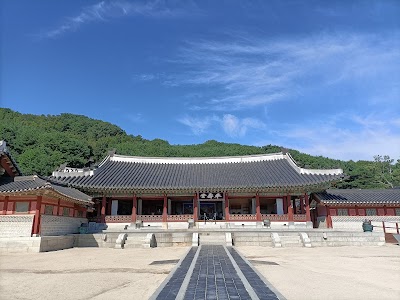
From the museum you walk into Hwaseong Haenggung, the largest travel palace of the Joseon dynasty, where the king stayed when visiting his father's tomb. Jeongjo threw a massive celebration here for his mother's sixtieth birthday, the kind of party that needed its own pavilion and a procession of thousands.
Painted eaves in traditional dancheong colors against spring cherry blossoms, the kind of thing that makes photographers stop mid-stride. On spring weekends the palace does night illuminations that transform the courtyards. Those evening passes sell out fast, so book ahead if that's your timing.
Tip: The largest temporary royal palace of the Joseon dynasty sits inside the fortress walls. Book tickets online in advance for the spring night illumination event, which often sells out on weekends.
Banghwasuryujeong Pavilion
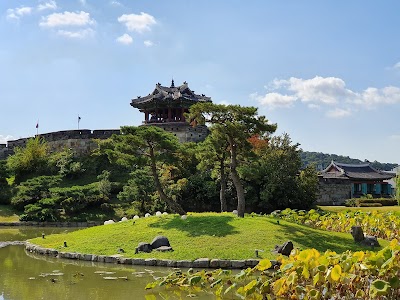
Keep walking the wall northeast to Banghwasuryujeong, a pavilion above Yongyeon Pond that's the most photogenic spot on the entire fortress circuit. The name means 'visiting flowers and seeking willows,' built so the king could write poetry looking at the pond. A poetry shack on a military wall.
It doubles as a secret gate for emergency escapes, one of several hidden passages. The beauty is military infrastructure in disguise. Late afternoon light hits the pavilion and pond from the perfect angle, and spring cherry blossoms fill every gap. This is the image that stays with you.
Tip: The most photogenic corner of the entire fortress, perched above Yongyeon Pond with willow reflections. Walk the northeast wall trail to reach it. Spring cherry blossoms frame the pavilion perfectly.
Day 2
Day two widens the lens. A living-history village with real Joseon-era houses, then a traditional Seoul neighborhood where people still live, finishing with neon and street food.
Korean Folk Village
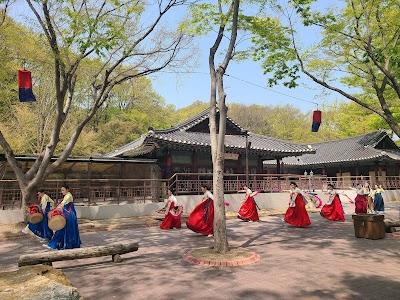
The Korean Folk Village is where period dramas film their street scenes. Two hundred sixty original structures relocated here piece by piece, not replicas. Organized by social class from noble to peasant, pulled from different provinces. A greatest-hits compilation of pre-modern Korean architecture.
Thatched roofs, dirt paths, blacksmithing sounds, traditional drumming from performance areas. Somewhere between a museum and a K-drama backlot. Get here in the morning because performances run on a daytime schedule, and arriving after noon means you miss something. Check the schedule for workshop closures too.
Tip: A sprawling living-history park with over 260 restored Joseon-era houses, craft workshops, and seasonal performances. Reserve at least half a day and buy tickets online to skip the ticket queue at the gate.
Bukchon Hanok Village
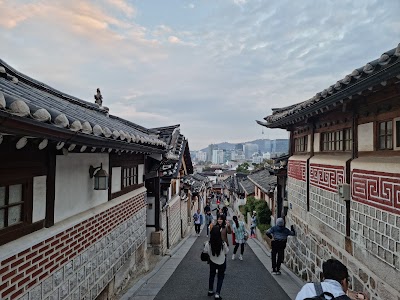
Bukchon Hanok Village is a neighborhood of traditional homes wedged between Seoul's two grandest palaces where people actually live. You're walking through someone's front yard. Residents post signs asking tourists to keep quiet, some decorative, some bluntly hand-written. That tension between tourism and daily life plays out on front gates.
Steep alleys, wooden facades, tiled roofs angling against apartment towers over the ridge, pine and tea smells from open doorways. Quiet in a way Seoul rarely manages. Come in the afternoon when morning tour groups thin out, because sunset light on the tile roofs is the shot. Wear shoes with grip on those stone alleys.
Tip: A preserved traditional village nestled between Seoul's grand palaces, offering hanok tea houses and craft shops. Take subway Line 1 from Suwon Station to Jonggak, then walk 10 minutes uphill to the village.
Myeondong Shopping Street
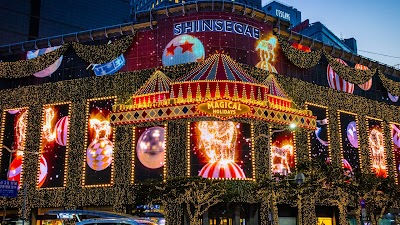
Myeongdong is where you stop being a cultural tourist and start needing face masks at nine PM. Seoul's loudest shopping district, zero subtlety. Every cosmetics store sends staff outside with sample trays, physically pulling you in. The street-level economy is a contact sport with moisturizer.
Fried food smells mixing with perfume samples, K-pop from competing speakers, vendors calling prices. After two days of heritage, this chaos is the point. Hit the side streets instead of the main drag for better food and thinner crowds. Bring cash for the tteokbokki and hotteok stalls.
Tip: Seoul's vibrant shopping and street-food district caps off the trip with modern Korean energy. Hop off the metro at Myeongdong Station and explore the neon-lit side streets for cosmetics, fashion, and tteokbokki.
What to book ahead
- Reserve Hwaseong Haenggung night illumination tickets (2 weeks before) - Spring night events sell out fast on weekends
- Buy Korean Folk Village tickets online (1 week before) - Skip the gate queue and sometimes get a discount
- Check Gyeongbokgung Palace hours (3 days before) - Closed Tuesdays; confirm if you swap in the palace alternative
What to pack
Essentials
- Comfortable walking shoes - Fortress wall circuit is 5.7 km on uneven stone paths
- Light layer or cardigan - Spring mornings start cool (12°C) but warm up by afternoon
- Portable charger - Full-day walking with heavy photo and map use drains batteries fast
Nice to have
- Sun hat and sunscreen - Limited shade on exposed fortress walls during midday
- Reusable water bottle - Few vending machines along the wall trail; refill at the museum
Final take
A fortress built out of grief, a poetry shack on a military wall, then neon and street food. This trip compresses centuries into forty-eight hours.
Plan this trip
Turn this guide into an editable trip plan
Open the route in Instaboard, adjust the stops, and share the itinerary with your travel group.