Travel Guide
Ulleungdo 4-Day Remote Island Nature Escape
Want the editable version of this route?
Open the Instaboard template and adapt stops, timing, and notes to fit your trip.
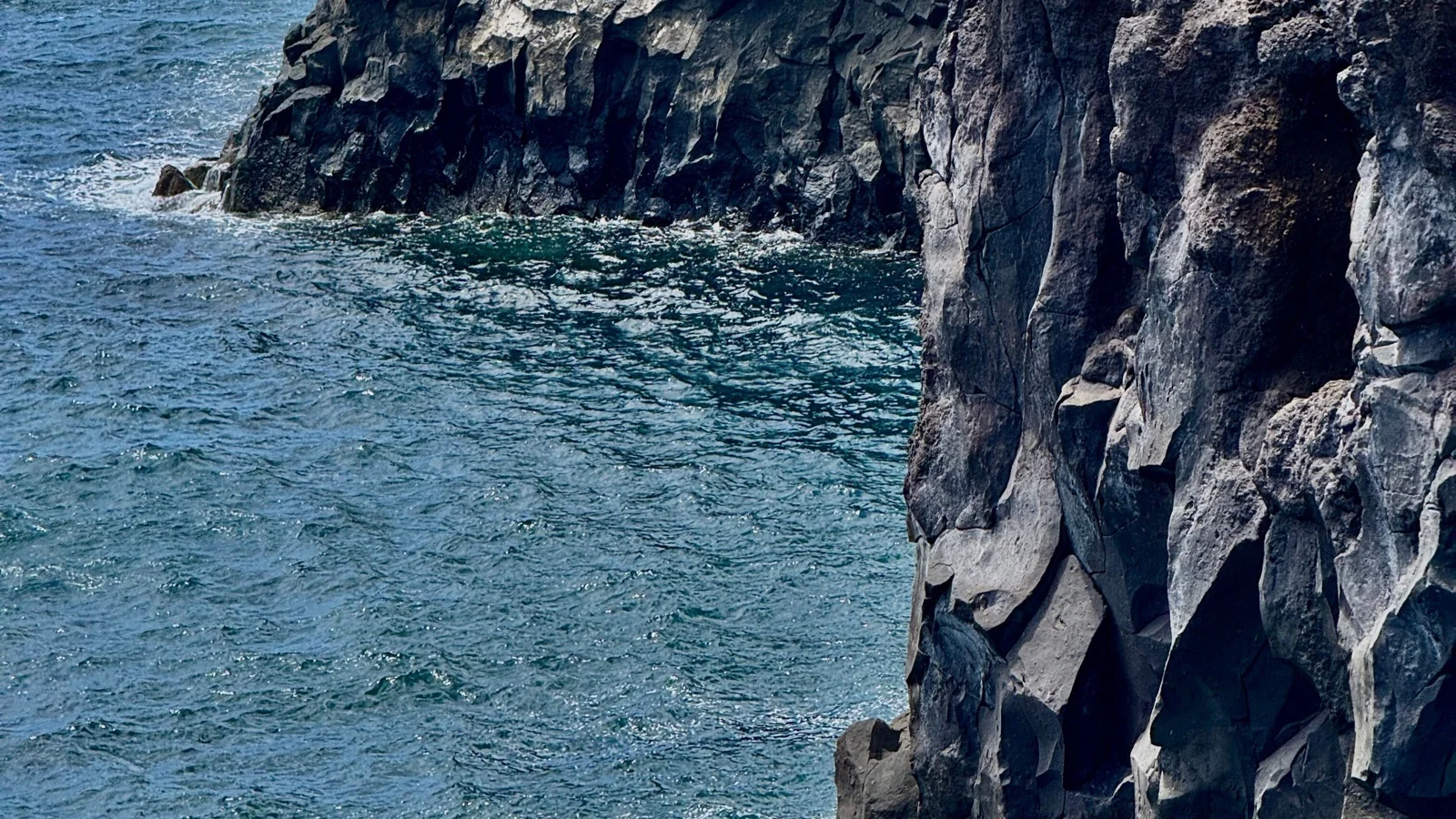
Most people visiting Korea never make it to Ulleungdo, and that's a shame, because it's a volcanic island in the middle of the East Sea with cliffs that drop straight into clear water and one big mountain holding the whole place together. Get the ferry timing wrong or pick a bad weather day for that mountain, and you'll spend half the trip fighting conditions instead of actually enjoying any of it.
Think of this as a volcano trip with a swimming problem: green calderas up high, pebble coves down low, and a ferry schedule that quietly decides a lot of your moves for you.
Day 1
The first day is really just landing at the harbor, eating something grilled, and earning one big clifftop view before dark.
Dodonghang
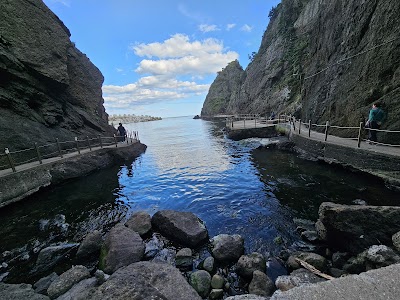
Dodonghang is Ulleungdo's main east-coast port, where your ferry drops you and where nearly every guesthouse and restaurant sits within a short walk.
The first thing that hits you isn't the sea. It's the smell of squid drying on open racks, mixed with diesel, salt, and gulls working the boats.
Dodong and next-door Jeodong have been this island's gateway since its modern resettlement. Historically, nearly everyone who ever arrived here came by sea, through this harbor.
Carry cash for the waterfront stalls because a lot of them don't take card. Don't try to 'do' the port; it's a staging beat, not a destination.
Tip: Ferry passengers arrive at Dodonghang, the island's main east-coast port and lodging hub. Walk five minutes to the waterfront and bring cash; many food stalls don't accept card payments.
Dokdo Sunrise Observatory
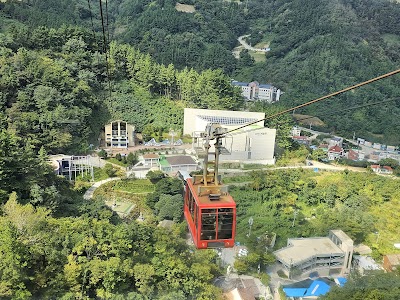
The Dokdo Sunrise Observatory is the island's headline attraction: a cable car that lifts you to a clifftop deck with the best sightline toward the disputed Dokdo islets, roughly 90 kilometers offshore.
Dokdo, also called Liancourt Rocks, sits at the center of a long sovereignty dispute between South Korea and Japan. This deck lets mainland visitors feel connected to a place most will never actually set foot on.
On a clear day you can theoretically see Dokdo from here. On a typical day you see fog where Dokdo is supposed to be, but the cable-car ride and the cliff view are the reliable product, and Dokdo is the bonus.
This is the one reservation that genuinely matters today, so prebook the cable car online for summer weekends, and check both the weather and the opening hours that same morning.
Tip: Ride the cable car to this clifftop observatory for sunset views toward Dokdo. Prebook your ticket online on summer weekends to skip the queue. Check opening hours before heading up.
Day 2
Day two climbs. You leave the coast, ride up into a volcanic caldera full of pumpkin fields, then keep going to the island's highest summit.
Nari Basin
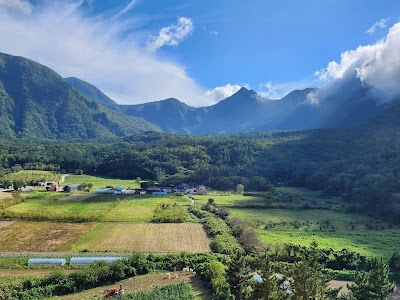
Nari Basin is a flat, green volcanic caldera sitting high on the island, ringed by ridges and dotted with pumpkin and squash fields. Nothing here looks like the coast you arrived at.
Ulleungdo's famous pumpkin and squash come from right here, so you're essentially standing inside the island's pantry.
The basin also holds reconstructed examples of old island pit-dwelling houses, built to survive typhoons and cold. What you see today are recreations in the old style, not originals.
Arrange your bus or taxi up in advance because that narrow access road doesn't guarantee a ride will appear. Layer up; the basin runs roughly ten degrees cooler than the port.
Tip: Take a bus or taxi up to this flat volcanic caldera dotted with pumpkin farms and wildflowers. The road is narrow, so reserve transport in advance. Layer up; mornings here run 10°C cooler.
Seonginbong
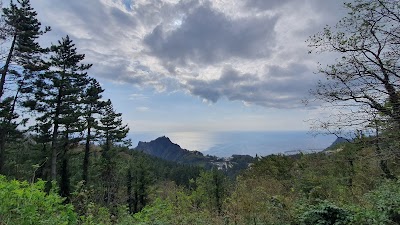
Seonginbong is Ulleungdo's highest peak, roughly 984 meters, and the island's signature hike. It's the one viewpoint that makes the whole island's shape and scale suddenly click.
From the summit you can see ocean in every direction, and you finally grasp that the entire livable island is just a thin ring of coast clinging to a single mountain.
It's exposed ridge up there: wind, short scrub, clouds rolling through faster than feels reasonable. Assume the top runs ten to fifteen degrees colder and windier than where you started.
Start by early afternoon from Nari Basin because the trail is ungated and free but the daylight is not. Upper sections can close for weather with no warning, so turning around is normal, not failure.
Tip: The 984 m summit is the island's signature hike from Nari Basin. Start by early afternoon to finish before sunset. Carry warm layers; trail entry is free and ungated but weather can close the upper section.
Day 3
Day three stays low and follows the coast: a boardwalk bolted to the cliffs, an islet you can walk to, and a sea stack that earns its keep at sunset.
Hangnam Coastal Walkway
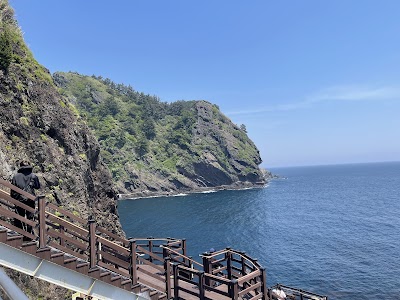
The Hangnam Coastal Walkway is a suspended wooden boardwalk clinging to the sea cliffs between Jeodong and the observatory area. It's the easiest way to get this island's vertical coastline up close.
Parts of this path are literally bolted onto a vertical cliff face, so you're walking on engineering, not trail: wood underfoot, waves hitting rock far below, that slight rail-and-sway feeling.
Morning is when the light hits the cliffs cleanly and the path is still quiet. The day-tripper groups show up mid-morning, and the seaward light turns harsher after that.
It's free and ungated, but wear sturdy shoes because the planks get wet and uneven in places. Check at the entry gate before committing; storm closures can happen with little notice.
Tip: A suspended boardwalk clings to the cliffs linking Jeodong to the observatory. Walk the full route in about 90 minutes with sturdy shoes. Sections can be closed after storms; check opening hours at the entry gate.
관음도
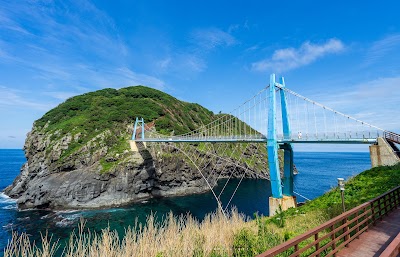
Gwaneumdo is a small islet stitched to Ulleungdo by a footbridge: cliffs, a sea-cave tunnel, and a pocket beach compressed into a loop you can finish in a couple of hours.
You reach a separate island on foot, no boat and no ticket drama. Just a short bridge crossing with translucent shallows below and spray coming off the cliffs.
The highlight is the sea-cave tunnel carved straight through the rock: dark, echoey, waves sloshing, then daylight on the far side opening to cliff views and clear water.
Bring cash because entry and the small vendors here are reportedly cash-only. Mid-afternoon is the sweet spot; the weekend crowd thins and warm light hits the cliffs and cave mouth.
Tip: A small islet linked by footbridge, featuring a sea cave tunnel and cliff views. Cross on foot, a short walk from the car park. Entry is cash-only; visit mid-afternoon when the weekend crowd thins.
Elephant Rock
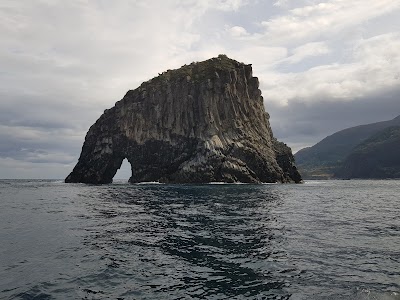
Elephant Rock is a tall volcanic sea stack off the east coast, framed by wooden walkways cut into the cliffs. It's a compact, free stop that exists almost entirely for golden hour.
The silhouette is the kind of shape every traveler tries to name: elephant, candle, something else entirely. That's half the fun of standing there with a camera.
Evening is the whole point because the rock glows orange at sunset, and that's the only window where this stop fully delivers. It's quiet most of the day, then a brief photographer cluster at dusk.
It's free and ungated, just follow the coastal path in. Line up a taxi pickup for after dark, because rides get scarce once the sun's gone.
Tip: A candle-shaped sea stack framed by carved wooden walkways near Jeodong. Best photographed at sunset when the rock glows orange. Access is free with no gate; follow the coastal path and taxi back after dusk.
Day 4
The last day crosses to the quieter west coast: a piece of architecture that looks like it landed from space, and one of the few coves where you can actually swim.
KOSMOS ULLEUNGDO
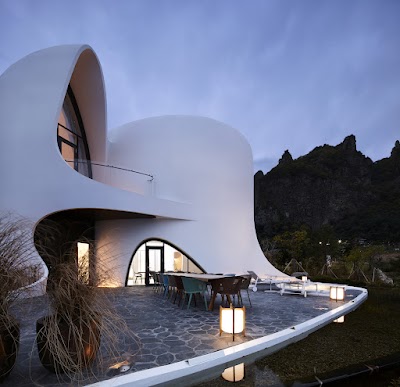
KOSMOS isn't a village. It's a single architect-designed luxury resort clinging to the west-coast cliffs near Chusan, and easily the island's most striking piece of contemporary architecture.
Locals and travel press describe it as a docked spaceship on the cliff edge, and from the coastal road, that's exactly the read: swooping concrete curves echoing the neighboring Songgotbong peak.
After days of raw volcanic coast, this is the stop that reframes the island as a design destination, not just a nature one. That contrast is the whole reason to make the crossing.
If you're not staying the night, confirm what non-guests can actually access before making the trip, because luxury properties often restrict interiors. The exterior and coastal views are the reliable draw.
Tip: The quieter west-coast village near Chusan offers sea cliffs and uncrowded shoreline walks. Take a morning bus from Jeodong; the transfer takes 40 minutes. Bring a warm layer; the western shore catches stiff sea breezes.
통구미 몽돌해변
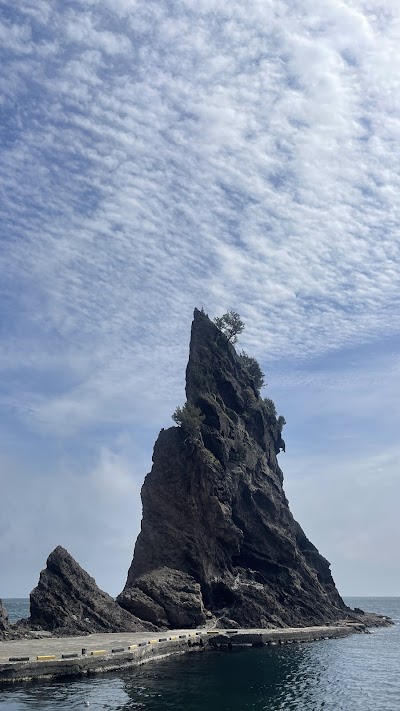
Tonggumi is a sheltered cove of smooth dark stones and translucent water, and because Ulleungdo has almost no sand, this is one of the few places where a summer swim is genuinely inviting.
No sand between your toes, just fist-sized pebbles that clatter under the waves like the beach is applauding, and water clear enough to make you forget your feet hurt.
Early afternoon is warmest and the water is at its most inviting, but that's also when weekend families arrive, so get there just before the rush to claim a patch of stones.
Water shoes aren't optional here; the pebbles are smooth but hard on bare feet. Carry cash for the snack stands, since there's little shade and no card machine to rescue you.
Tip: One of the island's few swimmable coves with smooth black pebbles and translucent water. Bring water shoes and carry cash for snack stands. Arrive by early afternoon before the weekend crowd builds.
What to book ahead
- Book ferry tickets (Pohang or Mukho to Dodonghang) (4-8 weeks ahead) - Summer sailings sell out fast; reserve online via the ferry operator's official site.
- Reserve guesthouse or minbak in Jeodong/Dodong (3-4 weeks ahead) - East-coast lodging near the port fills up on summer weekends.
- Prebook cable car tickets for Dokdo Sunrise Observatory (1-3 days ahead) - Online prebooking skips the base-station queue on busy days.
- Arrange taxi or tour for Nari Basin / Seonginbong access (1-2 days ahead) - The mountain road is narrow; self-driving requires a rental booked in advance.
What to pack
Essentials
- Hiking boots - Essential for Seonginbong summit trail and boardwalk sections with uneven surfaces.
- Rain jacket - Summer showers and sea spray are common; island weather shifts quickly.
- Cash (KRW) - Many food stalls, taxi drivers and small entry fees are cash-only.
- Sun protection (hat, SPF 50+) - Exposed ridgelines and open coastal paths offer little shade in summer.
Nice to have
- Water shoes - Smooth but hard black pebbles at Tonggumi beach are painful barefoot.
- Motion sickness pills - The ferry crossing to Ulleungdo can be rough even in calm season.
- Snorkel set - Tonggumi Mongdol Beach has translucent water ideal for a summer swim.
Final take
Four days on Ulleungdo and you've stood inside a volcano, climbed the one mountain that built the island, walked a boardwalk off a cliff face, and swum over dark stones in clear water. That's a hard place to leave.
Plan this trip
Turn this guide into an editable trip plan
Open the route in Instaboard, adjust the stops, and share the itinerary with your travel group.