Boardling
Biology lessons, one board at a time
Each lesson explains one idea in about three minutes while the notes are built on a board in front of you. Every page has the video, written notes, a practice question, common mix-ups, and the finished board to copy into your own notes.
Endocrine system
 3:20
HPA axis
How stress travels from the brain to the adrenal glands: CRH, ACTH, cortisol, negative feedback and the daily rhythm.
 3:13
Tropic vs non-tropic hormones
Which pituitary hormones act on other glands, the FLAT PEG trick, and how to find the gland that broke.
 3:33
Steroid vs peptide hormones
Why insulin works in seconds and cortisol takes hours: solubility, receptors, genes vs cAMP, and the amine trap.
 2:59
Posterior pituitary hormones
The posterior pituitary releases ADH and oxytocin but makes neither: where they are made, how they travel and what each does.
Immune system
 3:13
Clonal selection
How one matching B cell is picked and copied into ~1,000 cells, then becomes plasma and memory cells.
 3:33
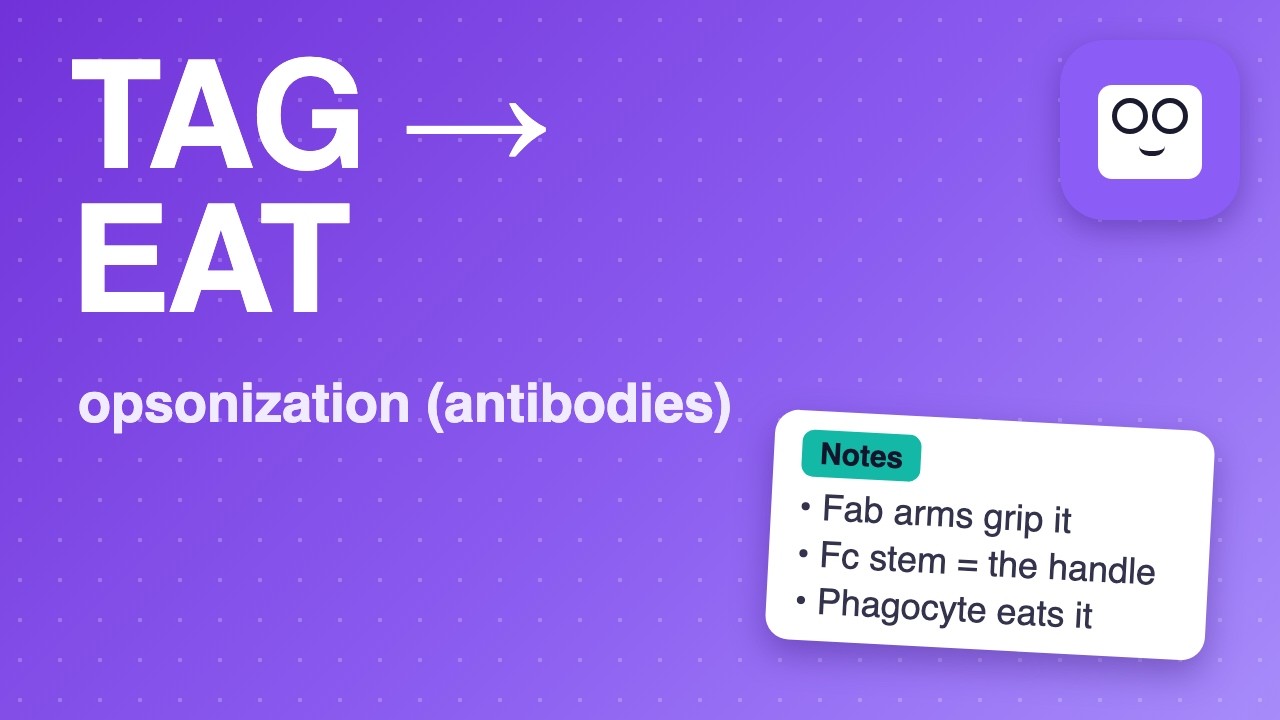
Opsonization
How antibodies tag a microbe so a phagocyte eats it: the Fab arms, the Fc stem, Fc receptors, C3b, and what fails when one part is missing.
 2:37
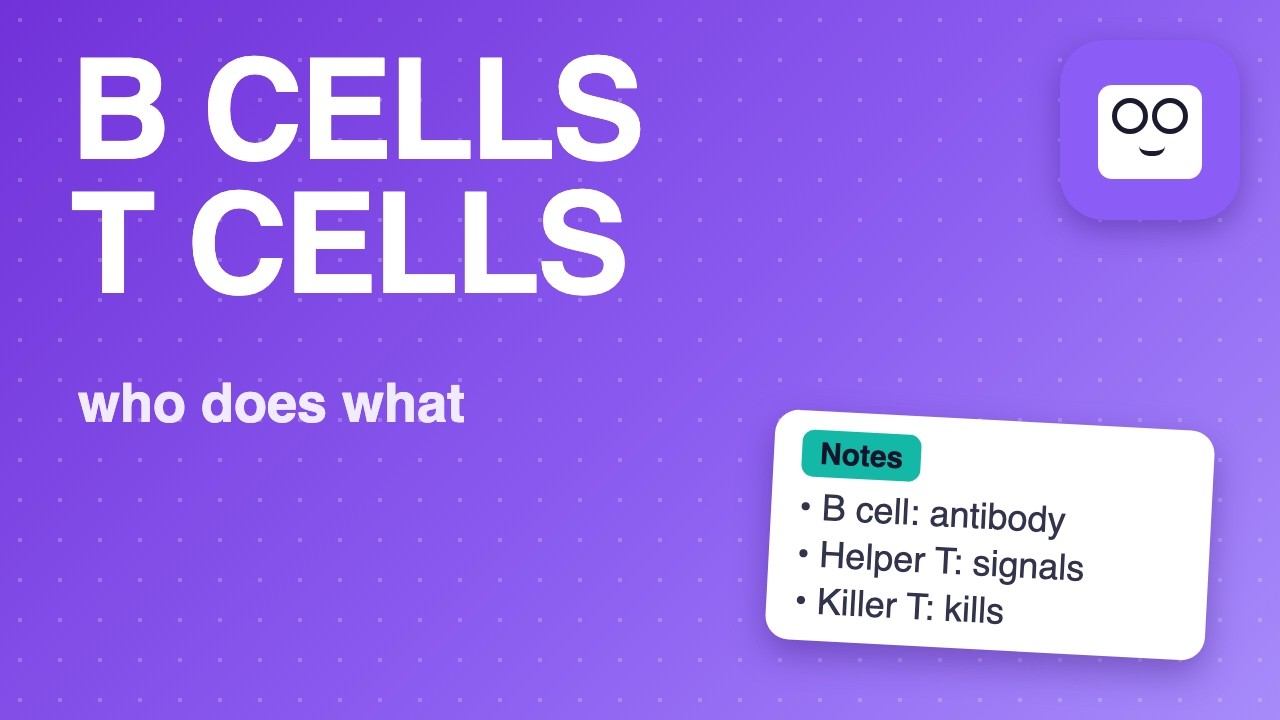
B cells and T cells
How your body stops a virus hiding inside your cells: killer T cells, B cells and plasma cells, helper T cells and memory cells, in plain words.
Kidney
 3:03
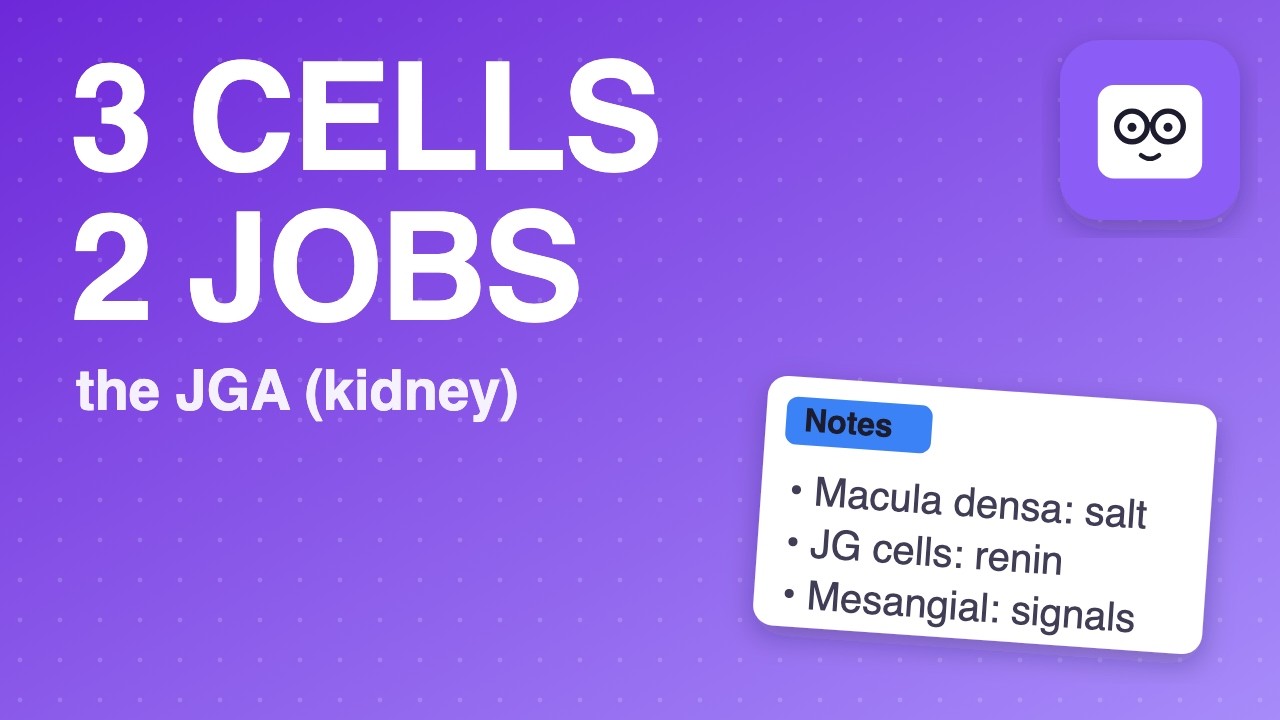
Juxtaglomerular apparatus
The spot where the kidney tubule touches its own arteriole: macula densa, JG cells, mesangial cells and renin.
 2:51
Transport maximum
Why glucose spills into urine: read the filtered, reabsorbed and excreted glucose lines, the transport maximum, the renal threshold and splay.
 2:20
RAAS
The renin-angiotensin-aldosterone system for the MCAT: kidney, liver, lungs and adrenal glands in one chain that brings blood pressure back up.
 2:23
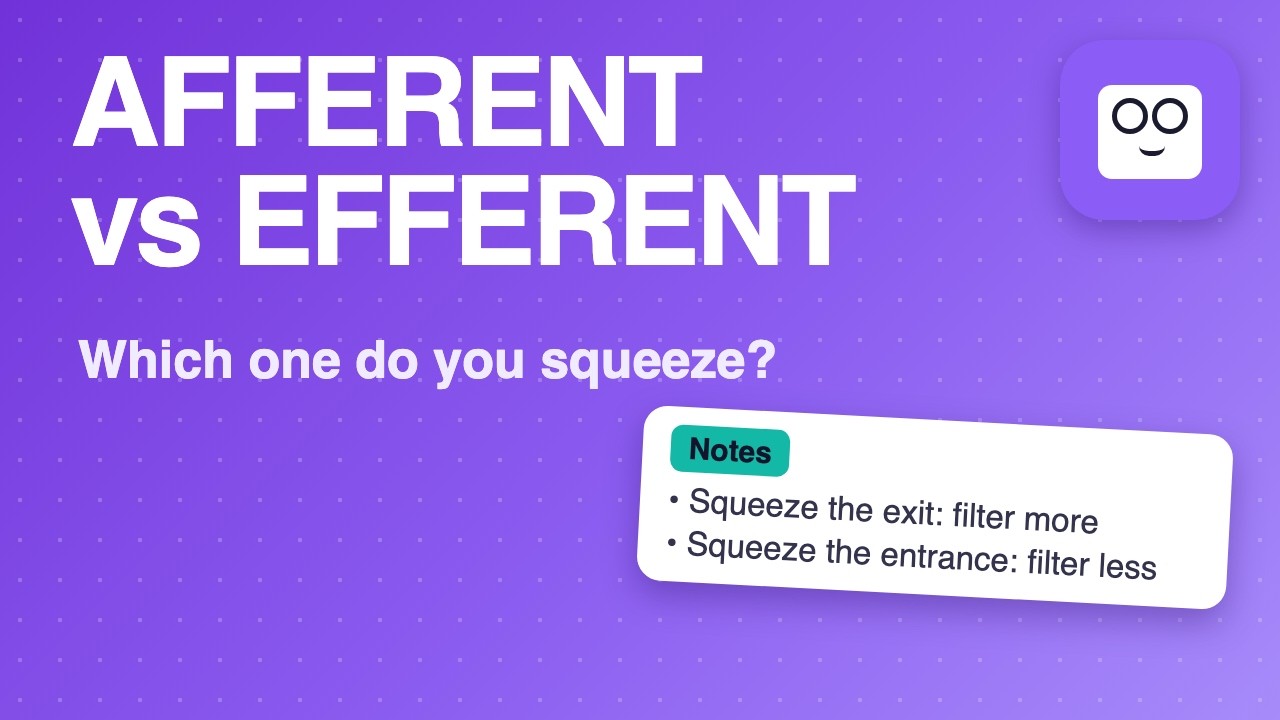
Afferent vs efferent arteriole
Which kidney arteriole do you squeeze to filter more? How the afferent (entrance) and efferent (exit) arterioles set glomerular pressure and filtration.
 2:25
Nephron
How a nephron turns 150 to 180 liters of filtrate a day into 1 to 2 liters of urine: filtration, reabsorption, secretion and ADH at the collecting duct.
Muscle and nerve physiology
 3:44
Twitch, summation and tetanus
How to read a myogram: one twitch, wave summation, unfused and fused tetanus, and why calcium makes twitches add up.
 2:57
Motor unit recruitment
How a muscle grades its force: motor units, small versus large units, the size principle, and the two ways to turn force up.
 2:19
Sliding filament theory
How a muscle gets shorter when its threads never do: actin and myosin, cross-bridges, the power stroke, ATP and the calcium switch, in plain words.
 2:21
Action potential
Every step of the action potential graph for the MCAT: resting potential, threshold, depolarization, the +30 mV peak, repolarization, hyperpolarization and the refractory period.
 2:19
Frank-Starling law
Why more blood filling the heart makes the next beat stronger: preload, sarcomere stretch, more cross-bridges and a bigger stroke volume.
 2:07
Sodium-potassium pump
How one kind of pump uses most of a nerve cell's ATP: 3 sodium out, 2 potassium in, the leak it fights and its part in the resting potential.
Blood and breathing

About Boardling
Boardling is a biology lesson series made by the team behind Instaboard, a board app for organizing notes with cards. Each lesson builds its notes live on an Instaboard board, and you can copy that board for free.
How the lessons are made: the narration is a synthetic (text-to-speech) voice, and scripts and notes are written with AI help, then checked against textbooks such as OpenStax Anatomy & Physiology. Each lesson page lists its sources and the date they were last checked. If you spot a mistake, email support@instaboard.app and we'll fix it.
New lessons come out on the Boardling YouTube channel.